Sliding Leg Bird Dog
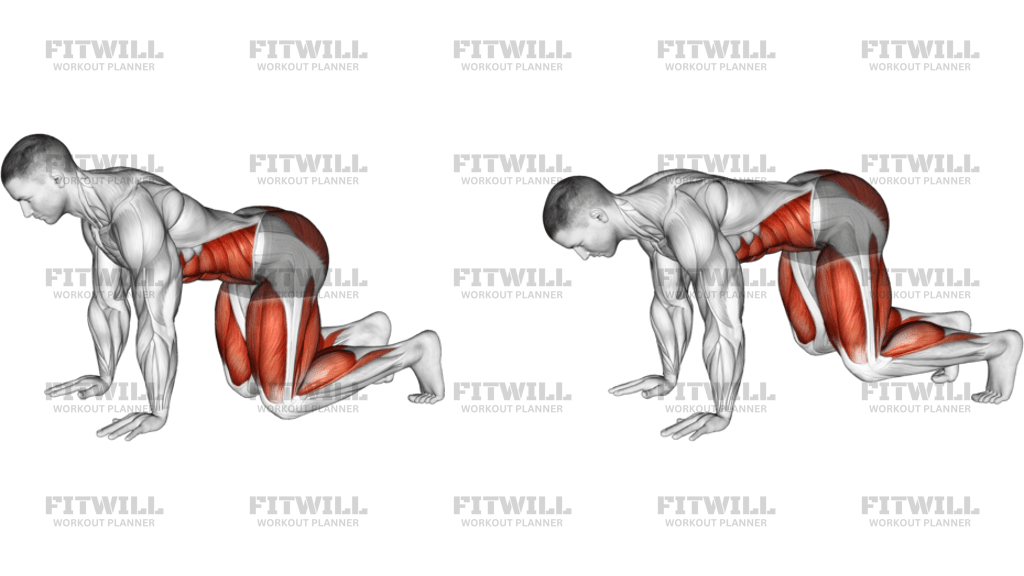
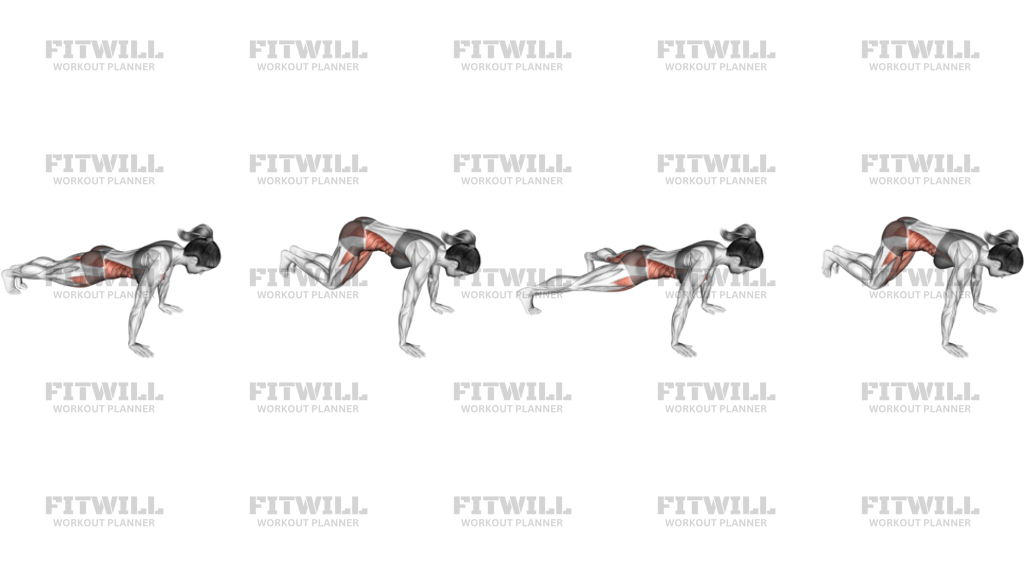
Sliding Leg Bird Dog is a floor-based stability drill that combines a classic bird dog reach with a sliding rear leg. It is usually done with body weight on a smooth floor, using a slider, towel, or gliding disc so the working leg can extend and return without bouncing. The exercise is less about big motion and more about keeping the torso quiet while the arm and leg travel away from each other.
The main training effect comes from resisting rotation and extension through the trunk while the shoulder, hip, and glute on the moving side work through a long lever. That makes it useful for core control, posterior-chain activation, and cleaner full-body coordination. The support arm and planted side also have to stay organized so the body does not twist, dump into the low back, or shift sideways as the leg slides.
The setup matters. Start from hands and knees with the shoulders stacked over the wrists and the hips square to the floor. The working foot stays light on the slider so the leg can glide straight back instead of hopping or lifting. A short, controlled range is usually better than forcing the leg farther back and losing pelvic position. If the ribs flare or the pelvis turns, the repetition has already gone too far.
Use this movement when you want a controlled core-and-hip drill that still feels athletic and coordinated. It fits well in a warm-up, activation block, rehab-style session, or accessory circuit before heavier lifting. Keep the motion smooth, breathe steadily, and stop the set when you can no longer keep the spine long and the hips level. The best reps look quiet and deliberate from start to finish.
[ Workout Log & Planner ]
Put your next workout in Fitwill
Keep your plan and training log ready when you are.


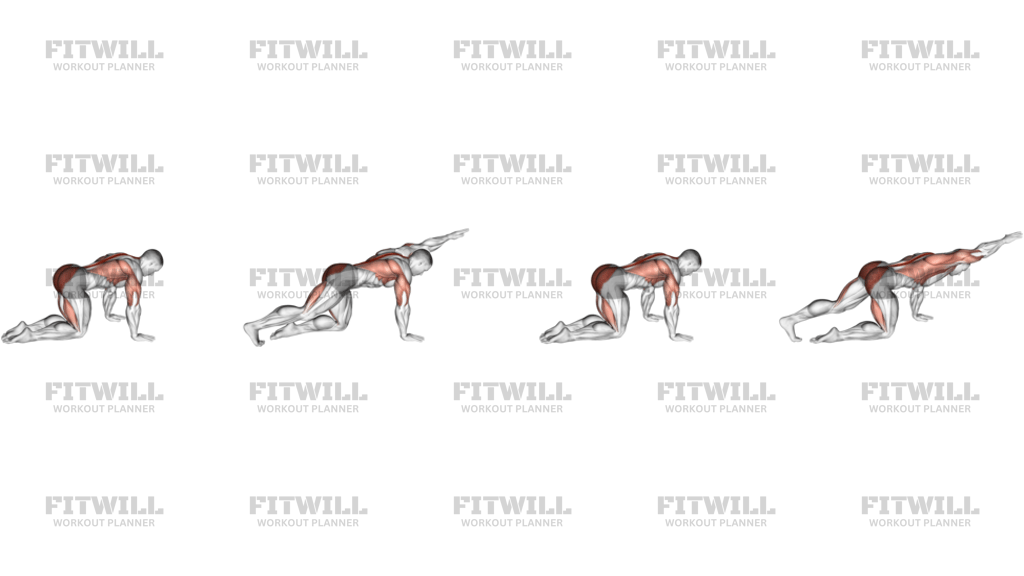
Instructions
- Start on hands and knees on a smooth floor, with your shoulders over your wrists and your hips stacked over your knees.
- Place a slider, towel, or gliding disc under the foot of the leg you plan to move, and keep the other knee grounded under your hip.
- Brace your midsection, keep your ribs down, and reach the opposite arm straight forward without shifting your weight.
- Slide the working leg straight back until it nearly straightens, letting the foot skim the floor instead of lifting off it.
- Keep both hip bones facing the floor so the pelvis does not rotate as the leg reaches long.
- Pause briefly at the longest reach with your neck relaxed and your shoulder blades still stable.
- Pull the leg back under your body in a slow, controlled glide while keeping your torso quiet.
- Reset the foot under the hip, switch sides, and repeat for the planned reps.
Tips & Tricks
- Keep pressure light on the sliding foot; if you push hard into the floor, the leg will hop instead of glide.
- Make the reach long enough to challenge your core, but stop before the low back arches.
- If your hips twist toward the sliding leg, shorten the glide and re-square the pelvis before the next rep.
- Press the planted hand into the floor to keep the shoulder steady while the opposite arm reaches away.
- Move slowly enough that the slider never jerks or catches under your foot.
- Exhale as the leg slides back and inhale as you draw it in, so the ribcage stays controlled.
- Keep the reaching hand at shoulder height or slightly lower if your neck or lower back starts to tighten.
- Use a towel on a smooth floor, or socks on a low-friction surface, if you do not have dedicated sliders.
Frequently Asked Questions
What does Sliding Leg Bird Dog train most?
It mainly trains trunk stability, with the glutes, shoulders, and deep core working together to keep the body from rotating.
Can beginners perform this exercise?
Yes. Beginners should use a short slide, keep the ribs down, and stop the rep as soon as the pelvis starts to twist.
Do I need a slider or towel for the working foot?
A slider is ideal, but a towel, sock, or gliding disc works as long as the floor is smooth enough for the foot to travel without sticking.
How far should the leg slide back?
Only as far as you can keep both hip bones facing the floor and your low back from arching.
Should the moving foot stay on the floor the whole time?
Yes. The foot should skim or slide on the floor rather than lift, because the goal is a controlled glide instead of a kickback.
What is the most common form mistake?
People usually let the pelvis open or the ribs flare when the leg reaches back, which turns the drill into a lower-back compensation exercise.
Can I make Sliding Leg Bird Dog harder?
Yes. Slow the tempo, pause longer at full reach, or extend the opposite arm farther while keeping the torso completely still.
Is this more of a core exercise or a glute exercise?
It is both, but the core’s job is to keep the spine and pelvis stable while the glute helps drive the sliding leg back.