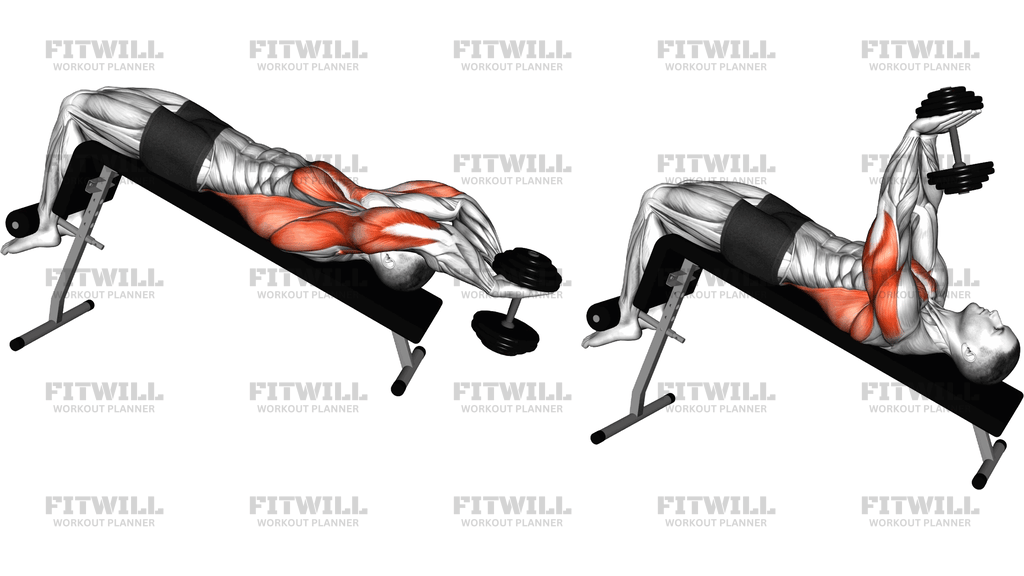
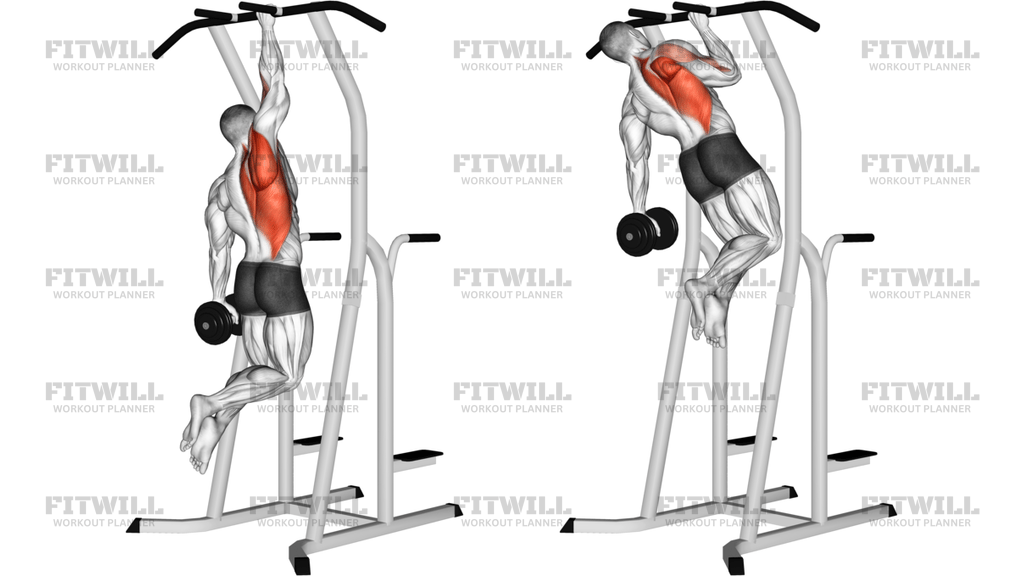
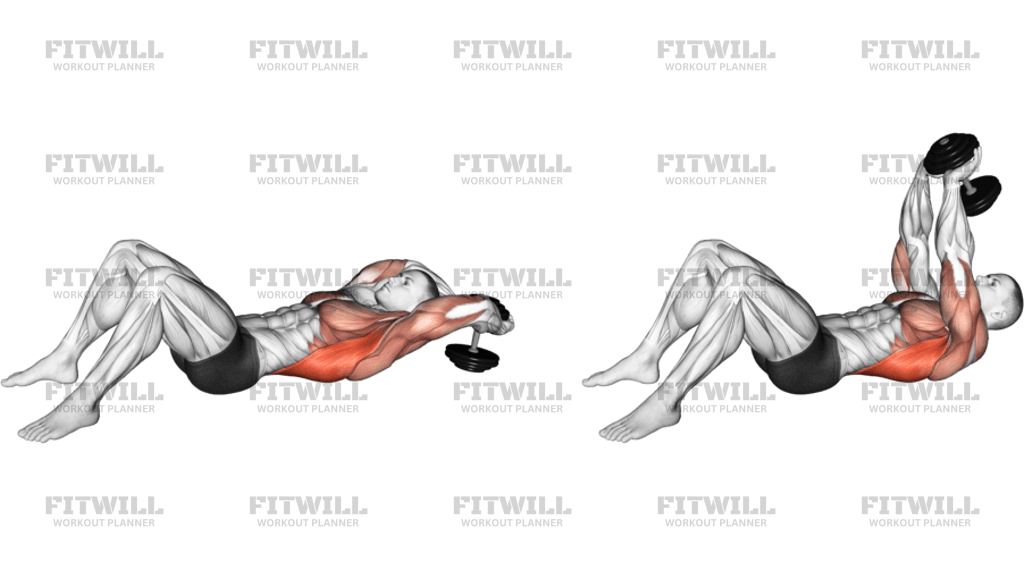
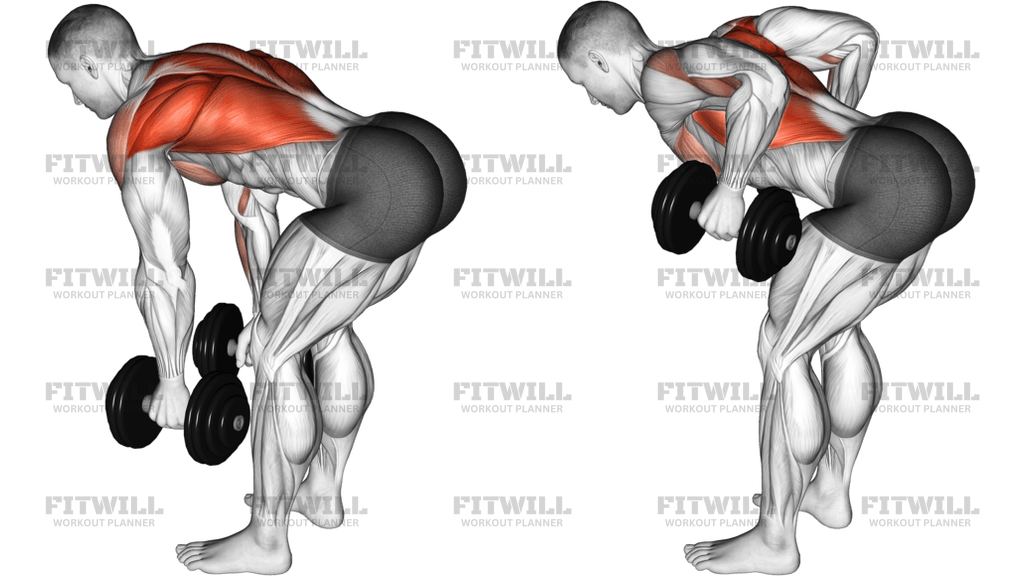
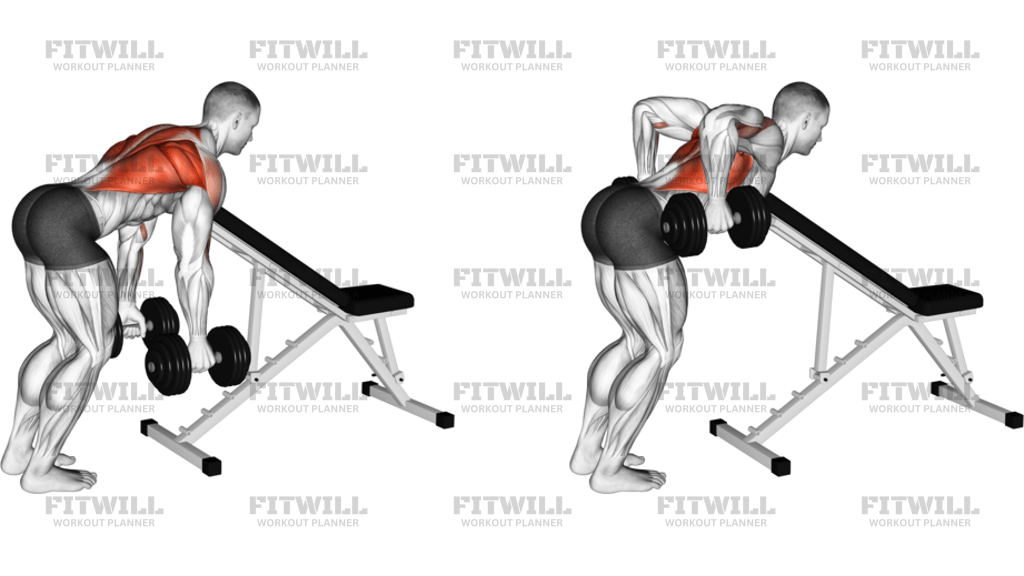
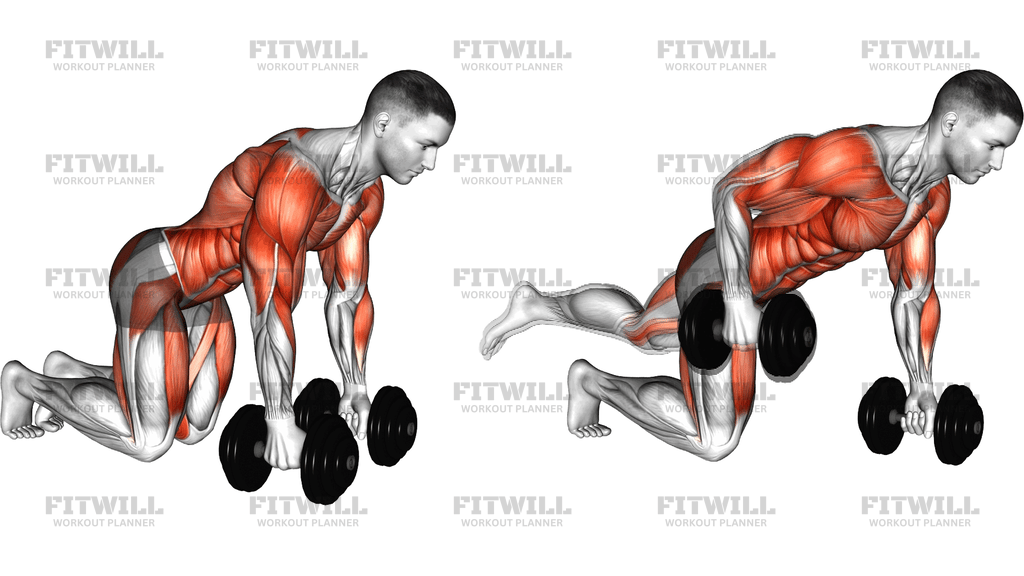
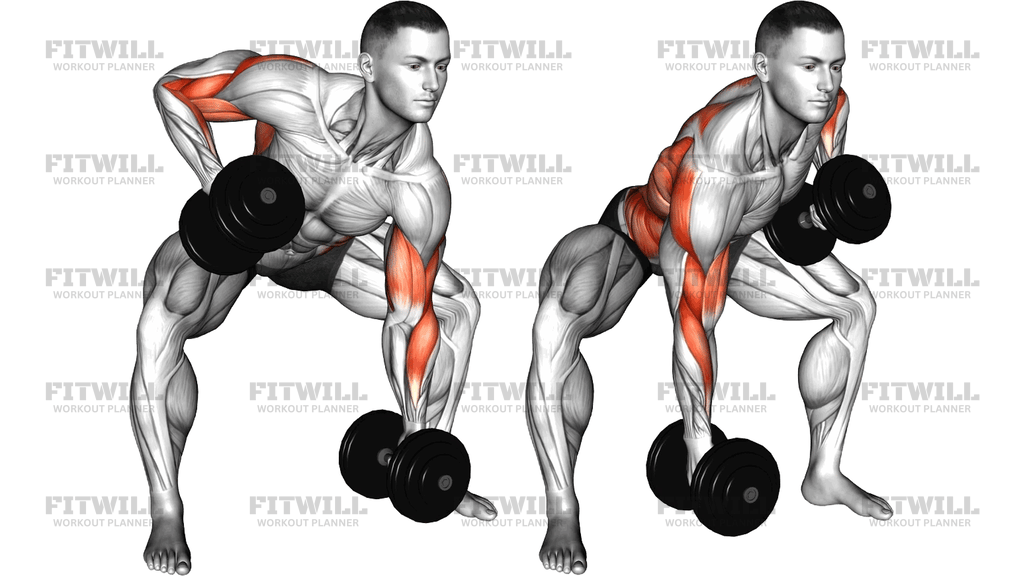
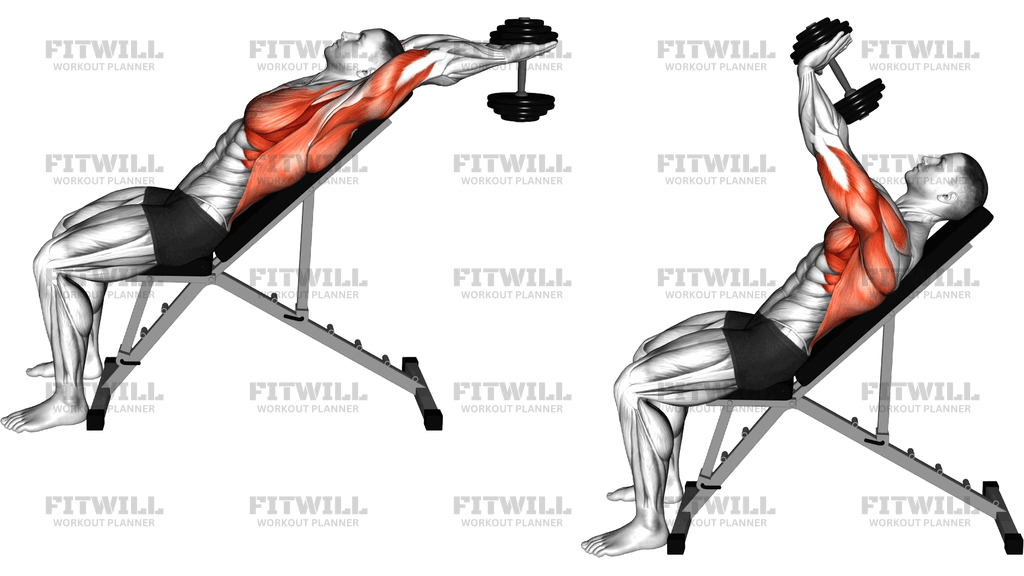
Dumbbell Lying Close-Grip Parallel Row On Rack
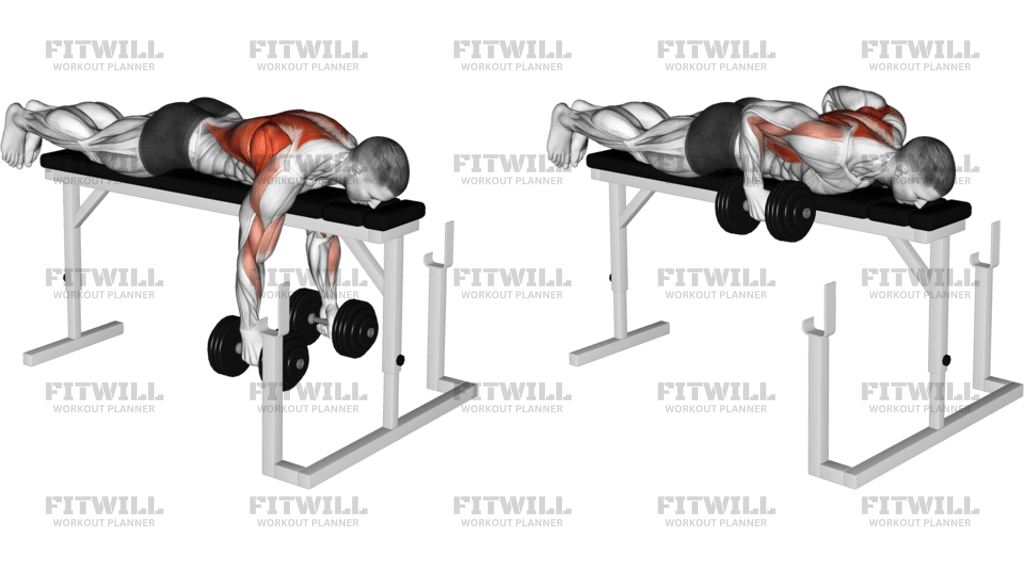
Dumbbell Lying Close-Grip Parallel Row On Rack is a chest-supported rowing variation done face down on a bench with the dumbbells hanging beneath you. The neutral, close grip keeps the elbows tucked and gives the lats a strong line of pull while the upper back, rear shoulder, biceps, and forearms help stabilize the rep. Because your chest and pelvis stay supported, the exercise is useful when you want strict pulling work without having to brace against a standing hinge.
The setup matters more here than in a free-standing row. If the bench is not high enough, the dumbbells can hit the floor or rack; if the bench height is too high, you lose a clean start and shortchange the stretch. Lie prone with the chest on the pad, feet planted or legs extended for balance, and let the arms hang straight down with the wrists neutral. From that hanging position, row the dumbbells in a smooth arc toward the lower ribs or upper waist while keeping the shoulders packed and the neck long.
A good repetition starts by pulling the shoulder blades back and down just enough to initiate the row, then driving the elbows close to the torso. The dumbbells should travel close to the bench, not flare out wide. At the top, squeeze the back without turning the row into a shrug or a jerky bounce. Lower the bells under control until the elbows are fully extended and the lats feel a loaded stretch, then reset the shoulders before the next pull.
This movement is a strong option for back volume, hypertrophy work, or accessory pulling when you want to reduce lower-back fatigue. It can fit after heavier compounds such as barbell rows, pull-ups, or deadlifts, or serve as the main row in a chest-supported back session. The exercise is also easy to scale: lighter loads teach cleaner scapular control, while heavier sets demand tighter bracing and stricter tempo.
Keep the rep quality high. If the dumbbells drift forward, if the shoulders roll up toward the ears, or if the chest lifts off the pad to create momentum, the row stops working the way it should. The goal is a controlled pull from a stable support position, not a heave. When the bench height, grip, and elbow path are right, the exercise gives you a very direct lat and upper-back stimulus with minimal cheating.
Fitwill
Log Workouts, Track Progress & Build Strength.
Achieve more with Fitwill: explore over 9600 exercises with images and videos, access built-in and custom workouts, perfect for both gym and home sessions, and see real results.
Start your journey. Download today!




Instructions
- Set a flat bench on the rack or supports so the dumbbells can hang freely below the pad without touching the floor.
- Lie face down with your chest and upper stomach on the bench, head neutral, and feet braced behind you for balance.
- Hold a dumbbell in each hand with a neutral grip so the palms face each other and the arms hang straight down.
- Let the shoulders settle away from the ears before the first rep and keep your torso glued to the bench.
- Pull both elbows back close to your sides, driving the dumbbells toward your lower ribs or upper waist.
- Squeeze the lats and upper back briefly at the top without lifting your chest or shrugging the shoulders.
- Lower the dumbbells slowly until the arms are fully extended and you feel a controlled stretch through the back.
- Reset the shoulders, exhale on the pull, and repeat for the planned number of reps.
- Set the dumbbells down carefully between the bench supports when the set is finished.
Tips & Tricks
- Keep the elbows tucked. If they flare wide, the row turns into more rear-delt work and less lat-driven pulling.
- Use a bench height that lets the dumbbells hang clear of the floor at the bottom of each rep.
- Think about pulling the elbows toward your back pockets instead of yanking the handles with your hands.
- A brief pause at the top is useful here, but avoid bouncing the dumbbells off the start position.
- Keep the chest in contact with the pad so you do not convert the movement into a sloppy incline row.
- Do not let the shoulders ride up toward the ears; keep them packed down as you pull.
- A neutral wrist is usually easiest on the elbows and lets the parallel grip stay strong through the set.
- Choose a load you can lower slowly; the eccentric control is what makes this variation valuable.
- If your neck cranes forward to chase the movement, the setup is too heavy or the bench is too low.
- Use a full stretch at the bottom, but stop before the dumbbells hit the rack or lose your shoulder position.
Frequently Asked Questions
What muscles does this row emphasize?
It mainly targets the lats, with strong help from the upper back, biceps, and forearms.
Why do I lie face down on the bench instead of rowing standing up?
The chest support removes lower-back fatigue and keeps the pull strict, so the back does more of the work.
Where should I pull the dumbbells?
Aim for the lower ribs or upper waist, keeping the elbows close to your torso instead of flaring out.
What grip should I use?
A neutral, parallel grip is the intended setup because it usually feels strongest on the elbows and shoulders.
How do I know if the bench height is right?
At the bottom, the dumbbells should hang freely without touching the floor or rack, and you should still keep your shoulders organized.
Can beginners use this exercise?
Yes, if the load is light enough to keep the chest on the bench and the elbows tucked through the full range.
What is the most common form mistake?
People usually shrug the shoulders or swing the dumbbells instead of rowing them with a controlled elbow path.
Where does this fit in a workout?
It works well as a strict rowing accessory after heavier pulls or whenever you want back volume with less lower-back stress.