Lever Lying Single Leg Curl
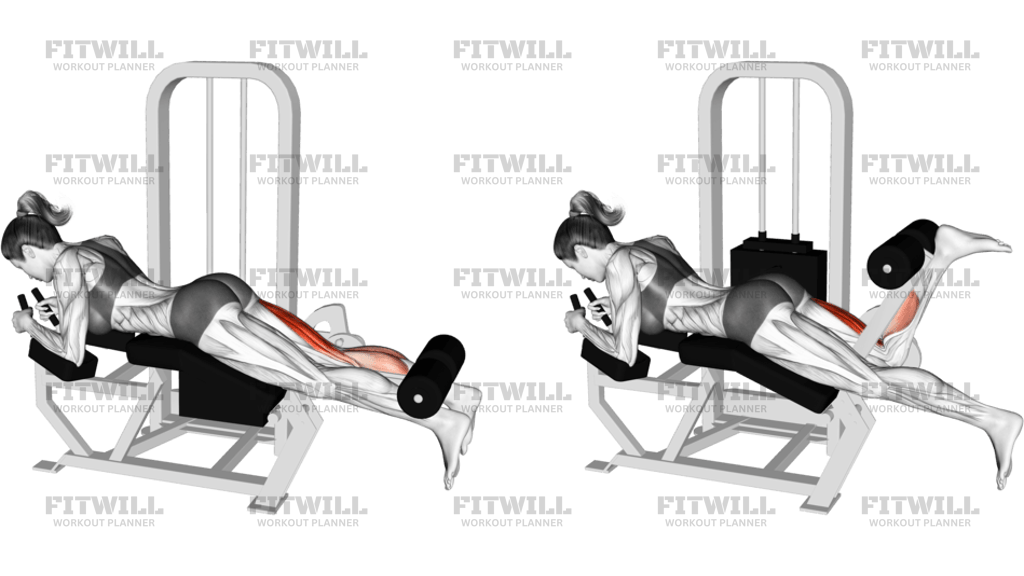
Lever Lying Single Leg Curl is a prone hamstring exercise performed on a leg curl machine with one ankle working against the lever at a time. The bench supports your torso and hips while the pad sits just above the heel or lower calf, so the hamstrings can flex the knee without the lower back or hips taking over. The main training effect is knee flexion strength, hamstring control, and side-to-side balance between legs.
Because the exercise is done face down, the setup matters. Your hips should stay pressed into the bench, your pelvis should stay square, and the working leg should move smoothly through the machine’s arc. The non-working leg stays long and quiet so it does not help kick the weight up. That single-leg setup makes it easier to notice strength differences, reduce compensation, and keep the target leg honest through the whole range.
A good rep starts with a stable torso and a controlled curl. Drive the heel toward the glute by bending the knee, then pause briefly where the hamstrings are most shortened without lifting the hips or twisting the torso. Lower the pad slowly until the leg is nearly straight again, keeping tension on the machine instead of letting the stack or lever slam down. Breathing should stay steady, with an exhale as you curl and an inhale on the return.
This movement fits well in hamstring-focused strength work, lower-body accessory blocks, or rehab-style training when you want isolated knee-flexion work with clear control. It is useful after compound lifts like squats or deadlifts, or as a stricter substitute for free-weight hamstring curls when you want more support and less momentum. Keep the range pain-free, use a load you can control one side at a time, and stop the set if the hips start to pop off the bench or the torso begins to rotate.
Fitwill
Log Workouts, Track Progress & Build Strength.
Achieve more with Fitwill: explore over 9600 exercises with images and videos, access built-in and custom workouts, perfect for both gym and home sessions, and see real results.
Start your journey. Download today!




Instructions
- Set the bench so your hips rest fully on the pad and the roller sits just above one heel or lower calf.
- Lie face down with your hips square to the machine, chest supported, and both hands gripping the front handles.
- Extend the non-working leg straight and keep it still so the moving leg does all the work.
- Brace your trunk lightly and start with the working knee almost straight but not locked out.
- Curl the working heel toward your glute by bending the knee and driving the lever through its arc.
- Keep both hips pressed into the pad and avoid twisting or lifting the pelvis as the leg bends.
- Pause briefly near the top when the hamstrings are fully shortened and the machine is under control.
- Lower the lever slowly back to the start until the leg is nearly straight, then repeat for the planned reps.
Tips & Tricks
- Keep the roller on the same spot on every rep; if it slides down toward the Achilles, the leverage changes and the rep gets sloppy.
- Do not let the pelvis lift when the curl gets hard. A small hip pop usually means the load is too heavy.
- Use a slower lowering phase than lifting phase so the hamstrings stay loaded instead of the stack dropping.
- Keep the non-working leg long and quiet. If it bends or drifts, you are probably helping the rep with momentum.
- Think about pulling the heel toward the glute, not just pushing the pad backward.
- Stop the curl just before the pelvis starts to rotate. A slightly shorter range is better than a forced finish.
- Choose a load that lets both legs match in control. The machine exposes side-to-side weakness quickly.
- Keep your head and neck relaxed on the bench so tension stays in the hamstrings instead of creeping into the upper body.
Frequently Asked Questions
What muscle does Lever Lying Single Leg Curl target most?
The hamstrings do most of the work because the exercise is a knee curl performed one leg at a time.
Where should the roller sit on my leg?
Set the pad just above the heel or lower calf so the lever bends the knee cleanly without slipping into the ankle.
Should my hips stay on the bench the whole time?
Yes. Keeping the hips pressed into the pad is the main rule for preventing lower-back arching and torso rotation.
Why train one leg at a time on this machine?
Single-leg work helps expose strength differences and keeps one side from covering for the other.
What is the most common form mistake?
Letting the hips lift or twist as the knee bends, which usually means the load is too heavy.
Can I use this after squats or deadlifts?
Yes. It works well as accessory hamstring work after compound lower-body training.
Is it normal to feel the non-working leg doing anything?
No. The free leg should stay relaxed and still while the working leg handles the lever.
How do I make the set harder without cheating?
Use a little more load, slow the lowering phase, or add a brief pause at the top while keeping the hips pinned.