High Knee Squat Version 2
High Knee Squat Version 2 is a bodyweight squat-to-knee-drive drill that blends lower-body strength, balance, and coordination in one movement. The squat phase loads the quads, glutes, and adductors, while the knee lift asks the core and hip flexors to stabilize the trunk as you rise. It is useful when you want a simple athletic drill that still teaches control through the bottom of the squat and balance at the top.
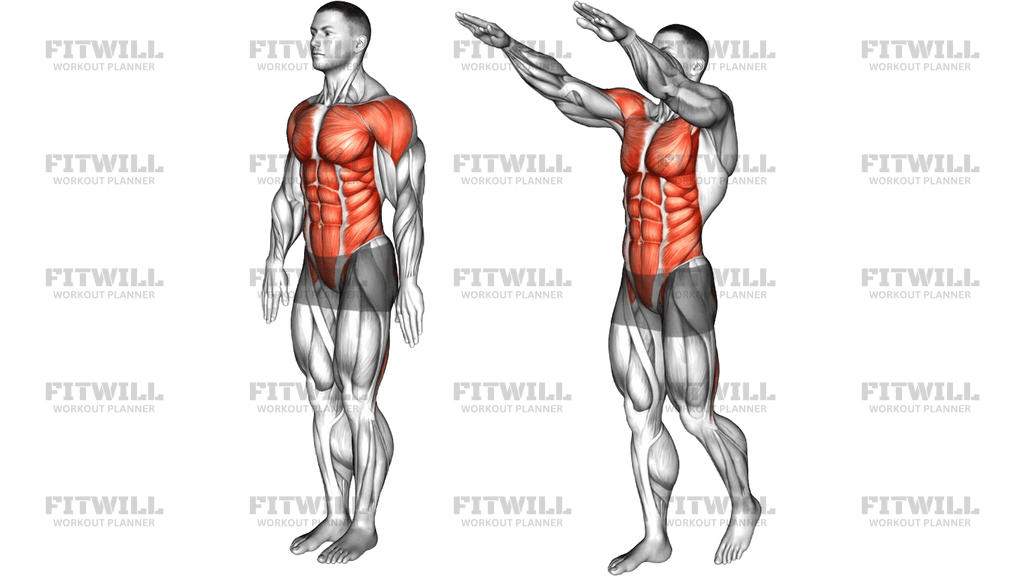
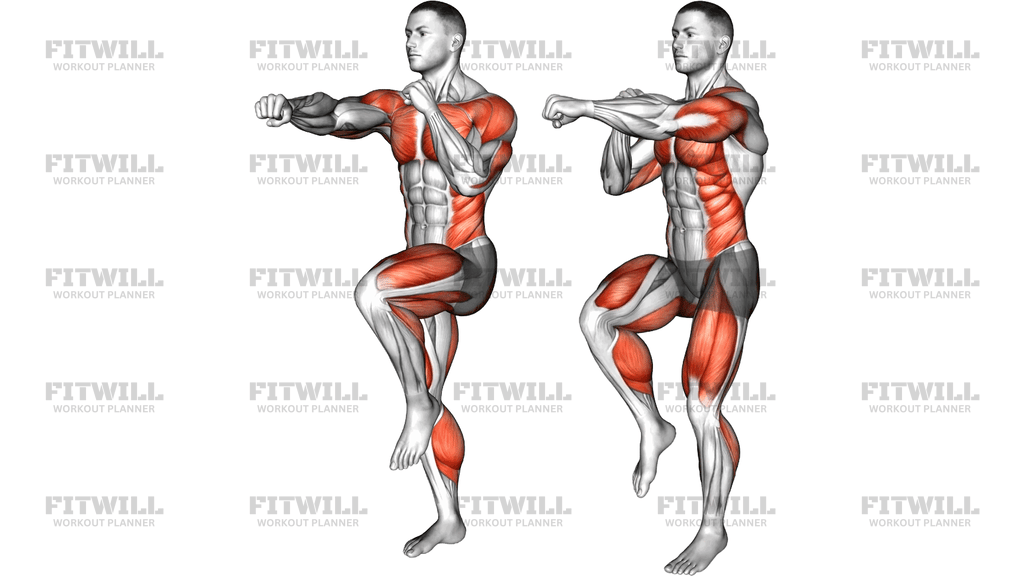
The setup matters because the exercise changes from a grounded squat into a single-leg balance every rep. Stand with your feet about hip-width apart, keep the chest tall, and let the arms stay forward for balance, just as the image shows. From there, sit the hips back and down so the knees can track over the toes without the heels peeling up or the torso folding forward.
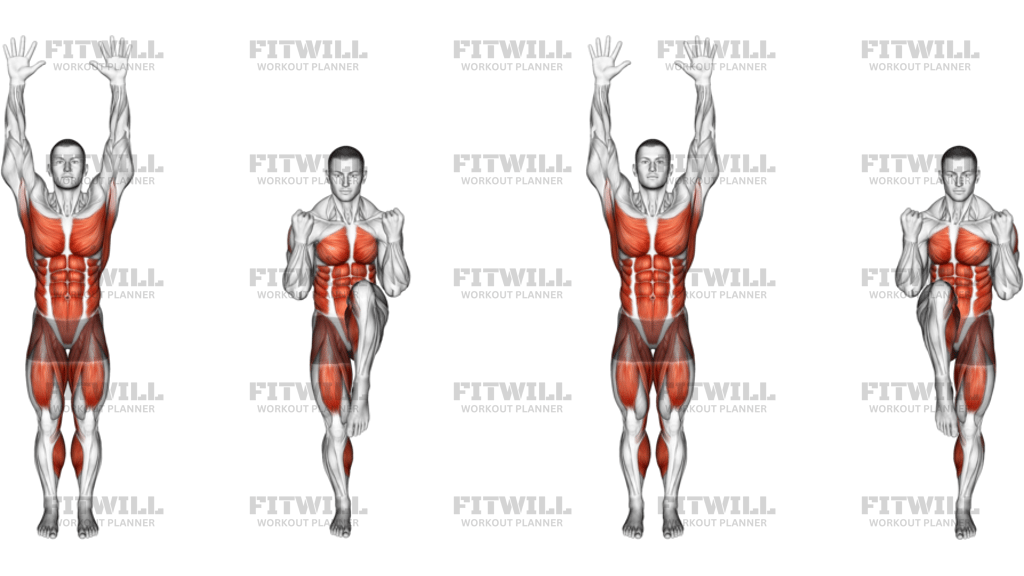
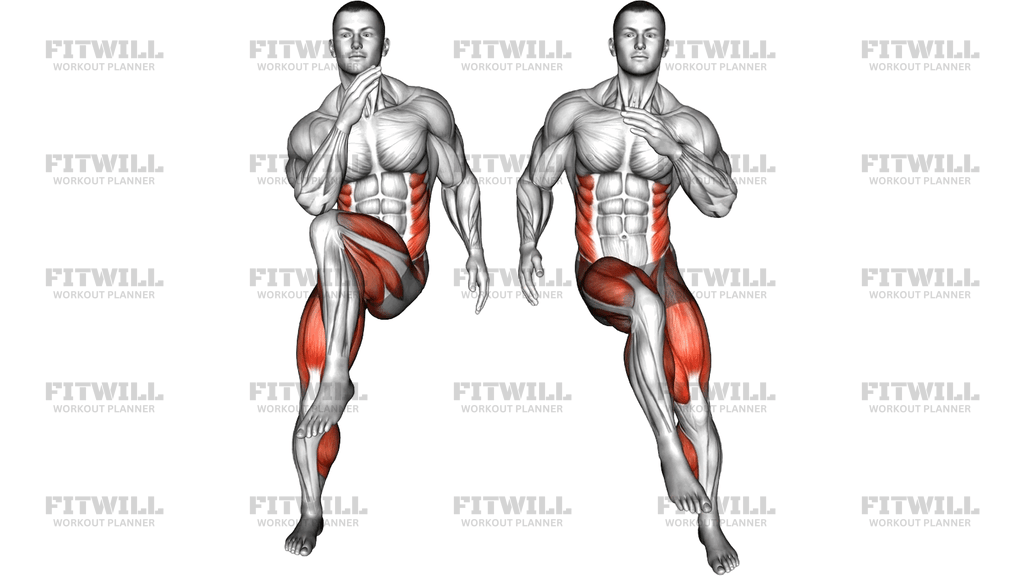
As you stand, drive through the whole foot and finish tall before lifting one knee toward hip height. The standing leg should stay rooted, with the pelvis level and the ribs stacked over the hips so the knee lift does not turn into a back lean. If the movement is programmed as an alternating drill, switch legs on the next rep and keep the transition smooth rather than bouncing between positions.
High Knee Squat Version 2 works well as a warm-up, conditioning drill, or low-load plyometric accessory because it builds rhythm without needing equipment. The goal is not to rush the rep count; it is to make every squat depth, rise, and knee drive look the same. If your balance or knee tracking breaks down, shorten the squat, slow the stand phase, or pause briefly at the top before the next rep. The controlled switch also makes it a good option for athletes who need cleaner single-leg timing without a hard landing.
This exercise is also a useful teaching tool for lifters who need cleaner squat mechanics and better single-leg control. Keep the movement quiet, brace before each descent, and finish each rep with the lifted foot under control instead of swinging it through. Done well, High Knee Squat Version 2 trains useful lower-body tension and coordination without asking for a heavy load.
Fitwill
Log Workouts, Track Progress & Build Strength.
Achieve more with Fitwill: explore over 9600 exercises with images and videos, access built-in and custom workouts, perfect for both gym and home sessions, and see real results.
Start your journey. Download today!




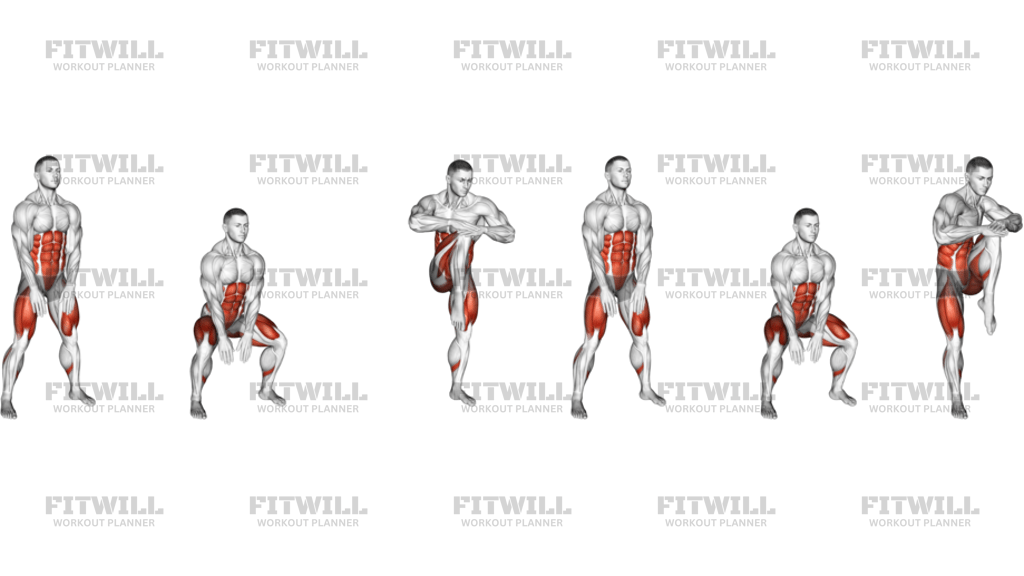
Instructions
- Stand with your feet about hip-width apart, toes slightly turned out, and your arms held forward at chest height for balance.
- Root your weight through the middle of each foot and heels, then brace your trunk before you start the first squat.
- Send your hips back and down until you reach a comfortable squat depth while keeping your chest lifted.
- Let your knees track in line with your toes instead of caving inward or drifting far past your toes.
- Drive through both feet to stand up tall without snapping your knees shut at the top.
- As you finish standing, lift one knee toward hip height and keep the opposite leg stacked and steady.
- Pause briefly in the high-knee position so your torso stays tall and your pelvis does not tip.
- Lower the raised foot with control, drop back into the next squat, and alternate sides for the planned reps.
Tips & Tricks
- Keep the squat shallow enough that you can still stand into a clean knee drive without rocking backward.
- Think about pushing the floor away on the way up rather than bouncing out of the bottom position.
- Hold the arms slightly forward and still; swinging them makes the knee lift sloppy and throws off balance.
- If the lifted knee makes your torso lean back, raise it only as high as you can without losing stacked ribs and hips.
- Press the standing knee gently out over the toes so the arch of that foot does not collapse inward.
- Use a brief pause at the top to make each side look the same before you lower into the next squat.
- Keep the descent quiet and controlled; a loud drop usually means you are collapsing into the bottom.
- Stop the set when the standing foot starts turning or the lifted leg begins to swing instead of lift.
Frequently Asked Questions
What muscles does High Knee Squat Version 2 work?
It mainly trains the quads, glutes, and core, with the hip flexors and calves helping during the knee drive and balance phase.
Is High Knee Squat Version 2 a squat exercise or a cardio drill?
It is both: the squat builds lower-body strength and control, while the knee drive adds a conditioning and coordination challenge.
Do I have to jump during High Knee Squat Version 2?
No. Keep it controlled unless your program specifically turns it into a plyometric version with an explosive rise.
How high should the knee come up?
Aim for about hip height as long as you can stay tall and balanced. If your torso leans back, bring the knee up a little less.
Can beginners do High Knee Squat Version 2?
Yes, if they keep the squat shallow at first and move slowly enough to balance on the standing leg before the next rep.
Why do my knees cave inward on this movement?
Usually the stance is too narrow or the foot arch is collapsing. Widen the stance slightly and press the knees gently out over the toes.
Should my arms stay in front of me the whole time?
Yes, keeping the arms forward helps counterbalance the squat and makes it easier to stay upright during the knee lift.
Where does High Knee Squat Version 2 fit in a workout?
It works well in a warm-up, athletic circuit, or lower-body conditioning block, especially when you want bodyweight work that still challenges control.