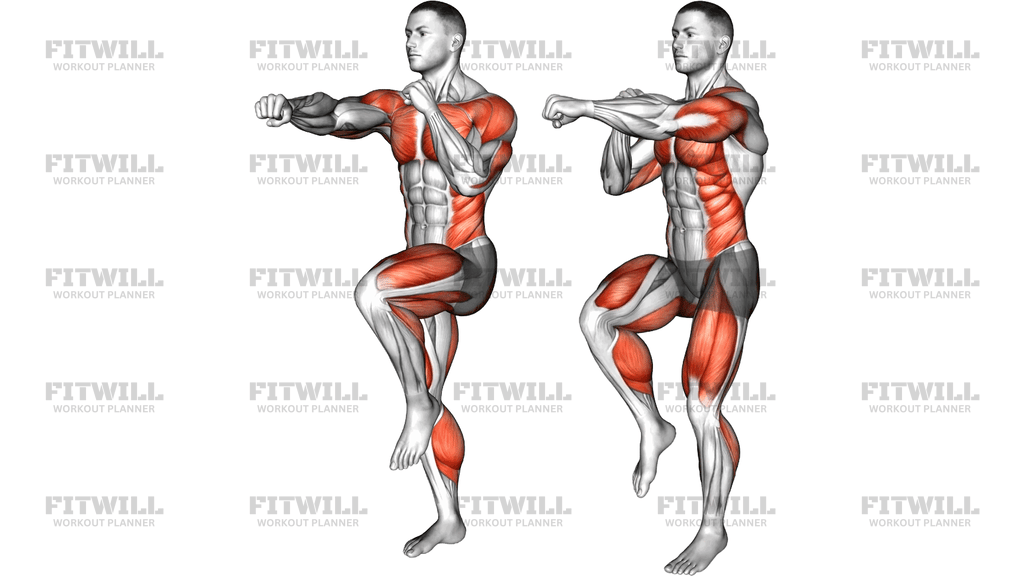
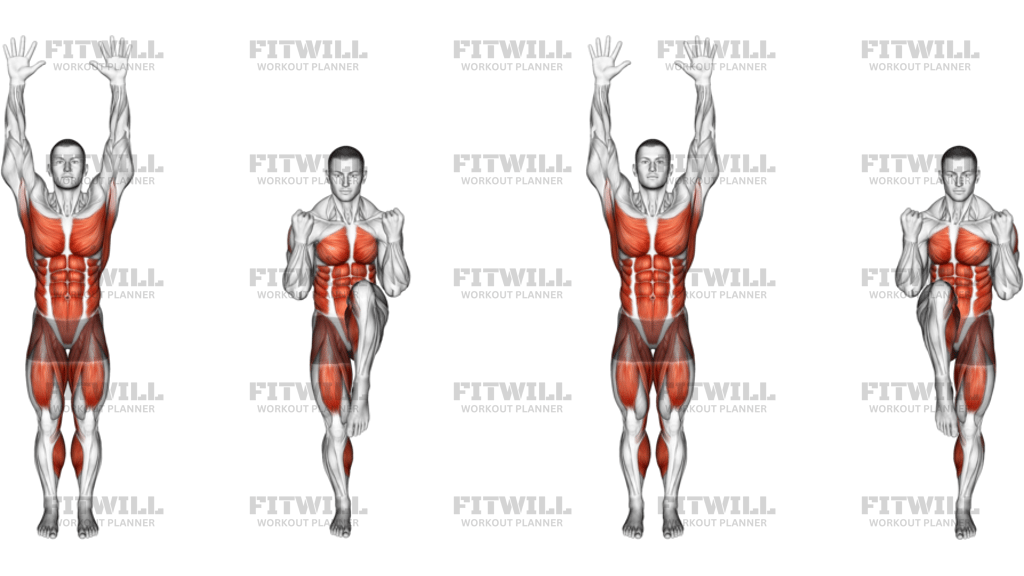
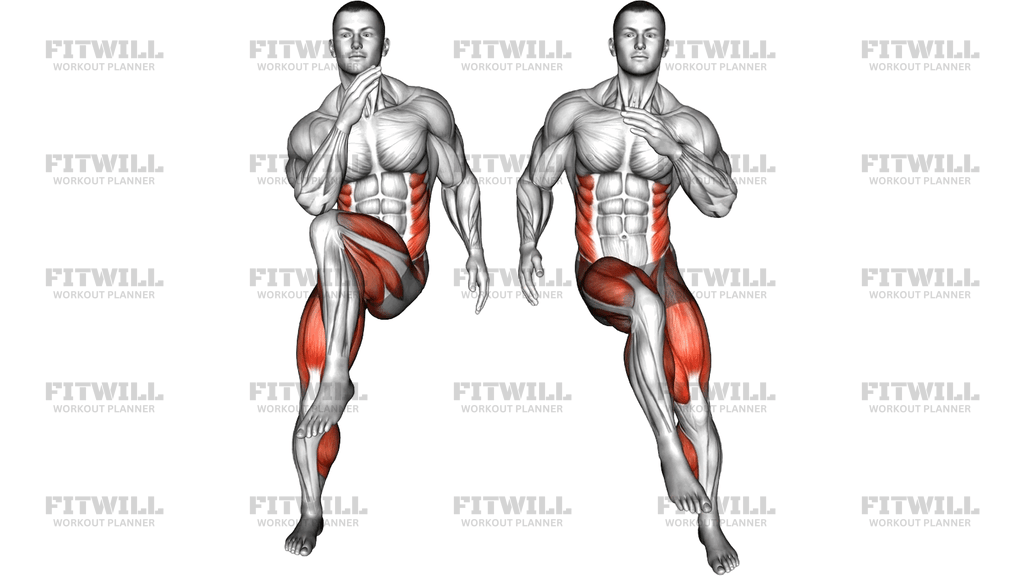
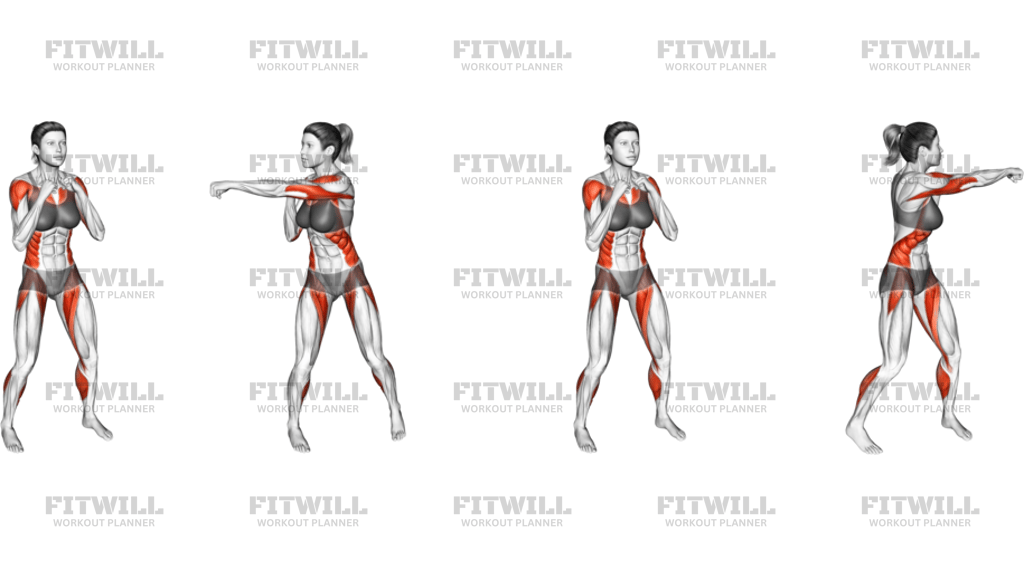
Jack Step
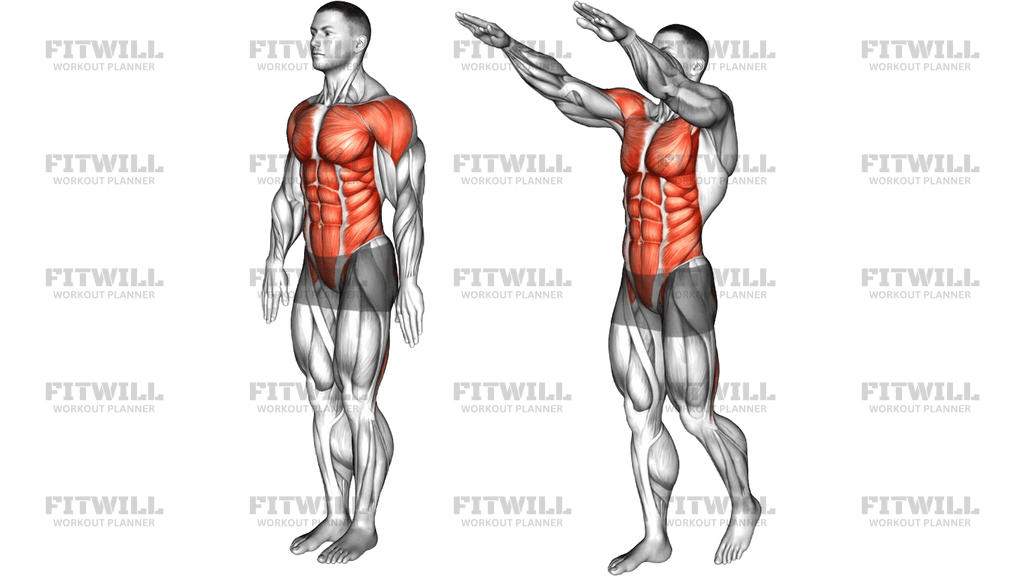
Jack Step is a low-impact jack pattern that trains coordination, rhythm, and whole-body control with nothing more than body weight. Instead of jumping both feet out at once, you step one leg out at a time while the arms travel overhead, which makes the movement useful for warm-ups, conditioning circuits, and general movement preparation.
The exercise puts most of its demand on the legs, shoulders, and trunk stabilizers. The stepping leg has to absorb body weight quietly, the opposite side has to stay organized, and the core has to keep the ribs from flaring as the arms rise. That combination makes Jack Step more than a simple cardio drill; it is also a clean way to rehearse posture, balance, and shoulder coordination.
The setup is simple, but it matters. Stand tall with your feet together, weight centered over the midfoot, and your arms relaxed at your sides. From there, each rep should feel like a controlled side step with an overhead reach, not a loose hop or a shrugging motion. The goal is to keep the torso stacked, the neck long, and the landings quiet enough that you can repeat the pattern without drifting out of rhythm.
Use Jack Step when you want a heart-rate bump without the impact of repeated jumps. It works well in warm-ups, light conditioning intervals, or as a reset between stronger strength sets. Beginners can learn it quickly because the range is small and the pattern is easy to repeat, but the exercise still rewards attention to arm path, foot placement, and breathing.
Keep the movement smooth from rep to rep. If the arms start to rush ahead of the feet, shorten the reach and clean up the timing. If the step becomes noisy or sloppy, slow the pace until each side lands under control. Done well, Jack Step gives you a simple, repeatable way to build movement quality while still raising body temperature and preparing the body for harder work.
Fitwill
Log Workouts, Track Progress & Build Strength.
Achieve more with Fitwill: explore over 9600 exercises with images and videos, access built-in and custom workouts, perfect for both gym and home sessions, and see real results.
Start your journey. Download today!




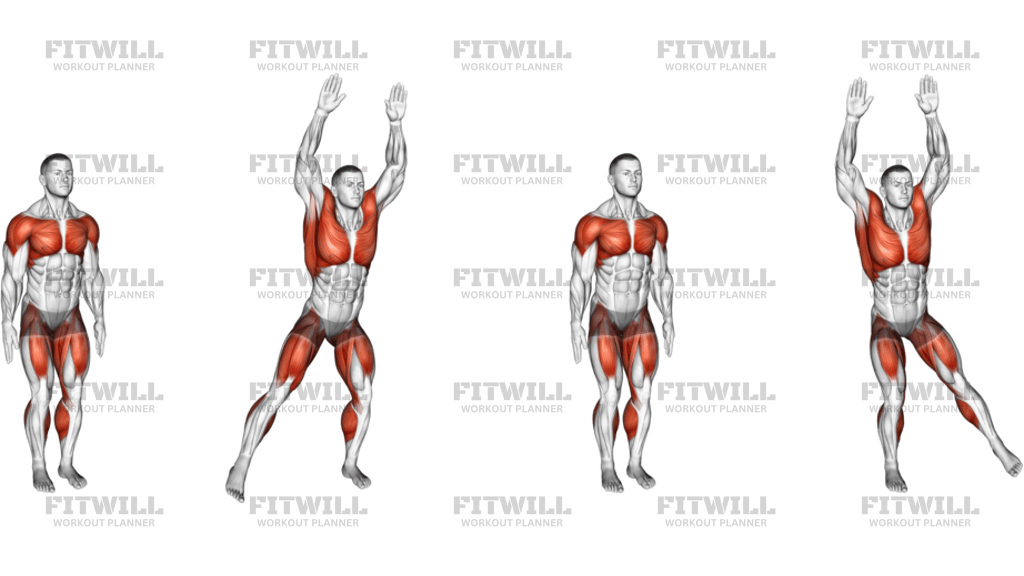
Instructions
- Stand tall with your feet together, arms relaxed at your sides, and your weight centered over the midfoot.
- Keep your chest up, ribs stacked over your pelvis, and your knees softly bent so the first step lands quietly.
- Brace your midsection lightly before you start so your torso stays steady as your arms travel.
- Step your right foot out to the side while both arms swing up overhead in one smooth motion.
- Bring your right foot back in to meet the left as you lower your arms back to your sides.
- Repeat on the other side by stepping your left foot out and reaching both hands overhead.
- Keep alternating sides at a steady rhythm, landing softly through the whole foot instead of bouncing off the toes.
- Let the shoulders stay down and the neck long as the arms rise so the reach does not turn into a shrug.
- Breathe out as the arms lift and in as you return to the center.
- Finish by stepping back to a neutral stance and standing tall before you stop or move to the next drill.
Tips & Tricks
- Treat the step as a side-to-side march, not a hop; if both feet leave the floor, you are turning it into a jumping jack.
- Stop the arm reach just short of a shrug if your shoulders feel tight overhead, especially during longer intervals.
- Land with a soft knee bend and even pressure through the foot so each step feels quiet rather than stamped.
- Keep your hands slightly in front of the ears on the way up instead of letting the arms drift behind your body.
- If your torso leans from side to side, shorten the step width and keep the sternum facing forward.
- Move at a pace that lets your feet and hands stay in sync; rushing the arms usually makes the pattern messy.
- Use Jack Step as a warm-up before lifting or as an easy cardio interval when you want movement without high impact.
- Keep the elbows softly unlocked so the overhead reach stays smooth instead of looking rigid.
- If your calves start taking over, slow the rhythm and roll through the whole foot on each landing.
- Choose flat, stable shoes and a non-slip surface if you plan to do this for repeated intervals.
Frequently Asked Questions
What muscles does Jack Step work?
Jack Step mainly uses the legs, shoulders, and core, with the calves and upper back helping to stabilize the repeated reach and step.
Is Jack Step a low-impact alternative to jumping jacks?
Yes. The alternating side step removes the full jump, so Jack Step is easier on the joints while still raising the heart rate.
Do my hands have to touch overhead in Jack Step?
No. Reach as high as your shoulders allow without losing rib position, and stop short if the overhead range turns into a shrug.
How is Jack Step different from a jumping jack?
A jumping jack moves both feet out at once, while Jack Step alternates one side at a time. That makes the pattern slower, more controlled, and usually less jarring.
Can beginners do Jack Step safely?
Yes. Start slowly, keep the step narrow, and focus on quiet landings and smooth arm timing before you speed it up.
Should I keep my core tight during Jack Step?
Keep the trunk lightly braced so the ribs do not flare as the arms rise. It should feel organized, not rigid.
What is the most common mistake in Jack Step?
Rushing the arm swing and letting the torso sway are the biggest problems. Slow the rhythm until each step lands under control.
How many reps of Jack Step should I do?
Use it for short conditioning bursts, warm-up sets, or time-based intervals. The right amount is usually whatever lets you keep the same rhythm and foot control through the last rep.