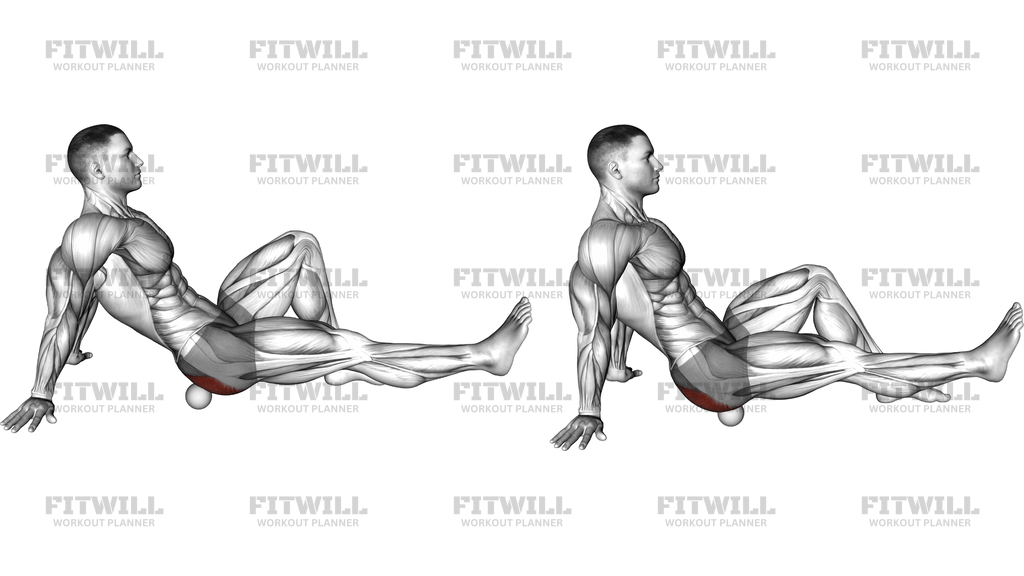
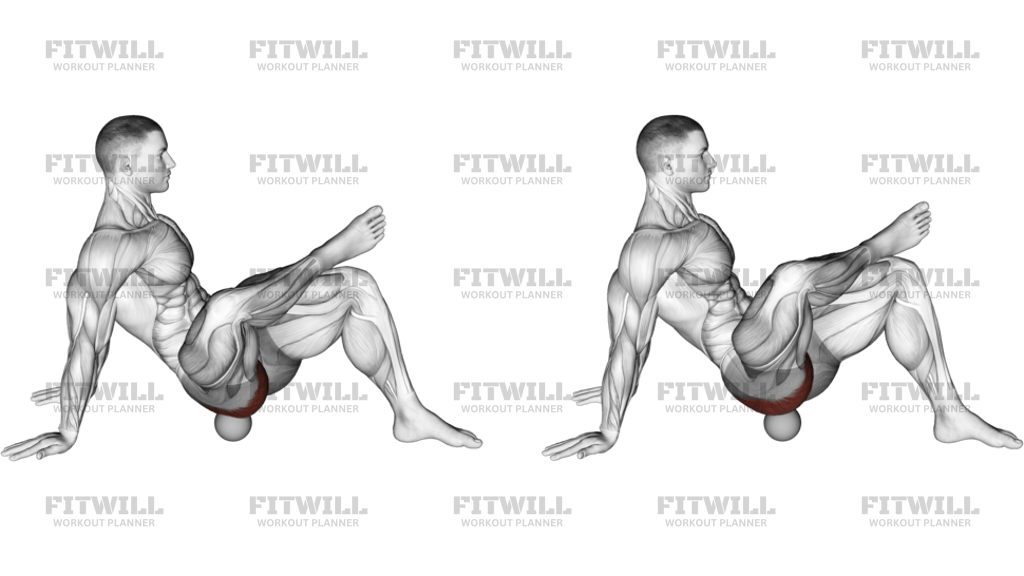
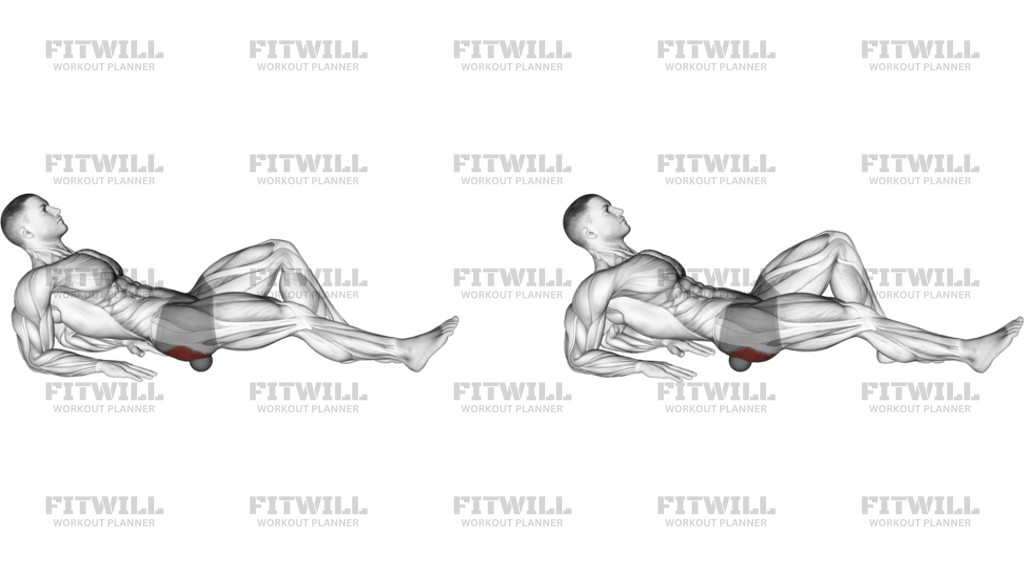
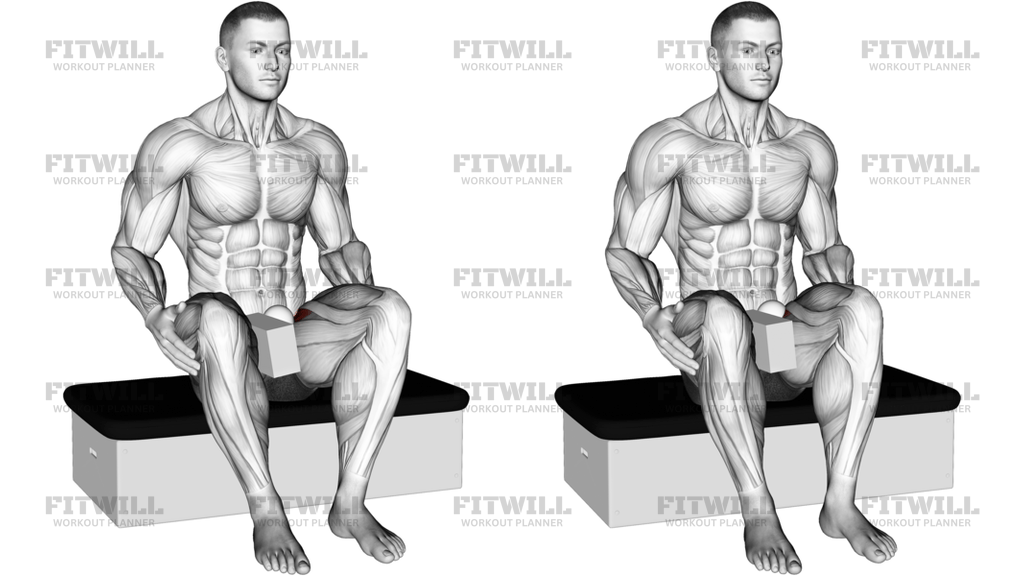
Roll Ball Rectus Abdominis
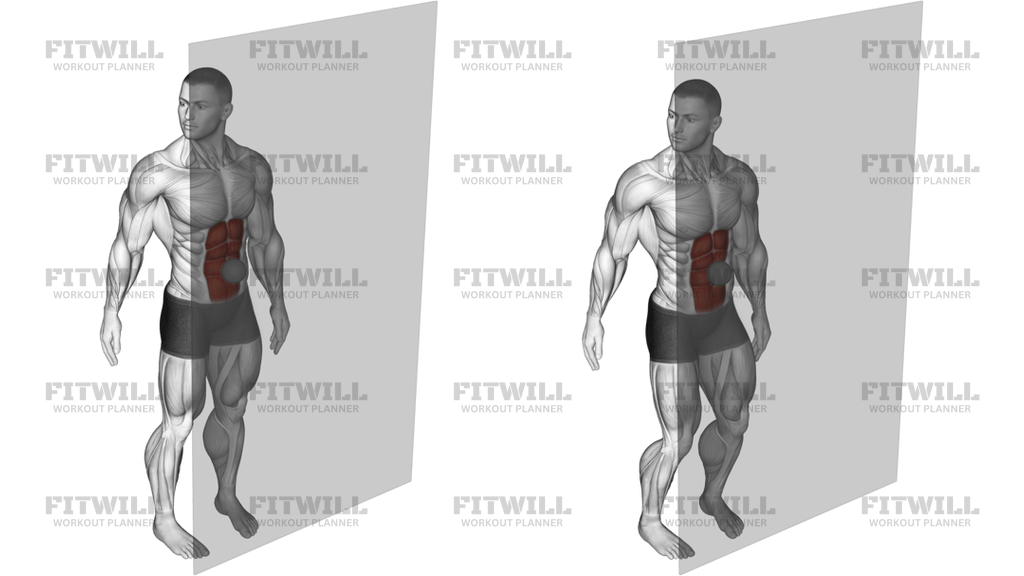
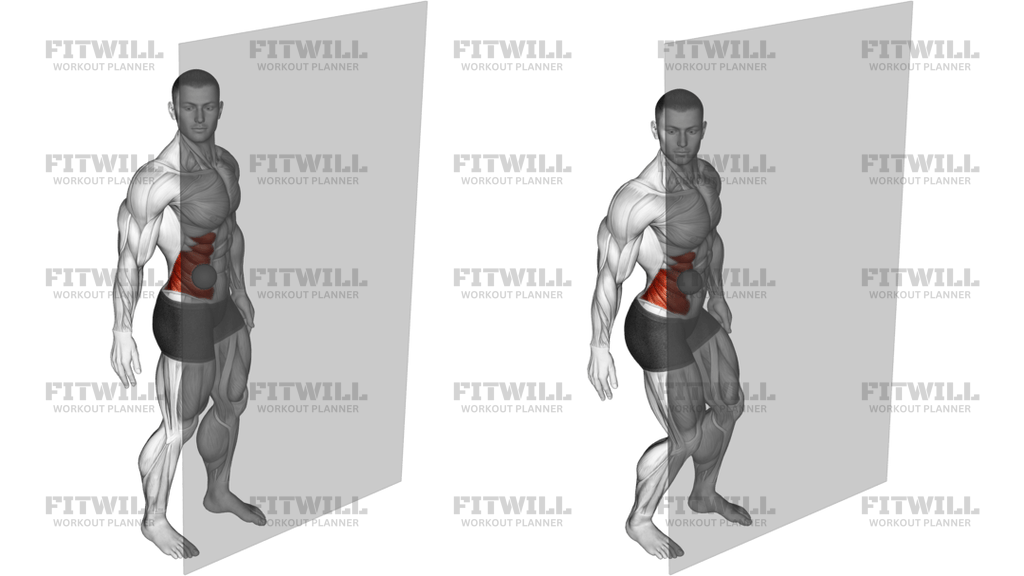
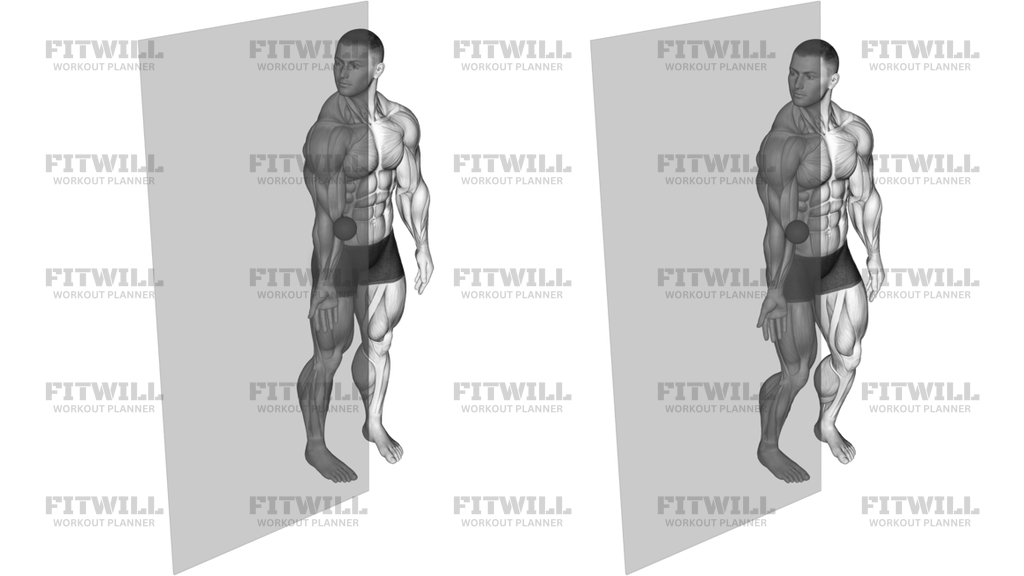
Roll Ball Rectus Abdominis is a standing core exercise built around controlled trunk flexion against a wall or upright support. The rollball sits at the front of the torso and gives you a clear surface to press into while you shorten the distance between your ribs and pelvis. The movement is small, deliberate, and much more about precision than load.
The main job is to train the rectus abdominis while the obliques, deep core, and hip stabilizers help you keep your torso stacked. That makes Roll Ball Rectus Abdominis useful when you want abdominal work without lying on the floor or yanking through the neck and hip flexors. The wall contact also gives you feedback, so you can feel whether the rib cage is drifting, the pelvis is tipping, or the shoulders are doing too much.
A good setup matters more here than on many other ab exercises. Place the ball at the front of your midsection, step into a balanced stance, and keep a soft bend in the knees so you can brace without locking out or swaying. As you exhale, tuck the ribs down toward the pelvis and let the ball travel only as far as you can keep the torso organized. If the movement turns into a hip hinge or a shoulder press, the abs stop doing the main work.
The best repetitions look controlled from start to finish. Use a range that lets you keep steady pressure into the ball, then return slowly to the tall standing position without losing contact or letting the low back arch. The rep should feel like a deliberate abdominal contraction, not a bounce or a twist. If you need to rush to make the ball move, the set is too heavy or the range is too large.
Roll Ball Rectus Abdominis works well as accessory core work, a warm-up drill before heavier lifting, or a higher-rep abdominal block when you want tension without a lot of spinal movement. It can suit beginners because the wall gives clear feedback, but the exercise still demands control. Keep the motion honest, keep the breathing purposeful, and stop the set as soon as the trunk position starts to drift.
[ Workout Log & Planner ]
Put your next workout in Fitwill
Keep your plan and training log ready when you are.


Instructions
- Stand tall with the rollball pressed against the front of your abdomen and the wall or upright support behind it.
- Set your feet about hip-width apart, stagger one foot slightly if needed, and keep both knees softly bent.
- Center your rib cage over your pelvis so you are not leaning back or pushing your hips forward.
- Take a breath in, then brace lightly as if you are preparing for a small standing crunch.
- Exhale and shorten your torso by drawing your ribs toward your pelvis while keeping steady pressure on the ball.
- Let the ball travel only a short distance if that is all you can control without lifting your shoulders or arching your low back.
- Pause briefly at the tightest point, then inhale and return to the tall standing position under control.
- Reset your posture between reps and repeat for the planned number of repetitions.
Tips & Tricks
- Keep the ball centered on your midsection; if it rides too high, the movement tends to become a shoulder shrug instead of an abdominal crunch.
- Think about closing the space between your ribs and pelvis rather than bending at the hips.
- A small range is fine here if it lets you keep the rectus abdominis loaded instead of bouncing through the rep.
- Exhale fully as you crunch so the rib cage can drop without forcing your neck forward.
- If your low back arches at the end of the return, shorten the range and keep a slight posterior pelvic tilt.
- Use a light, stable rollball that stays in place; a slippery ball makes the set turn into a balance drill.
- Keep the pressure into the wall consistent so the ball does not drift or wobble side to side.
- Stop the set when you start hinging from the hips or letting one shoulder roll forward more than the other.
Frequently Asked Questions
What muscles does Roll Ball Rectus Abdominis work?
It mainly targets the rectus abdominis, with the obliques and deep core helping you keep the torso stacked against the wall.
Where should the rollball sit during Roll Ball Rectus Abdominis?
Keep it against the front of your midsection, usually around the navel to lower-rib area, so the abs can shorten without the ball riding up into the chest.
Is Roll Ball Rectus Abdominis a beginner-friendly core exercise?
Yes, because the wall gives clear feedback and the range is easy to control. Start with a small crunch and focus on keeping the ribs and pelvis lined up.
Should I feel Roll Ball Rectus Abdominis in my neck or hips?
No, the main sensation should stay in the front of the abdomen. If the neck or hip flexors take over, reduce the range and keep the exhale tied to the crunch.
How far should I move the ball on each rep?
Only as far as you can keep steady pressure into the wall and avoid arching the low back. For this exercise, a smaller but cleaner rep is better than a bigger one with lost tension.
Can I use Roll Ball Rectus Abdominis as a warm-up?
Yes. It works well before heavier lifts because it wakes up the trunk without exhausting you the way a long floor core circuit can.
What is the most common mistake in Roll Ball Rectus Abdominis?
Most people either shrug the shoulders or hinge from the hips. Keep the torso stacked and let the abs create the movement instead of the upper body swinging.
How can I make Roll Ball Rectus Abdominis harder without changing the exercise?
Use a slower return, a tighter exhale at the top, or a slightly longer pause in the shortened position while keeping the ball steady against the wall.