Kettlebell Press-Up
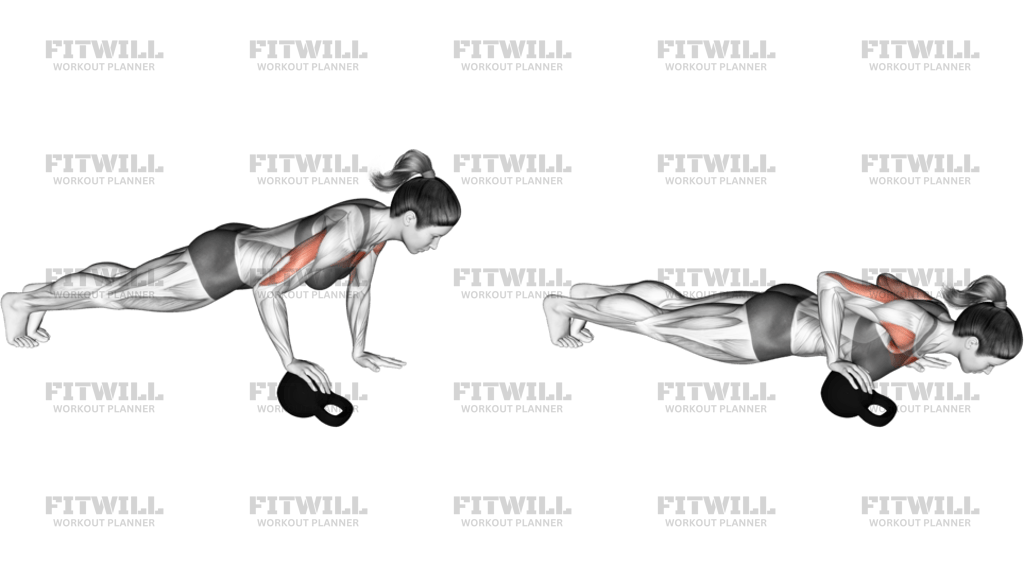
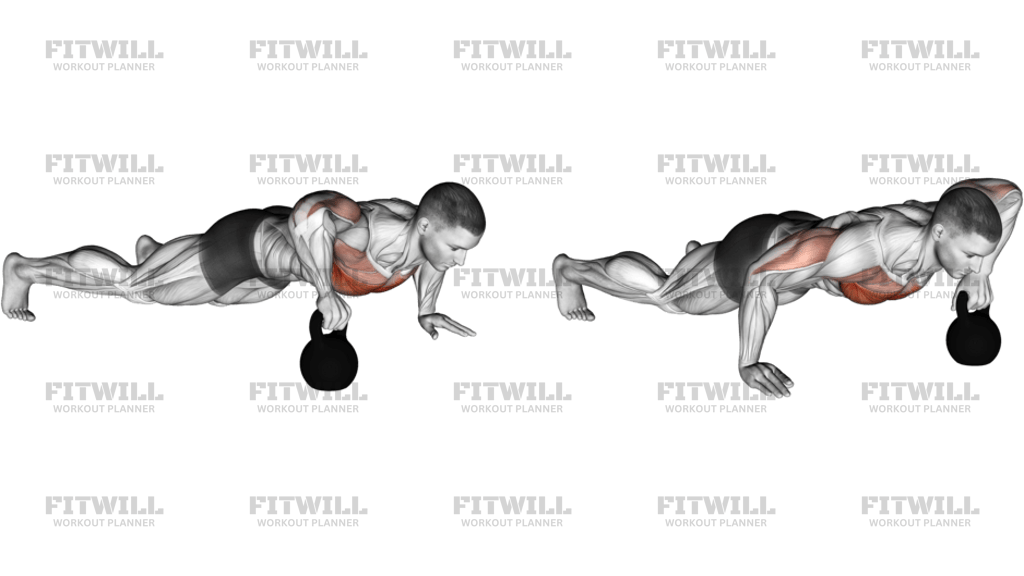
Kettlebell Press-Up is a push-up variation that places each hand on a kettlebell handle instead of flat on the floor. That neutral hand position can feel friendlier on the wrists while also forcing the shoulders, chest, triceps, and core to work a little harder to keep the bells steady. The exercise is simple in appearance, but the kettlebells add enough instability that every rep depends on clean body tension and even pressure through both hands.
The main training effect comes from pressing strength with extra stabilization. The chest and triceps drive the lift, while the front shoulders, serratus, and trunk muscles keep the torso from sagging, twisting, or drifting forward. Because the hands sit higher than the floor, the range of motion is slightly deeper than a standard push-up, so the bottom position can give you a stronger stretch if you keep your shoulders controlled.
The setup matters as much as the press itself. Place the kettlebells on a flat surface so the handles are parallel and spaced just wider than shoulder width, then grip the handles with your wrists stacked in a neutral line. A rigid high-plank position makes the rep cleaner: ribs down, glutes tight, legs long, and head in line with the spine. If the bells are too close together or unevenly placed, the set becomes a balancing drill instead of a pressing exercise.
On each repetition, lower with control until your chest approaches the line between the bells, then press the floor away through the handles and return to a straight-arm plank. Keep your elbows at a comfortable angle instead of flaring them hard to the sides, and let the shoulder blades move naturally without collapsing between your hands. Breathing should stay steady, with a controlled inhale on the way down and a forceful exhale as you press up.
Kettlebell Press-Up works well as an accessory movement in upper-body strength work, a chest-focused session, or a core-and-pressing circuit. It is especially useful when you want a pressing pattern that challenges wrist comfort, shoulder control, and anti-rotation strength at the same time. Beginners can use it if they can hold a solid plank, but the set should stop as soon as the hips start to sag, the bells wobble, or one side begins to press harder than the other.
[ Workout Log & Planner ]
Put your next workout in Fitwill
Keep your plan and training log ready when you are.


Instructions
- Place two kettlebells on a flat floor, handles parallel and slightly wider than shoulder width.
- Grip the handles and walk your feet back into a high plank with your shoulders stacked over the kettlebells.
- Set your feet hip-width apart, squeeze your glutes, and brace your ribs down so your body forms one straight line.
- Keep your neck long and your eyes slightly ahead of the bells before you begin the first rep.
- Lower your chest between the kettlebells by bending your elbows at about 30 to 45 degrees from your sides.
- Descend until your chest is just above the handles or as low as you can without losing a flat torso.
- Press through both handles evenly and exhale as you drive back to a strong plank.
- Reset your shoulders and keep the bells steady before starting the next rep.
- Lower the kettlebells or step back from the set once your hips, elbows, or shoulder position starts to slip.
Tips & Tricks
- Space the kettlebells so your forearms stay vertical at the bottom; if they are too wide, your shoulders will drift forward.
- Keep both palms squeezing the handles evenly so one kettlebell does not tip or take more load than the other.
- Think about pulling your ribs away from the floor on the descent to stop your lower back from sagging.
- If your wrists feel better on kettlebells than on the floor, keep the handles centered in your palms and do not let your hands collapse inward.
- A slow three-count lowering phase makes the instability more useful and keeps the chest from bouncing off the bottom.
- Let the elbows track naturally at a shallow angle; flaring them hard usually shifts stress toward the shoulders.
- Use a shorter range of motion if you lose body tension before your chest reaches the bells.
- If the bells wobble, lighten the set or move to a higher hand position before chasing more reps.
Frequently Asked Questions
What muscles does Kettlebell Press-Up work?
It mainly trains the chest and triceps, with the front shoulders and core working hard to keep the body steady between the kettlebells.
Why do the hands stay on kettlebells instead of the floor?
The handles keep your wrists in a neutral position and let your chest travel a little deeper between the bells, which increases the demand on both pressing strength and control.
How wide should the kettlebells be set?
Place them just wider than shoulder width so your forearms stay fairly vertical and your shoulders do not drift too far forward.
Is Kettlebell Press-Up easier on the wrists?
Usually yes, because the neutral grip reduces wrist extension compared with a flat-hand push-up.
Can beginners use this variation?
Yes, if they can hold a strong plank and lower under control. Start with light bells or an elevated setup if the bottom position feels unstable.
What if the kettlebells wobble during the rep?
That usually means your hands are uneven or your torso is drifting side to side. Reset the bells, shorten the set, or choose a more stable variation.
How deep should I go on Kettlebell Press-Up?
Lower until your chest is just above the handles or until your torso starts to lose its straight line. Depth should come from control, not from dropping into the bottom.
How can I make Kettlebell Press-Up harder?
Slow the lowering phase, pause near the bottom, or elevate your feet once you can keep the bells perfectly steady.