Kettlebell Bent Press
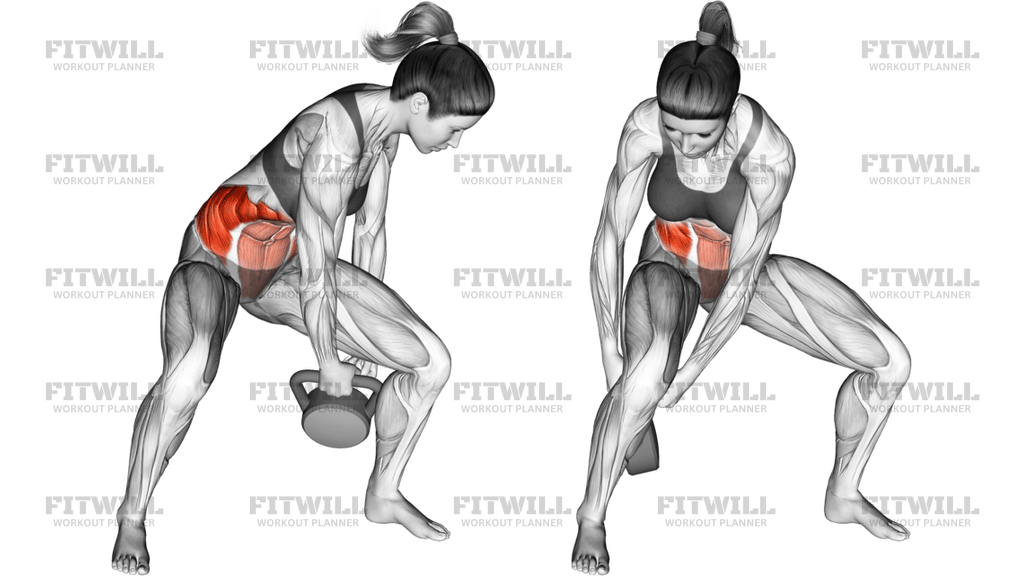
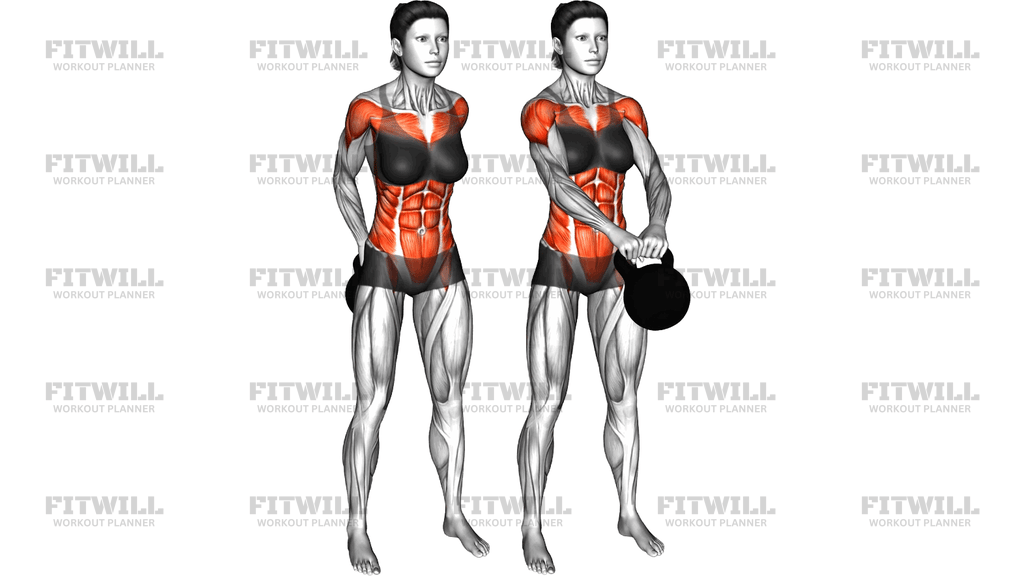
Kettlebell Bent Press is a one-arm kettlebell strength skill that combines an overhead lockout, a controlled side bend, and a standing return. The image shows the bell held overhead while the torso folds away from it, which is the key idea of the lift: the weight stays stacked over the shoulder while your body moves around it. That makes the bent press useful for shoulder stability, oblique strength, hip control, and body awareness under load.
This movement is not a straight press and it is not a dumbbell side bend. The rack position, overhead lockout, and the angle of the torso all matter because they keep the bell balanced over the base of support. When the setup is clean, the rep feels smooth and economical; when the setup is off, the shoulder drifts forward, the ribcage twists, and the rep turns into a grind. A controlled bent press rewards patience more than force.
Start each repetition with the kettlebell in a solid rack position, then press it to a stable overhead lockout before you shift the hips and let the torso lean away from the bell. The free hand slides down the leg for balance while the working arm stays vertical. At the bottom, the body is bent under the load with the shoulder still packed and the wrist stacked over the elbow. From there, stand the body back up under the bell rather than trying to pull the bell down.
Because the exercise asks for both mobility and stability, it fits best as a technique drill, accessory strength movement, or a focused core-and-shoulder accessory on days when you want controlled tension rather than speed. It can be a very effective unilateral strength exercise, but only if the bell is light enough to keep the overhead line clean and the torso movement deliberate.
Treat every rep like a practice rep. If the shoulder feels unstable, the elbow bends, or the torso twists hard to one side, reduce the load and shorten the range until the overhead position stays organized. A good bent press should look smooth, deliberate, and repeatable from the first rep to the last.
Fitwill
Log Workouts, Track Progress & Build Strength.
Achieve more with Fitwill: explore over 9600 exercises with images and videos, access built-in and custom workouts, perfect for both gym and home sessions, and see real results.
Start your journey. Download today!




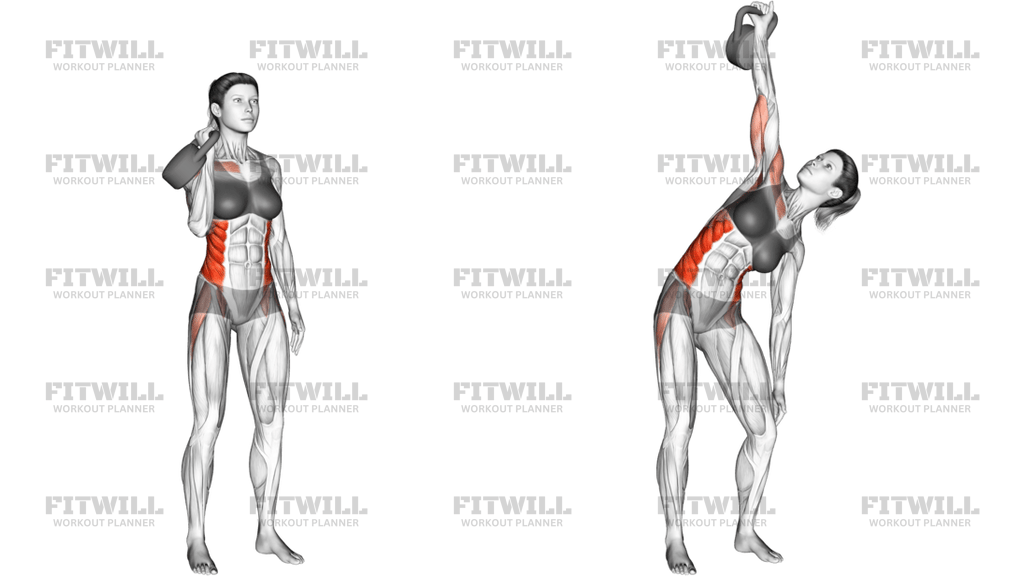
Instructions
- Clean the kettlebell into a rack position at one shoulder, with the bell resting against the forearm and the wrist straight.
- Set your feet about shoulder-width apart and point the toes slightly out so you can shift your hips and torso without losing balance.
- Press the kettlebell overhead until the elbow is locked, the shoulder is packed, and the bell sits directly above the shoulder.
- Keep your eyes on the bell, brace your midsection, and let the free hand hover near the hip or thigh for balance.
- Shift the hips slightly toward the kettlebell side, then hinge the free-side hip back as the torso begins to lean away from the bell.
- Slide the free hand down the outside of the free leg while keeping the loaded arm vertical and the wrist stacked over the elbow.
- Lower until you reach the deepest stable side-bent position you can control without the shoulder drifting forward or the elbow softening.
- Drive through both feet to stand the torso back up under the kettlebell, keeping the arm locked overhead until you are tall again.
- Bring the bell back to the rack with control, then repeat on the other side after the planned reps are complete.
Tips & Tricks
- Keep the kettlebell stacked over the shoulder the whole time; if it drifts forward, the press becomes a shoulder strain instead of a bent press.
- Let the torso move around the bell instead of trying to side-bend the bell down. The arm should stay nearly vertical through the rep.
- A slightly turned-out free foot often makes the hip shift and torso lean feel smoother and gives you more room to sit under the load.
- Use the free hand as a guide on the thigh or shin, not as a support post. It helps balance, but it should not pull you through the rep.
- Keep the ribs from flaring hard overhead. A stacked ribcage makes the lockout feel stronger and protects the low back.
- Exhale as you stand the body back up under the kettlebell, then reset your breath before the next rep.
- If the elbow bends or the wrist folds back in the top position, the load is too heavy or the shoulder is not ready for the range.
- Use a light bell at first. The bent press is a technique lift, and a smaller kettlebell often produces a cleaner line than a heavier one.
Frequently Asked Questions
What does the kettlebell bent press train most?
It trains the shoulder lockout, obliques, lats, and hip control together. The bell stays overhead while the torso moves around it.
Is the kettlebell bent press the same as a side bend?
No. In a bent press the kettlebell stays locked overhead while the body bends and stands back up underneath it.
How should the kettlebell sit at the top of the rep?
It should be stacked directly over the shoulder with the elbow locked and the wrist neutral, not pushed forward in front of the body.
Where should my free hand go during the bent press?
Let it slide down the outside of the free leg for balance. It helps you find the lean without turning the movement into a twist.
How far should I lower myself in the side-bent position?
Go only as low as you can while keeping the arm vertical and the shoulder packed. Depth matters less than a clean stacked line.
Can beginners do the kettlebell bent press?
Yes, but only with a very light kettlebell and a clean overhead lockout first. It is a technique-heavy lift, so control matters more than load.
What is a common mistake to avoid?
The biggest mistake is letting the bell drift forward or the elbow bend. That turns the rep into a shaky press instead of a controlled bent press.
How should I progress this exercise?
Add load only after you can keep the overhead line clean, the torso movement smooth, and the return to standing controlled on both sides.