Kettlebell Concentration Curl
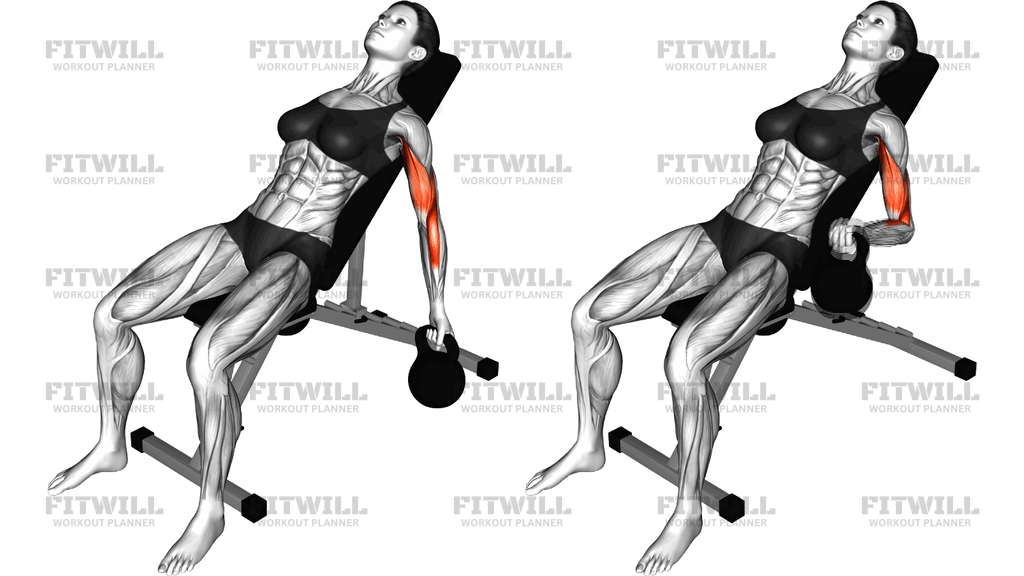
Kettlebell Concentration Curl is a strict single-arm curl built around a seated, supported setup that strips away most of the cheating you can get from body swing. The working elbow is braced against the inner thigh, so the arm has to do the job from a dead-hang position to a hard squeeze at the top. That makes it a useful choice when you want focused arm work, cleaner elbow flexion, and a strong biceps stimulus without turning the set into a full-body heave.
The exercise is especially valuable when you want to isolate one arm at a time and expose side-to-side differences. Because the upper arm stays pinned to the thigh, the kettlebell cannot be lifted by leaning back, shrugging the shoulder, or using a big torso sway. The forearm and grip still have to stabilize the handle, but the main challenge is keeping the curl strict enough that the biceps stay loaded through the entire path.
The setup matters more here than it does in many other curls. Sit on the edge of a flat bench, plant both feet, and hinge forward just enough that the working elbow can rest securely against the same-side inner thigh. Keep the chest over the thigh, the non-working hand on the other leg for balance, and the wrist stacked so the kettlebell hangs straight down before the first rep. If the elbow slides off the thigh or the shoulder rolls forward, the rep gets harder to control and the tension shifts away from the arm.
On each repetition, curl the kettlebell smoothly toward the same-side shoulder while keeping the upper arm fixed in place. Let the forearm rotate naturally into a palm-up position as the bell rises, then lower it under control until the arm is almost straight again. The top position should feel like a hard biceps squeeze, not a shrug, and the descent should stay slow enough that the bell does not swing past the leg. Exhale on the way up and inhale as you lower, especially if you are using a load that makes the last few reps slow.
Kettlebell Concentration Curl works well as accessory volume after heavier pressing or pulling, as a focused arm finisher, or as a beginner-friendly way to learn strict curling mechanics. It also helps lifters who tend to cheat on standing curls because the thigh support makes compensation obvious. Use a moderate load that lets you keep the elbow planted, the wrist quiet, and the shoulder relaxed; once those details disappear, the set is no longer a true concentration curl.
Fitwill
Log Workouts, Track Progress & Build Strength.
Achieve more with Fitwill: explore over 9600 exercises with images and videos, access built-in and custom workouts, perfect for both gym and home sessions, and see real results.
Start your journey. Download today!




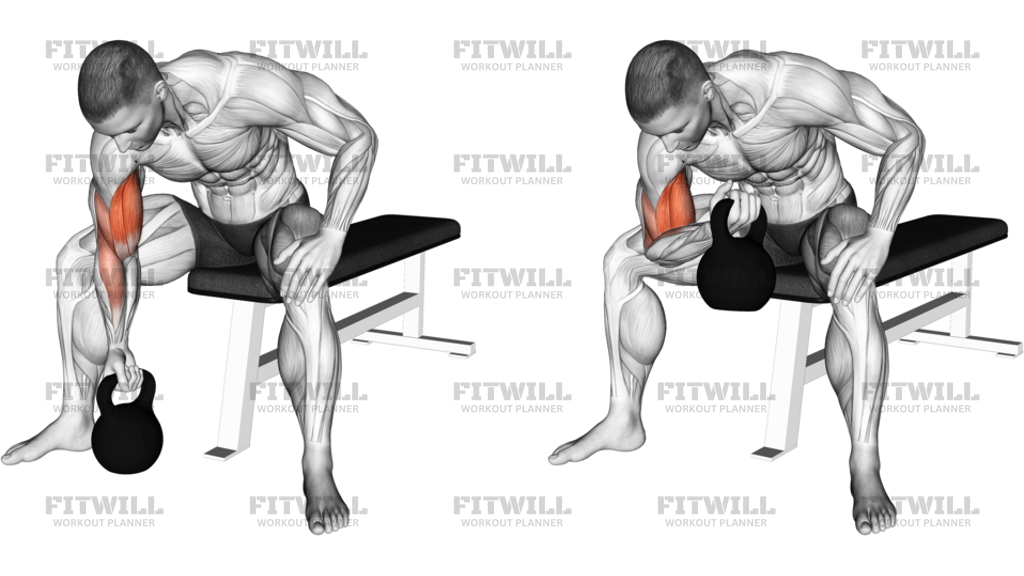
Instructions
- Sit on the edge of a flat bench with both feet flat and lean forward until your working elbow can rest inside the same-side thigh.
- Hold the kettlebell in the working hand and let it hang straight down with your wrist neutral and your non-working hand braced on the opposite thigh.
- Plant both feet firmly, keep your chest over the thigh, and set your shoulder down so the arm starts long and relaxed.
- Curl the kettlebell toward the same-side shoulder while keeping the upper arm glued to the thigh and the elbow from drifting forward.
- Let your palm turn up naturally as the bell rises and keep the wrist stacked over the forearm instead of bending back.
- Squeeze the biceps at the top for a brief moment without letting the shoulder roll forward or the torso rock back.
- Lower the kettlebell slowly until the arm is almost straight and the bell hangs under control beside the floor.
- Reset the bell before switching sides and repeat for the planned number of repetitions.
Tips & Tricks
- Set the bench low enough that the elbow can press into the inner thigh without the shoulder hunching up.
- Keep the working heel planted; if the foot lifts, the torso usually starts helping the curl.
- Think about drawing the pinky slightly toward your shoulder on the way up to finish the palm-up position cleanly.
- Use a load that lets the kettlebell stay quiet at the bottom instead of swinging forward off the leg.
- If the elbow slides off the thigh, move your torso a little farther forward and restart the set.
- Do not let the wrist fold back over the handle; stack the knuckles over the forearm so the bell stays stable.
- A two- to three-second lowering phase keeps tension on the biceps and stops the rep from becoming a drop.
- Stop the set when you have to shrug the working shoulder or lean back to get the bell up.
- Match both sides carefully; this curl is useful for noticing when one arm finishes lower or rotates slower than the other.
- Keep the non-working hand heavy on the opposite thigh so the torso does not twist as fatigue builds.
Frequently Asked Questions
What muscles does Kettlebell Concentration Curl train?
It mainly trains the biceps, with the brachialis, brachioradialis, and forearm grip muscles helping to control the kettlebell.
Why is my elbow pressed into my thigh during Kettlebell Concentration Curl?
That support point keeps the upper arm from swinging and forces the curl to stay strict. If the elbow slides off the thigh, the exercise becomes much easier to cheat.
Should I rotate my wrist as I lift the kettlebell?
Yes, let the forearm naturally turn so the palm finishes up near the top. The rotation should feel smooth, not forced.
How heavy should the kettlebell be for this curl?
Use a weight that lets you keep the elbow pinned and lower the bell slowly for all reps. If the bell swings or the shoulder takes over, it is too heavy.
Is Kettlebell Concentration Curl good for beginners?
Yes. The bench support makes it easier to learn strict curling mechanics, but beginners should start light and keep the upper arm locked to the thigh.
What is the most common mistake with this movement?
Leaning back and turning it into a body English curl is the big one. Keep the chest over the thigh and let only the forearm move.
Can I do Kettlebell Concentration Curl one arm at a time in a full arm workout?
Yes, it fits well as an accessory movement after heavier pressing or pulling. Alternate arms or finish one side before switching, depending on how you want to manage fatigue.
What should I do if the kettlebell bumps my foot or the bench?
Move the working foot slightly wider and keep the bell hanging just in front of the shoe. The bell should travel straight up and down beside the leg, not swing under the bench.