Kettlebell Seesaw Press
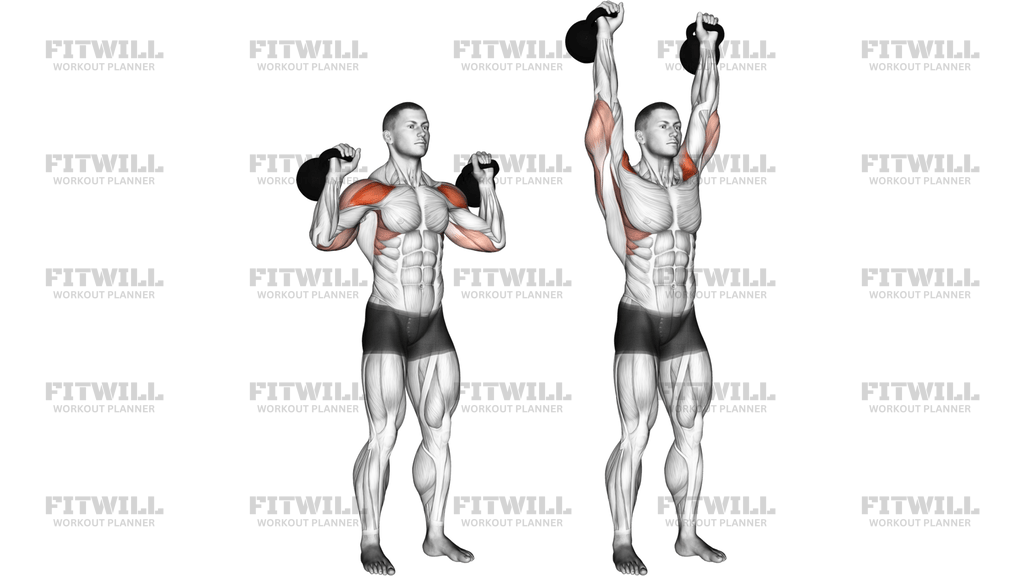
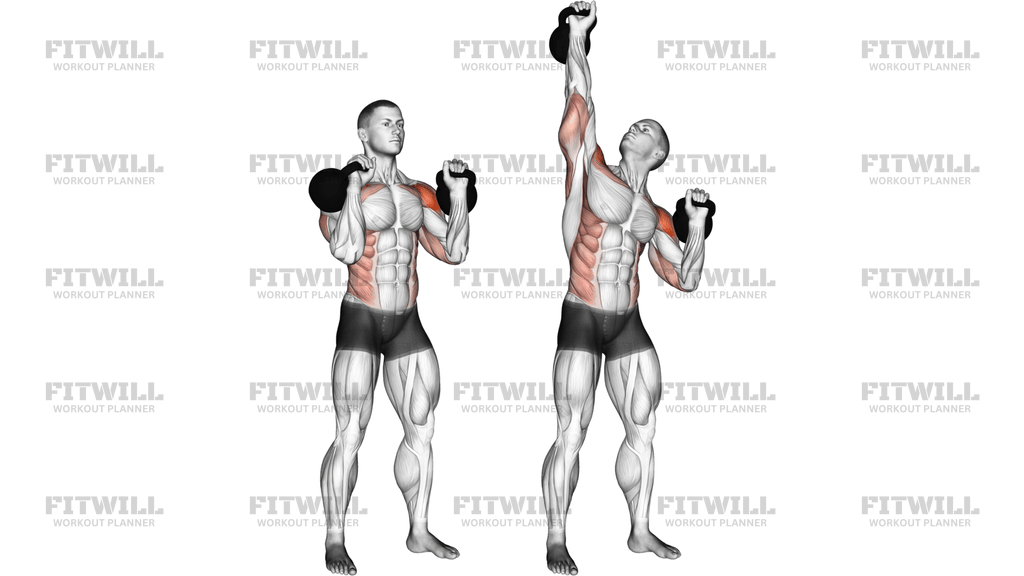
Kettlebell Seesaw Press is a standing alternating overhead press that keeps one arm working while the other stays loaded in the rack position. It is a clean way to train shoulder strength, triceps drive, and upper-back stability without turning the set into a full-body heave. The alternating pattern makes each rep feel deliberate, so posture, wrist position, and breathing matter just as much as the press itself.
Because both bells start at the shoulders, the exercise asks you to stabilize before you press. That is what gives Kettlebell Seesaw Press its value: one arm drives overhead while the opposite side resists rotation and keeps the torso from tipping. The delts do most of the pressing, while the traps, serratus, triceps, and upper back help guide the bell and keep the shoulder centered under load.
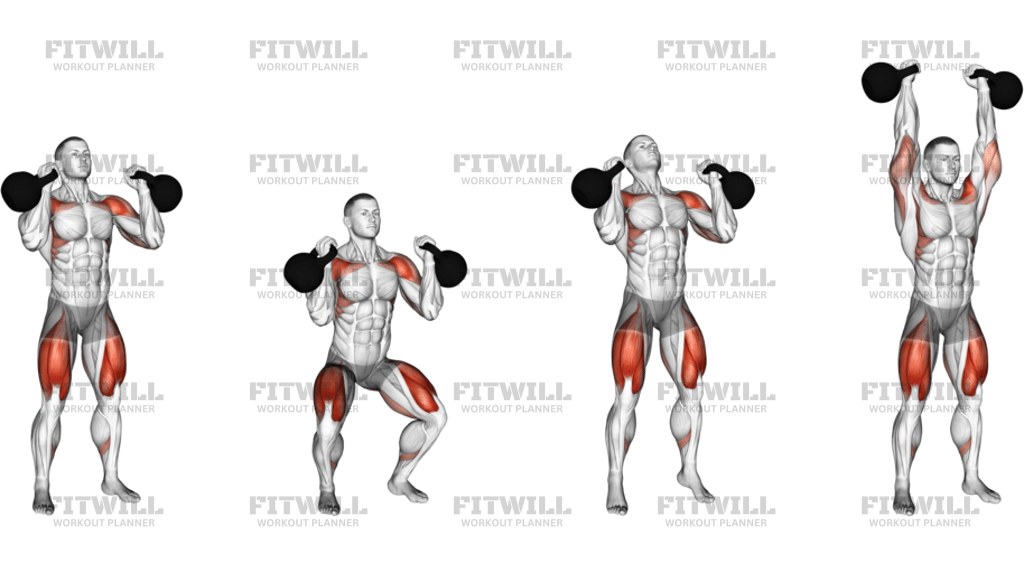
Set your feet under your hips, stand tall, and keep the kettlebells parked at shoulder height with the elbows slightly in front of the ribs. From there, one bell presses straight up as the other stays quietly in the rack instead of drifting forward or flaring out. The overhead arm should finish stacked over the shoulder and midfoot, not pushed out in front of you, and the lowering side should come back under control before the next rep starts.
A good set of Kettlebell Seesaw Presses feels smooth, not rushed. Exhale as you drive the bell overhead, then take a controlled breath as it returns to the shoulder and the other side takes over. If your lower back arches, your ribs pop up, or you lean toward the working arm, the load is too heavy or the pace is too fast for the current set.
This is a useful accessory press for upper-body strength sessions, shoulder-focused training, and conditioning blocks where you want more work per rep than a simple single-arm press. It can also fit well after the main lift when you want to challenge shoulder endurance and anti-rotation control. Keep the range pain-free, finish each rep in a stable overhead position, and end the set with both bells returned to the rack before lowering them to the floor.
Fitwill
Log Workouts, Track Progress & Build Strength.
Achieve more with Fitwill: explore over 9600 exercises with images and videos, access built-in and custom workouts, perfect for both gym and home sessions, and see real results.
Start your journey. Download today!




Instructions
- Stand with your feet about hip-width apart and bring a kettlebell into each shoulder rack position, with the handles resting deep in your palms and the elbows slightly in front of your torso.
- Stack your wrists over your elbows, keep the bells close to the front of your shoulders, and brace your glutes and abs so your ribs stay down.
- Press one kettlebell straight overhead until the arm is locked out and the biceps are near the ear, while the opposite bell stays quiet in the rack.
- Keep the working side stacked over the midfoot and avoid leaning away from the pressing arm as the bell travels up.
- Lower the overhead kettlebell back to the same shoulder under control, letting the elbow come down in front of the ribcage rather than dropping behind you.
- As soon as the first bell returns to the rack, press the opposite kettlebell overhead in the same path so the shoulders alternate like a seesaw.
- Breathe out on each press and inhale as the kettlebell comes back to the shoulder and you prepare the next side.
- Finish the last rep by bringing both bells back to the rack, then lower them to the floor with control if the set is complete.
Tips & Tricks
- Keep the non-working kettlebell parked at the shoulder; if it floats forward, the torso usually starts twisting with it.
- Think about pressing slightly back and up so the wrist, elbow, and shoulder finish stacked over the midfoot instead of in front of it.
- If your ribs flare as the bell rises, lower the weight and shorten the set before your lower back starts helping the press.
- A neutral wrist matters here: let the handle sit deep in the hand instead of letting the bell fold the wrist backward at the top.
- Use a slower lowering phase than the press; the return to the rack is where many lifters lose shoulder position.
- Keep the elbow from drifting wide during the transition, especially when the opposite arm takes over.
- Light to moderate kettlebells usually work better than heavy ones because the alternating pattern adds a lot of stabilization demand.
- If the bells bang together or the shoulders shrug hard, the load is too aggressive for a strict seesaw press.
- Stop the set when one side can no longer lock out cleanly without a hip shift or a side bend.
Frequently Asked Questions
What does Kettlebell Seesaw Press train most?
It mainly trains the shoulders, especially the delts, with strong help from the triceps and upper back as you stabilize each bell.
What makes Kettlebell Seesaw Press different from a regular kettlebell press?
One arm presses while the other stays loaded in the rack, so you have to resist rotation and keep your torso organized between reps.
Should both kettlebells move at the same time?
No. One bell presses while the other stays in the rack, then they switch sides in an alternating pattern.
How do I know if the bells are set up correctly at the start?
Each kettlebell should sit close to the shoulder with the elbow slightly forward, the wrist stacked, and the forearm vertical enough to support the load cleanly.
Is Kettlebell Seesaw Press beginner friendly?
Yes, if you start light and keep the torso still. The alternating pattern is more demanding than a simple press, so beginners should earn speed only after the rack position stays solid.
What is the most common mistake in Kettlebell Seesaw Press?
Leaning toward the working arm or letting the lower back arch to finish the rep are the biggest breakdowns. Both usually mean the bells are too heavy.
Can I do Kettlebell Seesaw Press seated?
You can use a seated alternating press variation if standing balance is the limiting factor, but the standing version is better for anti-rotation control.
How many reps should I use for Kettlebell Seesaw Press?
Moderate reps work best for most people, usually enough to keep the rack position crisp and the overhead lockout controlled without turning it into a grind.