Diagonal Lunge
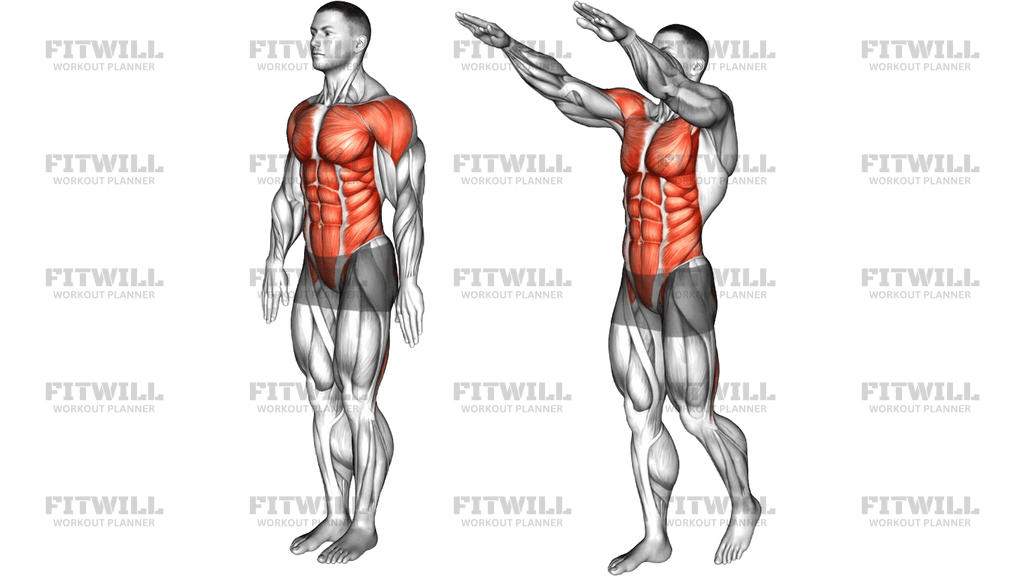
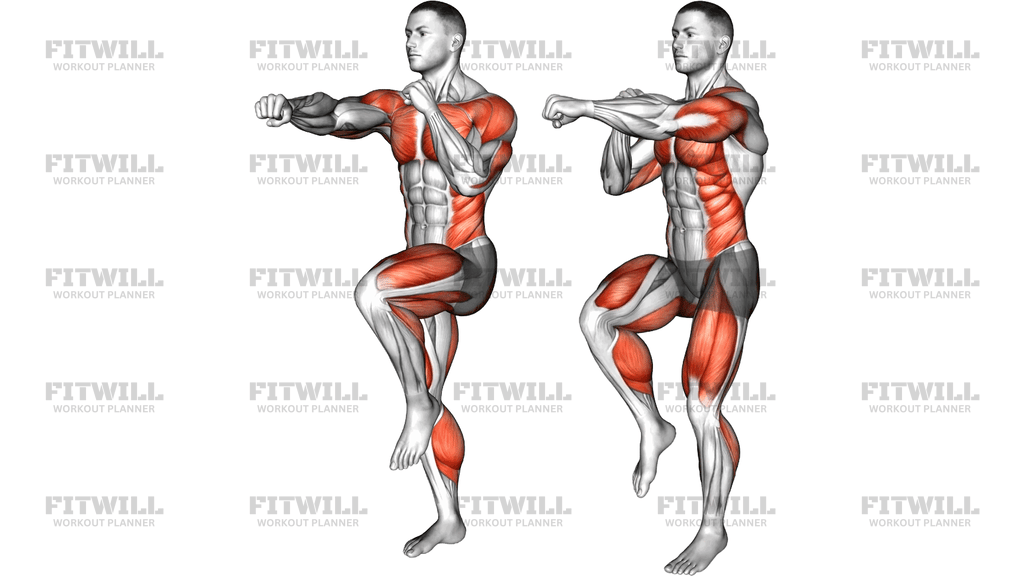
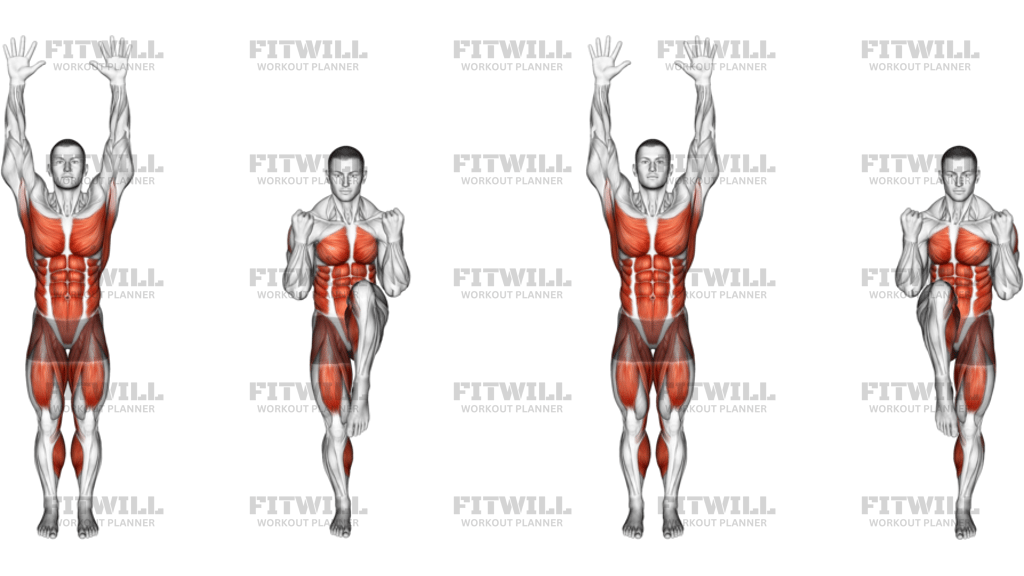
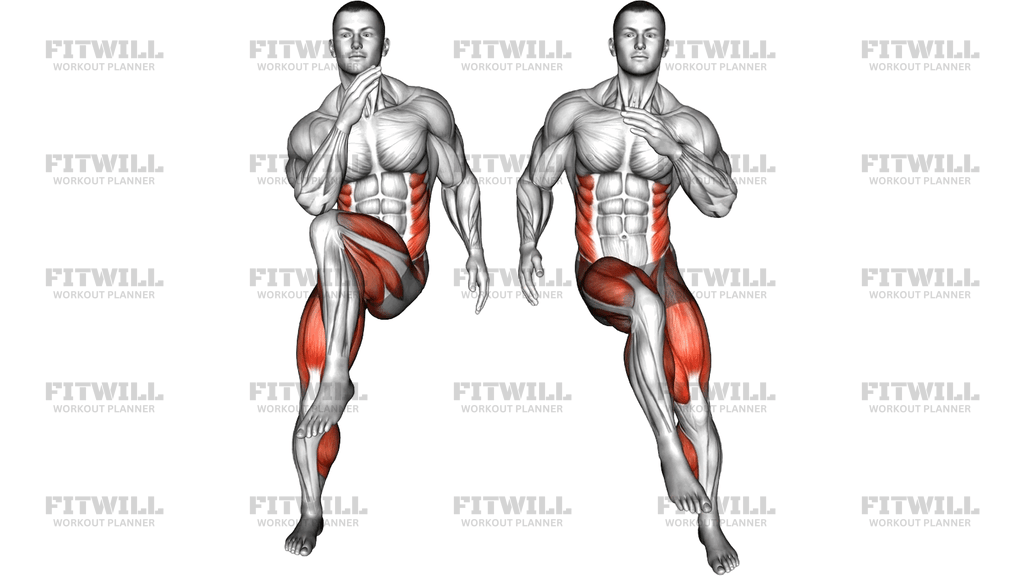
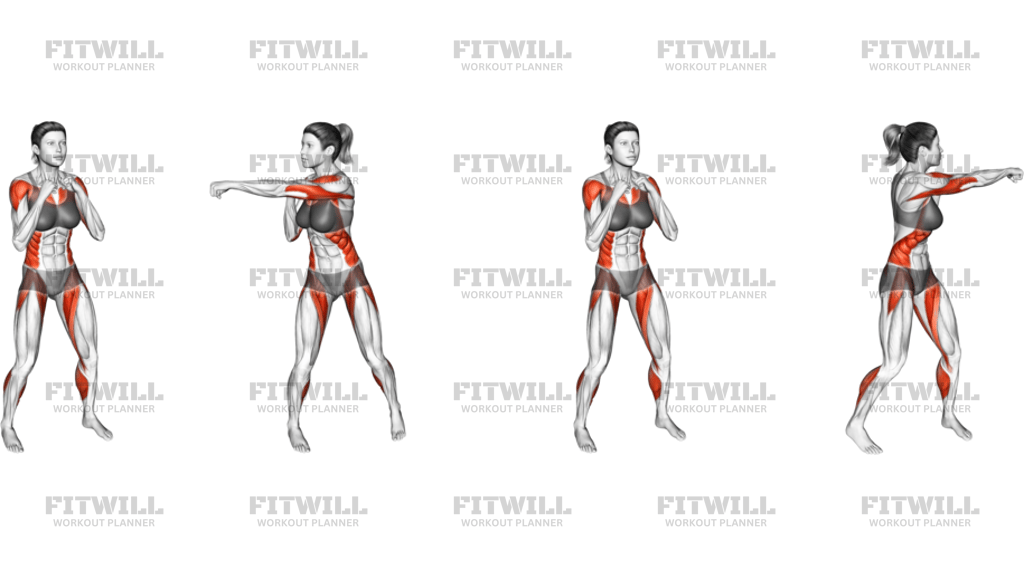
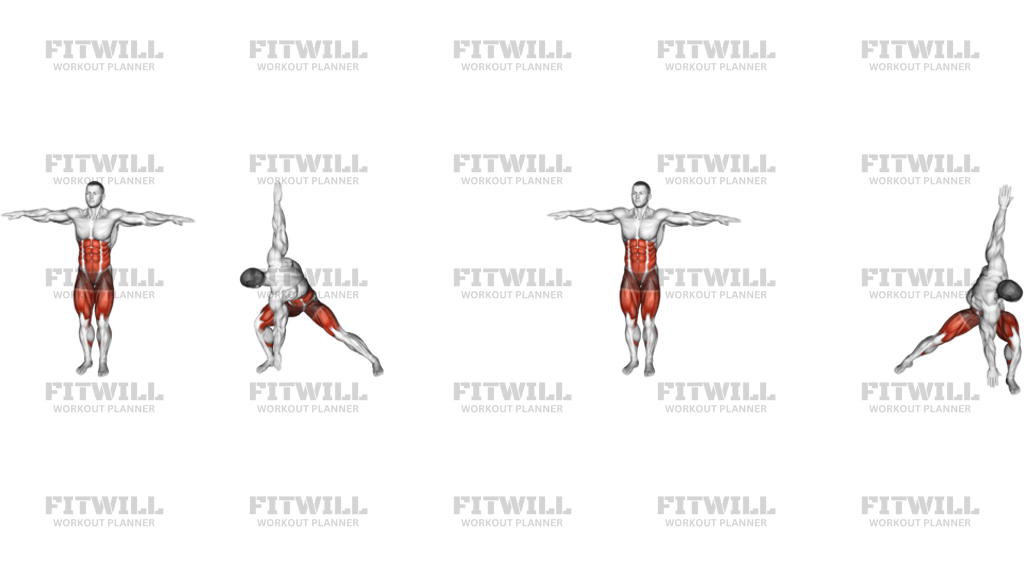
Diagonal Lunge is a bodyweight single-leg lunge variation that steps on a 30- to 45-degree line instead of straight forward or straight back. That small change makes the exercise more demanding for hip control, balance, and lower-body coordination, especially when you keep the torso tall and the movement smooth. In the image, the athlete is shown with an upright start and a long diagonal split stance, which is a good visual cue for how much space you should give the stepping leg.
This exercise mainly trains the quads and glutes while also asking the adductors, calves, and trunk to keep the pelvis steady. The diagonal path challenges the knee and hip to track cleanly as the body lowers and rises, so the rep should feel controlled rather than explosive. If you use the overhead arm reach shown in the image, the core has to work harder to keep the ribs from flaring and the torso from tipping.
The setup matters because a diagonal lunge can turn sloppy fast if the step is too short, too wide, or aimed in the wrong direction. Start tall, brace lightly, and send the working leg back and out on a diagonal while the front foot stays planted. Lower until the rear knee approaches the floor and the front knee stays aligned over the toes, then drive through the front foot to return to standing without bouncing off the bottom.
Use the exercise when you want single-leg strength, warm-up coordination, or accessory work that exposes side-to-side differences in control. It fits well in leg sessions, athletic warm-ups, and circuits where you want knee stability and pelvic control without heavy loading. Beginners can perform it with a shallow range and hands on the hips or at chest height before progressing to the overhead reach. The best reps look the same from side to side: stable foot, quiet torso, smooth descent, and a balanced finish.
[ Workout Log & Planner ]
Put your next workout in Fitwill
Keep your plan and training log ready when you are.


Instructions
- Stand tall with your feet about hip-width apart and your arms overhead or at chest height for balance.
- Brace your trunk and shift weight onto the leg that will stay planted.
- Step the other leg back and out on a 30- to 45-degree diagonal, landing on the ball of the foot.
- Keep the front heel down and lower your hips until the front thigh is near parallel and the rear knee is close to the floor.
- Track the front knee over the second or third toe instead of letting it cave inward.
- Keep your torso long and slightly inclined forward, with the chest open and the ribs controlled.
- Pause briefly at the bottom without bouncing, then drive through the front foot to stand back up.
- Bring the stepping leg back under your body and reset before the next rep, or alternate sides as programmed.
Tips & Tricks
- A shorter diagonal step usually makes the front knee travel too far forward; lengthen the step until you can keep the heel planted and the hip loaded.
- Think of the back foot traveling on a diagonal rail instead of crossing tightly behind the standing leg.
- If the overhead reach pulls your ribs open, lower your arms to chest height and keep the torso stacked over the hips.
- Keep the pelvis facing forward; rotating into the stepping leg turns the lunge into a twist and reduces the leg work.
- Let the rear knee hover just above the floor instead of slamming down or touching lightly and rebounding.
- Use a slow descent so the front leg has to own the lowering phase instead of dropping into the bottom.
- Push the floor away through the midfoot and heel of the lead leg to return to standing with balance intact.
- If the inner thigh or knee feels pinchy, reduce depth and narrow the diagonal angle until the rep is smooth.
Frequently Asked Questions
What muscles do diagonal lunges train?
They mainly train the quads and glutes, with the adductors, calves, and core helping control the diagonal step and the return to standing.
How is a diagonal lunge different from a reverse lunge?
A reverse lunge drops straight back, while a diagonal lunge steps back and out at an angle, which adds more hip-stability and balance demand.
Should my back foot cross behind my body?
No. Step back on a diagonal line and keep the landing foot separated from the stance leg so the hips can stay square.
How low should I go in the lunge?
Lower until the rear knee is close to the floor and the front heel stays planted. If you lose balance or knee alignment, shorten the range.
Do I need to hold my arms overhead?
No. The overhead reach increases the balance and core challenge, but you can keep your hands at chest height or on your hips if that helps you stay organized.
What should I watch for at the front knee?
The knee should track in line with the toes instead of collapsing inward. If it drifts, reduce the step angle or the depth.
Is this exercise suitable for beginners?
Yes, if they start with body weight, a shallow range, and a slower tempo before adding the overhead reach or extra load.
Can I load diagonal lunges with weight?
Yes, but only after you can keep the torso steady and the lead foot planted. A goblet hold or light dumbbells are usually the easiest progressions.