Seated Glute Stretch Version 2
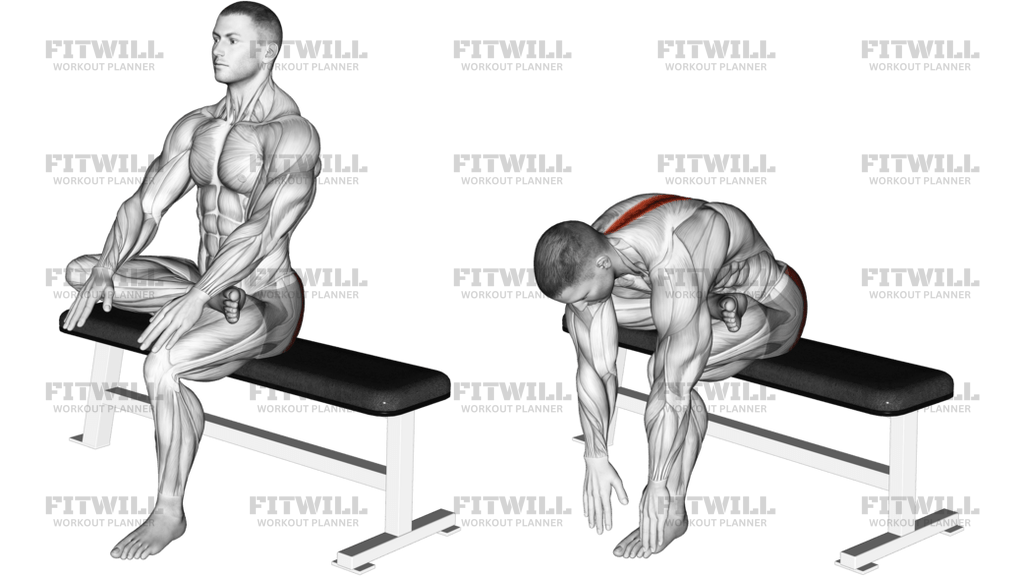
Seated Glute Stretch Version 2 is a seated figure-four stretch that targets the outer hip and deep glute area, especially the piriformis and the small muscles that rotate the thigh outward. It is a body-weight mobility drill, not a loaded strength movement, so the value comes from position, breathing, and a controlled hinge rather than from forcing a larger range.
The setup matters because this stretch works best when the pelvis stays grounded and the spine stays long. Sit on a flat bench or on the floor with one ankle resting across the opposite thigh, then keep the lifted foot flexed so the knee and hip stay organized. If the crossed knee feels blocked, slide the support foot a little farther out or sit taller before folding forward.
The stretch is created by hinging from the hips, not by rounding aggressively through the low back. As the chest moves toward the shin, the glute of the crossed leg lengthens and the hip capsule opens on the outside of the pelvis. The legs should feel steady and passive while the torso does the work of gently increasing the stretch. A light forward lean is usually enough; a deeper fold should never come from yanking the leg down.
Use a slow exhale to settle into the end range and keep the shoulders relaxed. The goal is a clear stretch through the back pocket, outer glute, and deep hip rotators without pinching the knee or twisting the pelvis. If the sensation shifts into the low back, reduce the fold, sit on a higher surface, or bring the crossed foot lower on the thigh so the hip can open without strain.
This stretch fits well after squats, lunges, running, cycling, or long periods of sitting when the hips feel tight and the glutes do not want to relax. It also works as a gentle warm-up when you want to restore hip motion before lower-body training. Keep the rep quality even on both sides, and treat each hold as a controlled reset rather than a forced push into discomfort.
Fitwill
Log Workouts, Track Progress & Build Strength.
Achieve more with Fitwill: explore over 9600 exercises with images and videos, access built-in and custom workouts, perfect for both gym and home sessions, and see real results.
Start your journey. Download today!




Instructions
- Sit on a flat bench or the floor with both sit bones rooted, then cross one ankle over the opposite thigh just above the knee.
- Flex the crossed foot so the shin stays active and the knee does not collapse inward.
- Keep the support foot planted and the torso tall before you begin the forward hinge.
- Brace lightly through the midsection, then hinge from the hips and bring the chest toward the shin of the crossed leg.
- Stop the fold when you feel a strong stretch through the outer glute and deep hip rotators, not a pinch in the knee or low back.
- Let the crossed knee open only as far as the hip allows; do not push it down with force.
- Breathe out slowly to soften into the hold, then take quiet breaths while keeping the shoulders relaxed.
- Hold the end position for the prescribed time, then walk the torso back up with control before switching sides.
Tips & Tricks
- If the stretch feels more like a knee stretch than a glute stretch, lower the crossed ankle a little and reduce the fold.
- A taller sitting surface usually makes the hip easier to open because it reduces how far the pelvis has to tip forward.
- Keep the flexed foot active; a limp ankle often makes the crossed leg collapse and steals tension from the hip.
- Do not force the top knee toward the floor. The hip should open from the hinge, not from pressure on the leg.
- A long spine usually gives a cleaner glute stretch than rounding the upper back and collapsing the chest.
- Use the exhale to soften the outer hip, then inhale without changing the knee position.
- If one side is much tighter, spend a little longer there instead of trying to match the looser side immediately.
- Sharp pain in the knee, groin, or front of the hip is a sign to back off the range or change the setup.
Frequently Asked Questions
What does Seated Glute Stretch Version 2 target most?
It mainly targets the glutes and deep external rotators of the hip, especially the piriformis area.
Do I need a bench for the seated figure-four position?
No. A flat bench can make the setup easier, but the stretch also works on the floor if you can sit tall.
Why should I flex the crossed foot?
Flexing the foot keeps the leg active and helps prevent the knee from dropping into a sloppy position that can irritate the hip.
Where should I feel the stretch?
You should feel it in the outer glute, back pocket, and deep side of the hip on the crossed leg, not in the low back.
Should I push the crossed knee down?
No. Let the hip open naturally as you hinge forward, and only use very light pressure if the setup allows it pain-free.
Is this useful after running or squatting?
Yes. It is a common cooldown stretch after lower-body training, running, cycling, or long periods of sitting.
What if my knee feels pinched in this stretch?
Shorten the range, sit higher, or lower the crossed foot on the thigh so the hip opens without twisting the knee.
Can beginners use this stretch?
Yes. Beginners usually do best with a shorter hold, a taller seat, and a smaller forward hinge.