Child To Cobra Pose
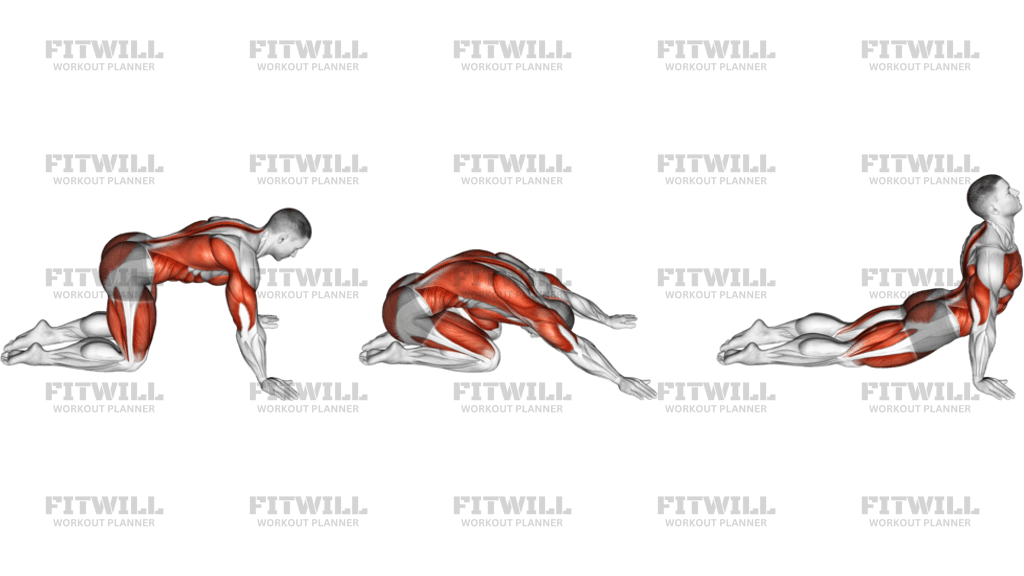
Child To Cobra Pose is a bodyweight floor flow that links a resting child’s pose position with a gentle cobra. It is less about loading a muscle and more about moving the spine, shoulders, hips, and chest through a controlled pattern so the transition feels smooth instead of abrupt. That makes it useful when you want to open the front of the body, restore extension after sitting, or build a more deliberate warmup before training.
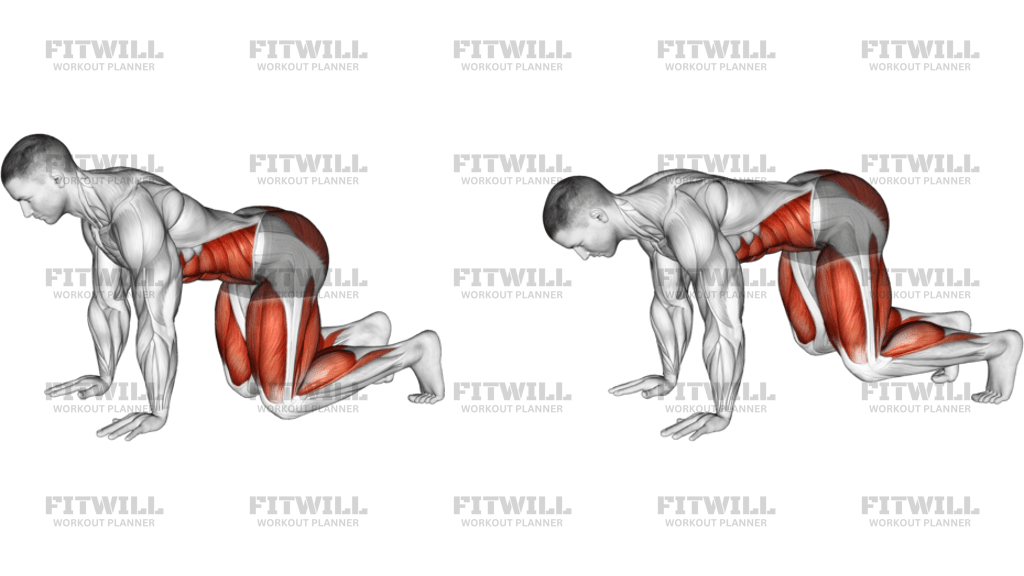
The kneeling start matters because it sets the whole rhythm of the rep. In child’s pose, the hips sink back toward the heels, the arms reach forward, and the ribs stay soft against the thighs or close to the floor. From there, you shift forward with control, place the hands under or slightly in front of the shoulders, and press into the floor until the chest lifts into cobra without forcing the low back to do all the work.
This movement asks the core and glutes to stay organized while the back extends. If the lower back pinches, the lift is too high or the ribs are flaring; if the shoulders shrug, the press is becoming a shrug instead of a smooth spinal extension. The best version of Child To Cobra Pose keeps the neck long, the elbows controlled, and the pelvis grounded as the chest rises.
As a flow, Child To Cobra Pose is often used in mobility work, yoga-based warmups, cooldowns, and recovery sessions. It can also be a good reset between harder upper-body sets when you want to reverse the rounded posture that comes from desk work, pulling exercises, or long periods of sitting. The range should feel calm and repeatable, not aggressive.
Treat each repetition as a transition rather than a stretch held at one end. Breathe out as you fold back into child’s pose, then inhale as you glide forward and lift into cobra. If either position feels cramped, widen the knees, shorten the reach, or use a smaller cobra so the motion stays pain-free and easy to control.
[ Workout Log & Planner ]
Put your next workout in Fitwill
Keep your plan and training log ready when you are.


Instructions
- Kneel on a mat with your shins on the floor, knees comfortably apart, and your hands reaching forward from child’s pose.
- Sit your hips back toward your heels and let your chest lower between your thighs or close to the mat.
- Keep your palms planted and walk them slightly back under your shoulders as you prepare to shift forward.
- Press through your hands and glide your chest forward so your torso comes off the thighs in one smooth motion.
- Straighten your arms enough to lift the chest into cobra, but keep the shoulders down and away from your ears.
- Let the hips and thighs stay grounded while the chest opens and the neck stays long, with your gaze slightly ahead of you.
- Inhale as you rise into cobra, then exhale as you lower the chest and send the hips back toward child’s pose.
- Return fully to the kneeling rest position and settle your breathing before starting the next repetition.
- Repeat the flow for the planned number of reps or slow transitions.
Tips & Tricks
- Keep the cobra low enough that your low back feels long, not pinched.
- If your shoulders creep toward your ears, shorten the lift and press the floor away less aggressively.
- Let your hips travel back to your heels in child’s pose before you start the next glide forward.
- A wider knee position usually makes child’s pose more comfortable for tight hips.
- Think of cobra as a chest lift, not a push-up; the thighs should stay down.
- Place your hands slightly in front of the shoulders if a deeper reach makes the transition smoother.
- Move slowly through the handoff between the two positions so momentum does not pull you through the spine.
- Keep your elbows soft rather than locking them hard at the top of cobra.
- If the neck feels compressed, lower your gaze and lift your chest a little less.
Frequently Asked Questions
What does Child To Cobra Pose work?
It mainly opens the spine, chest, shoulders, and hips while the core and glutes help control the transition.
Is Child To Cobra Pose a stretch or a strength exercise?
It is mostly a mobility flow with a light strengthening effect through the back and trunk. The value comes from moving between flexion and extension with control.
Should my hips stay on the floor in cobra?
Yes, the hips and thighs should stay grounded in the cobra portion. If they come up, the movement has turned into a press-up instead of a cobra.
How far should I lift in Child To Cobra Pose?
Lift only until the chest opens comfortably and the low back still feels long. A smaller cobra is better than forcing height with your lower spine.
Where should my hands be during the transition?
Start with the hands reaching forward in child’s pose, then bring them under or slightly in front of the shoulders before you press into cobra.
Can beginners do Child To Cobra Pose?
Yes. Beginners usually do well with a small cobra, a wider knee position, and a slow pace between the two positions.
What if my wrists bother me in cobra?
Move the hands a little farther forward, spread the weight through the whole palm, or switch to sphinx if loaded wrist extension is uncomfortable.
What is the most common mistake in Child To Cobra Pose?
People usually rush the transition and over-arch the low back. Keep the lift smooth and stop before the shoulders shrug or the ribs flare.