Front Groin Kick Kickboxing With Boxing Bag
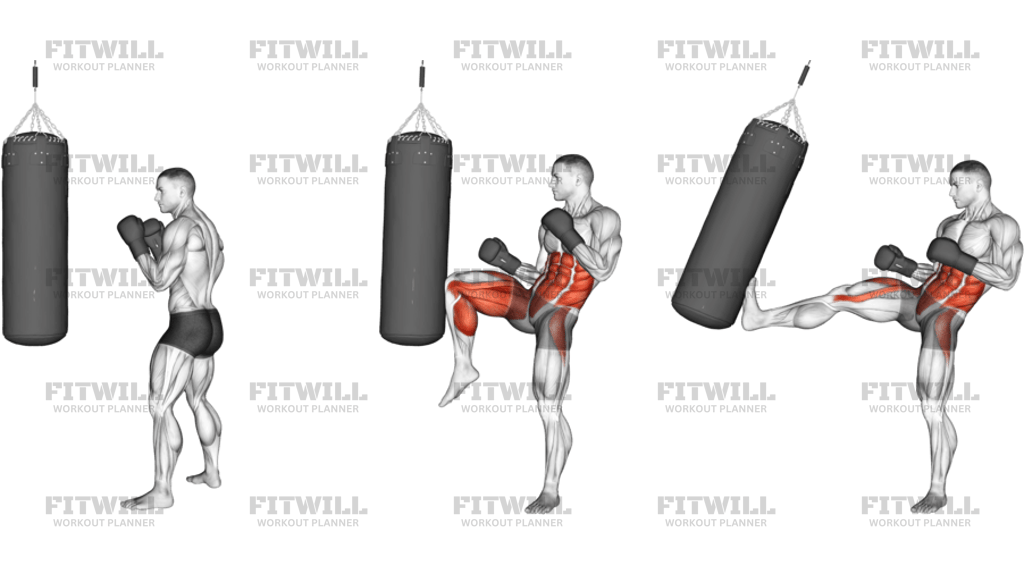
Front Groin Kick Kickboxing (with Boxing Bag) is a standing kickboxing drill built around a sharp front kick to a hanging bag at low-to-mid height. The image shows a fighting stance, a high guard, a lifted knee, and a straight snap of the lower leg into the bag, so the movement should be coached as a controlled front kick rather than a swinging strike. The goal is clean contact, quick recoil, and balance on the support leg from rep to rep.
This drill trains hip flexion, knee extension, trunk control, and the ability to create force without losing posture. The kicking leg does most of the visible work, but the standing leg, obliques, glutes, and upper back all help keep the body organized while the kick lands and returns. In practical terms, it is useful for kickboxing skill work, conditioning rounds, and lower-body coordination when you want athletic power without a lot of equipment.
Setup matters because the kick starts from distance, not from a reach. Stand close enough that your knee can chamber straight up without leaning toward the bag, and keep your hands up so the strike still looks like a real fighting pattern. A slight lean away from the target and a small pivot on the support foot help open the hip and protect the knee, but the torso should stay controlled instead of collapsing backward.
On the kick, lift the knee first, then snap the lower leg forward to the bag and immediately recoil the foot back under you. That recoil is part of the exercise; it keeps the strike fast, reduces strain on the hip flexors, and makes the next rep smoother. Exhale on contact, re-set your stance under control, and repeat on the same side or alternate sides depending on the round.
Use this exercise when you want a technical striking drill that also challenges balance and body control. It works well in warmups, bag rounds, mixed martial-arts conditioning, or accessory work after heavier strength training. Keep the contact crisp but not sloppy, lower the kick height if the hip feels pinchy, and stop the set if you have to lunge, twist, or drop the guard to make the strike happen.
Fitwill
Log Workouts, Track Progress & Build Strength.
Achieve more with Fitwill: explore over 9600 exercises with images and videos, access built-in and custom workouts, perfect for both gym and home sessions, and see real results.
Start your journey. Download today!




Instructions
- Stand in a kickboxing stance about one kick-length from the bag, with your hands up and your weight centered.
- Set the support foot flat on the floor and keep a soft bend in that knee before you start the kick.
- Lift the kicking knee straight up toward the target instead of reaching the lower leg first.
- Keep your torso tall with a small lean away from the bag so the strike stays balanced and compact.
- Snap the lower leg forward into the bag, aiming at groin or lower-torso height depending on the drill.
- Strike with the ball of the foot or the instep, depending on your gym’s kicking style.
- Pull the knee back into the chamber immediately after contact so the kick does not hang on the bag.
- Set the kicking foot back under control, re-form your stance, and reset your guard before the next rep.
- Breathe out sharply as the kick lands and keep the rest of the body quiet through the return.
- Repeat on the same side or alternate sides for the planned number of reps or rounds.
Tips & Tricks
- If you have to lean forward to touch the bag, step a little closer before you start the set.
- Keep the support knee slightly bent and avoid locking it out when the kick leaves the floor.
- A small pivot on the standing foot helps the hip open and keeps the knee from twisting.
- The recoil matters as much as the strike; bring the knee back first, then lower the foot.
- Keep the non-kicking hand high so the movement still reads like a guarded fighting stance.
- Use a lower bag target if your hip flexors or groin start to feel pinchy at the top of the kick.
- Aim for crisp, snappy contact instead of pushing the bag with a slow shove.
- Do not let the shoulders roll back or the chin lift when the leg extends.
- Stop the set if you begin to turn the kick into a hop or lose your balance on the return.
- For conditioning rounds, lighter contact and faster recoil usually beat hard, sloppy strikes.
Frequently Asked Questions
What does Front Groin Kick Kickboxing (with Boxing Bag) train?
It trains front-kick mechanics, hip flexion, trunk control, balance, and the ability to strike a bag without overcommitting your body weight.
What part of the foot should hit the bag?
Most fighters use the ball of the foot for a traditional front kick, but some gyms coach the instep depending on the bag, target height, and striking style.
How far should I stand from the boxing bag?
Stand far enough away that you can lift the knee straight up before the lower leg snaps out. If you have to reach, you are too far away.
Why do I lose balance when I kick?
Balance usually breaks down when the stance is too narrow, the chamber is rushed, or the torso leans too far toward the target instead of staying stacked.
Should I pivot my support foot?
A small pivot is helpful because it opens the hip and keeps the standing knee happier, but you should not spin the entire body around the bag.
Is this exercise good for beginners?
Yes, if the kick stays low, the contact is light, and the priority is balance and recoil rather than power.
What is the main mistake to avoid?
The biggest mistake is throwing the foot at the bag without chambering the knee first, which usually turns the kick into a reach instead of a strike.
Can I use this in conditioning rounds?
Yes, it works well in bag rounds, warmups, and kickboxing circuits as long as you can keep the return path quick and controlled.