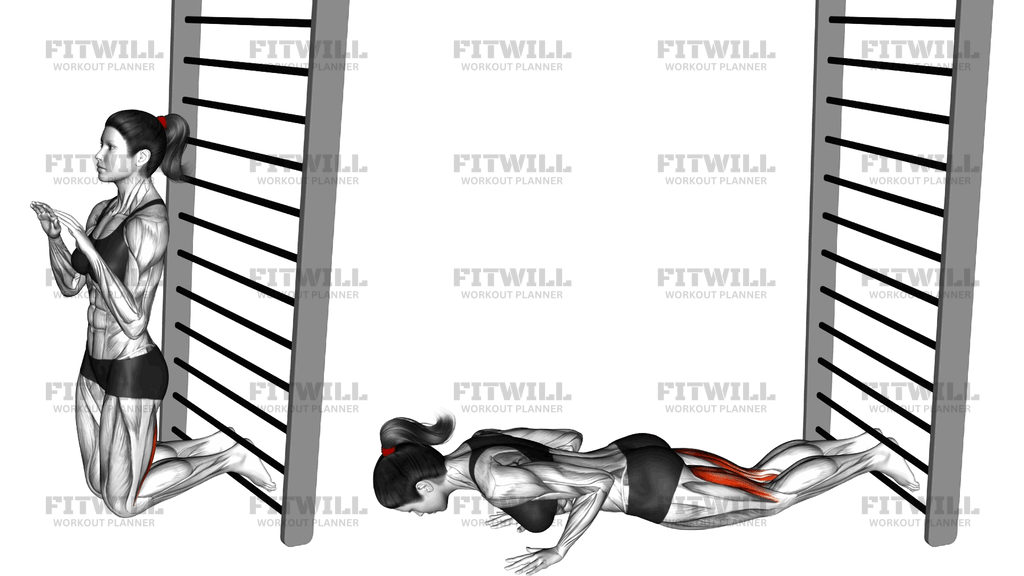
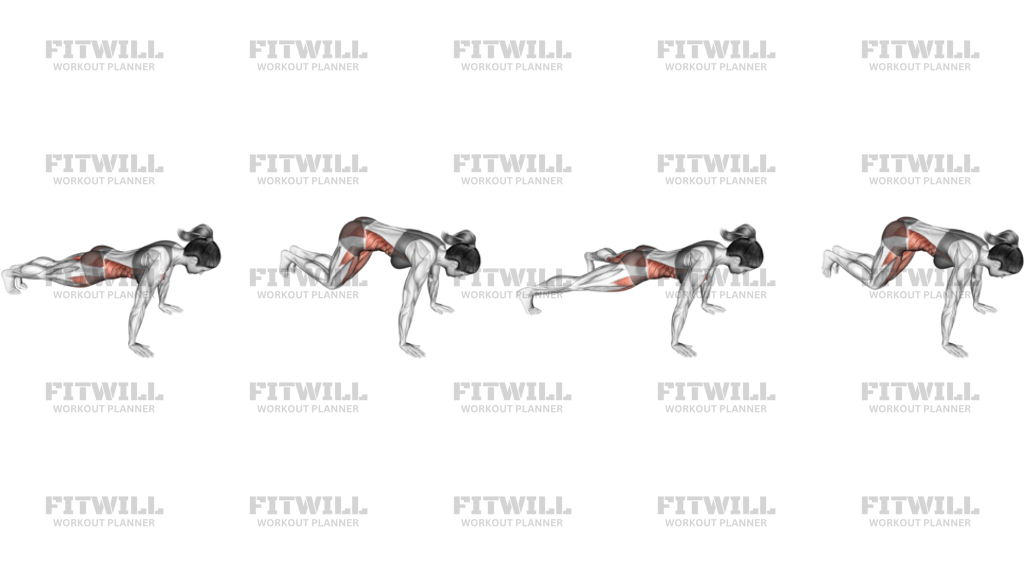
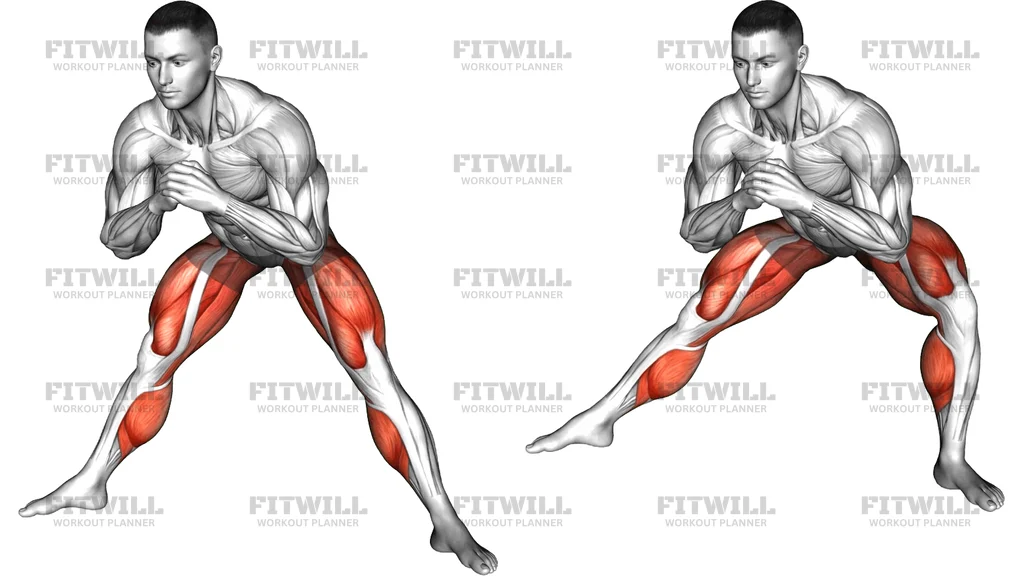
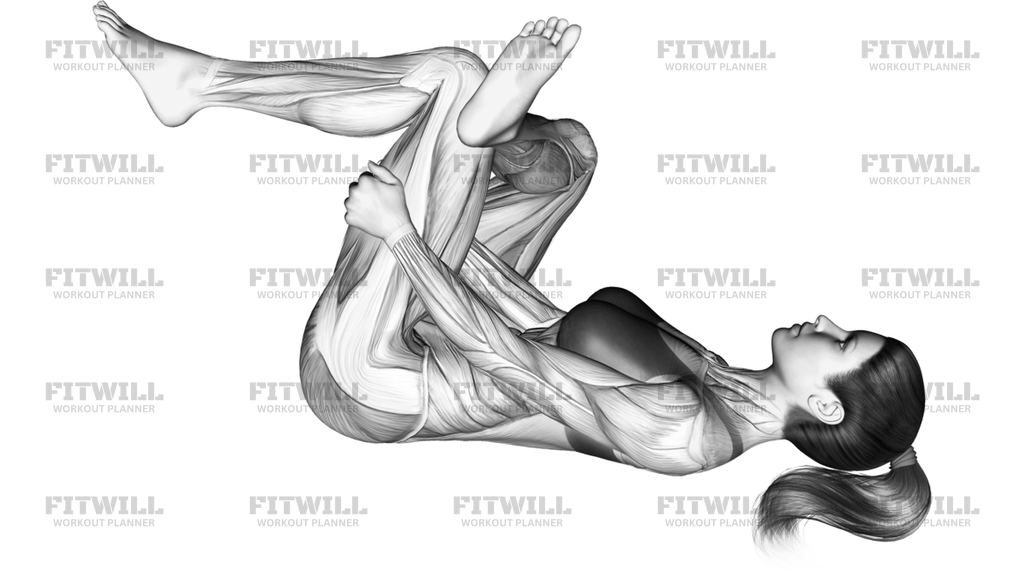
Front Kick Kickboxing With Boxing Bag
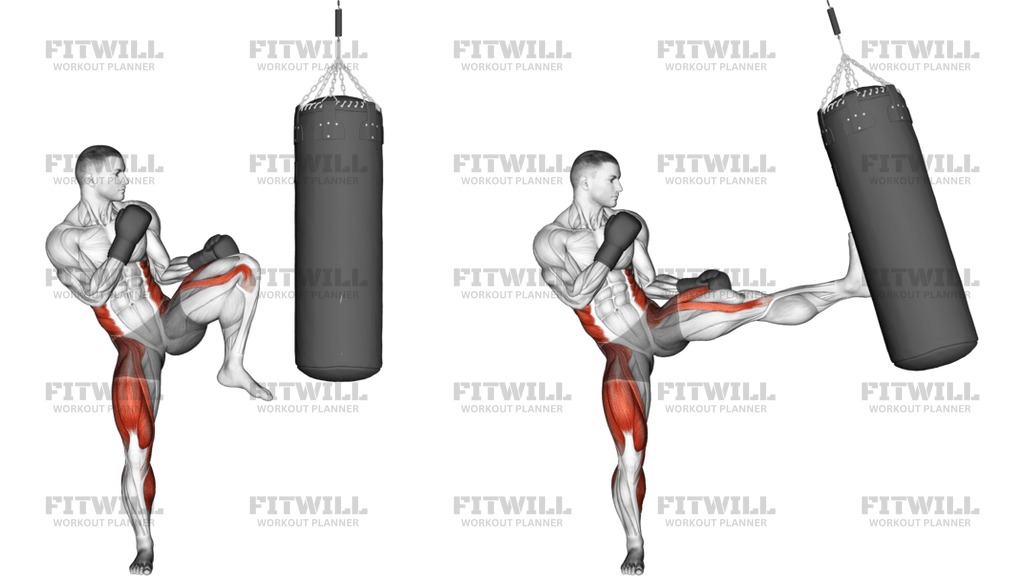
Front Kick Kickboxing With Boxing Bag is a standing striking drill where you chamber one knee, extend the lower leg into a heavy bag, and then recoil the leg back under control. It is usually used as a conditioning, coordination, and technique exercise rather than a pure strength lift. The bag gives you a clear target and instant feedback, which makes the setup and return path more important than trying to kick as hard as possible.
The movement asks a lot from the hips, quads, glutes, core, and standing leg. The raised-knee chamber teaches balance and control, while the snap of the kick trains the body to transfer force quickly without losing posture. Because the exercise is done standing, the trunk has to stay organized so the strike lands cleanly and the supporting leg does not collapse or wobble.
A good rep starts before the leg moves. Stand at a distance where the lifted knee can reach the bag without lunging, keep your hands in guard, and set your weight on the support leg. From there, bring the knee up first, then extend the foot forward to the bag, and immediately bring the leg back into the chamber before you place the foot down. That sequence keeps the kick sharp and protects the knee, ankle, and low back from sloppy overextension.
This exercise works well in kickboxing conditioning, athletic warmups, and accessory circuits where controlled repetition matters. It can be scaled by kicking lower, reducing speed, or using a lighter-contact tap on the bag. If the torso has to lean back, the standing hip twists, or the bag knocks you off balance, the distance is too close, the kick is too high, or the effort is too aggressive.
Done well, the front kick should feel crisp, balanced, and repeatable. You should finish each rep able to reset the guard, re-chamber the knee, and choose the next kick without losing your stance. That makes it useful for both beginners learning striking mechanics and experienced trainees using the bag for structured conditioning.
[ Workout Log & Planner ]
Put your next workout in Fitwill
Keep your plan and training log ready when you are.


Instructions
- Stand side-on to the bag with your feet under you, hands up in guard, and enough space to lift one knee before you strike.
- Shift your weight onto the support leg and bring the working knee straight up toward your chest.
- Keep the toes of the kicking foot pulled back so the ankle stays ready for contact.
- Brace your trunk and stay tall instead of leaning back to reach the bag.
- Snap the lower leg forward and strike the bag with the ball of the foot or the heel, depending on your style.
- Let the kick land with control rather than driving your hips so far forward that you lose balance.
- Pull the leg back to the chamber position immediately after contact.
- Set the foot down softly, reset your guard, and repeat for the planned reps or switch sides if programmed.
Tips & Tricks
- Pick a bag height that lets you hit with a clean knee lift instead of having to reach upward with your torso.
- Keep the rear shoulder and lead hand in guard so the strike feels like a real kickboxing drill, not a loose leg swing.
- Pull the toes back before contact so the top of the foot does not absorb the strike if you miss your preferred contact point.
- Think knee first, kick second; the chamber should happen before the lower leg snaps out.
- If the bag swings you backward, shorten the kick or reduce power until you can recover your stance cleanly.
- Use the standing leg as a pillar and avoid letting the knee cave inward when you load the kick.
- Exhale on the strike so the trunk stays braced without holding your breath through repeated reps.
- Stop the set if you start leaning away from the bag or dropping the guard after every kick.
Frequently Asked Questions
What does the front kick on the boxing bag train most?
It mainly trains the hip flexors, quadriceps, glutes, and core while also challenging balance and coordination.
Can beginners learn this kick safely?
Yes. Start with a low bag target, light contact, and a slow chamber so you can learn the balance and return path first.
Where should the bag make contact on the kick?
Most people use the ball of the foot or the heel, depending on style and comfort. The key is a controlled snap, not a shove.
Why do I need to lift the knee before kicking?
The chamber sets the line of force, protects the hip and low back, and makes the strike more controlled than throwing the leg from the floor.
Should I lean back when I kick the bag?
Only a small natural counterbalance is normal. If you have to lean back hard, the bag is too far away or the kick is too high.
Do I alternate legs or work one side at a time?
Either works. Alternating is useful for conditioning, while single-side sets help you clean up technique and power on one leg.
What is the most common mistake on this exercise?
Reaching for the bag with the torso instead of lifting the knee first and snapping the leg from a stable base.
How should I progress the front kick over time?
Increase only one variable at a time: speed, contact intensity, or volume. Keep the chamber and recovery clean before chasing harder impact.