Boxing Left Uppercut With Partner
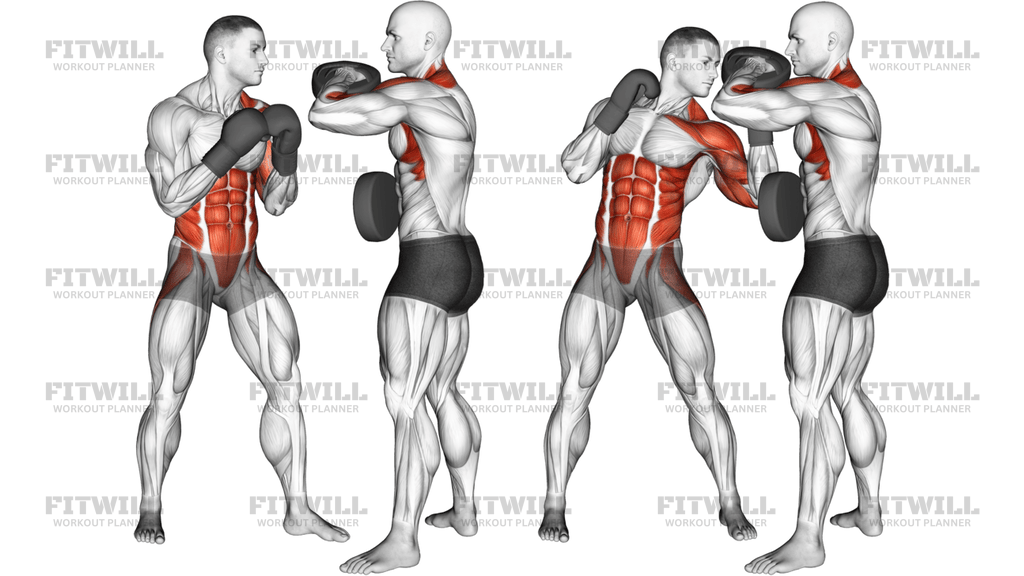
Boxing Left Uppercut With Partner is a partner pad-and-mitt drill built around a short upward punch from the left side. It is not a wide swinging hook or a straight jab. The punch travels from your guard, rises under the target, and finishes with the fist stacked over the wrist so the partner can feel a clean, compact strike.
The movement trains timing, coordination, trunk rotation, and the ability to keep your guard organized while the lead side works. Your legs and hips create the drive, your core transfers it, and the shoulder, arm, and upper back finish the punch without letting the fist drift away from the body. That makes the drill useful for boxing conditioning, athletic warmups, and light power work where precision matters more than raw load.
Setup matters because the uppercut starts close to your stance. Stand in a balanced boxing position with soft knees, feet under you, chin tucked, and both gloves near your face. Have your partner brace the mitt or pad in front of the target line you want to hit, usually just inside your lead shoulder line and high enough that you can drive up into it without reaching. If the target is too far away, the punch turns into a swing; if it is too low, you end up bending at the waist instead of using the legs.
On each rep, make a small dip by bending the knees, keep your chest tall, and drive the left glove upward in a short arc from the guard toward the pad. Let the left hip and shoulder come through together, but keep the motion tight and compact. The right hand stays at the cheek, the wrist stays straight at impact, and the exhale happens as the glove lands. Reset back to guard immediately so the next repetition starts from a stable position instead of from a stretched, off-balance finish.
Use this drill when you want crisp boxing mechanics, short explosive efforts, and clean pad contact rather than maximal force. It works well in combinations, mitt rounds, or skill-focused conditioning blocks. Keep the partner cueing the same target height and bracing the pad firmly so every rep teaches the same path. If the neck, wrist, or shoulder starts to feel strained, reduce the height and force of the punch and tighten the range back up.
Fitwill
Log Workouts, Track Progress & Build Strength.
Achieve more with Fitwill: explore over 9600 exercises with images and videos, access built-in and custom workouts, perfect for both gym and home sessions, and see real results.
Start your journey. Download today!




Instructions
- Stand in a boxing stance with your lead foot slightly ahead, knees soft, chin tucked, and both gloves up at cheek level.
- Have your partner brace the mitt or pad in front of the target line, close enough that you can punch without reaching.
- Keep your weight balanced on both feet and keep the rear hand parked at the face before the punch starts.
- Dip a few centimeters by bending the knees, not by folding at the waist.
- Drive the left glove upward in a short arc from the guard toward the pad, keeping the elbow close to the ribcage.
- Turn the left hip and shoulder through the punch just enough to add force without spinning out of stance.
- Land the punch with a straight wrist and the first two knuckles aligned to the target.
- Exhale on contact, then snap the glove back to guard and reset for the next rep.
Tips & Tricks
- Keep the punch tight to your body; a compact path lands cleaner than a looping swing.
- Use a small knee dip to load the punch, not a deep squat.
- Keep the non-punching hand glued to your cheek so the guard does not open up.
- Match the pad height to the target you are working instead of chasing it with your shoulders.
- Keep the wrist stacked so the knuckles, wrist, and forearm make one line at impact.
- Let the hip and shoulder turn together instead of tossing the arm first.
- Stay balanced on both feet; if your head drifts past your front knee, the stance is too aggressive.
- Work in short bursts of crisp reps and stop once the punch stops snapping back to guard.
Frequently Asked Questions
What does Boxing Left Uppercut With Partner train most?
It trains boxing timing, upward punching mechanics, trunk rotation, and the ability to stay balanced while the lead side works.
Do I need a mitt or body pad for this drill?
Yes. Your partner should brace a mitt or pad so the punch lands on a clear, stable target instead of in open air.
How high should my partner hold the target?
Hold it on the line you want to hit, usually just inside the lead shoulder and high enough that the punch rises into it instead of swinging across.
Should the uppercut be a big upward swing?
No. The clean version is short and compact, with the glove traveling close to the body and finishing back in guard quickly.
What is the most common mistake with a left uppercut?
Reaching with the arm and folding at the waist instead of loading with the knees and driving from the legs and hips.
Can beginners practice this exercise?
Yes. Beginners should use a light, controlled touch, focus on the path, and keep the partner target stable before adding speed or force.
How should my hands finish after contact?
The striking hand should snap straight back to the cheek so you can defend or throw the next punch without resetting your whole stance.
What makes this different from a hook or straight punch?
The left uppercut rises under the target in a short vertical arc, while a hook travels more horizontally and a straight punch goes directly forward.