Front Snap Kick Kickboxing With Partner
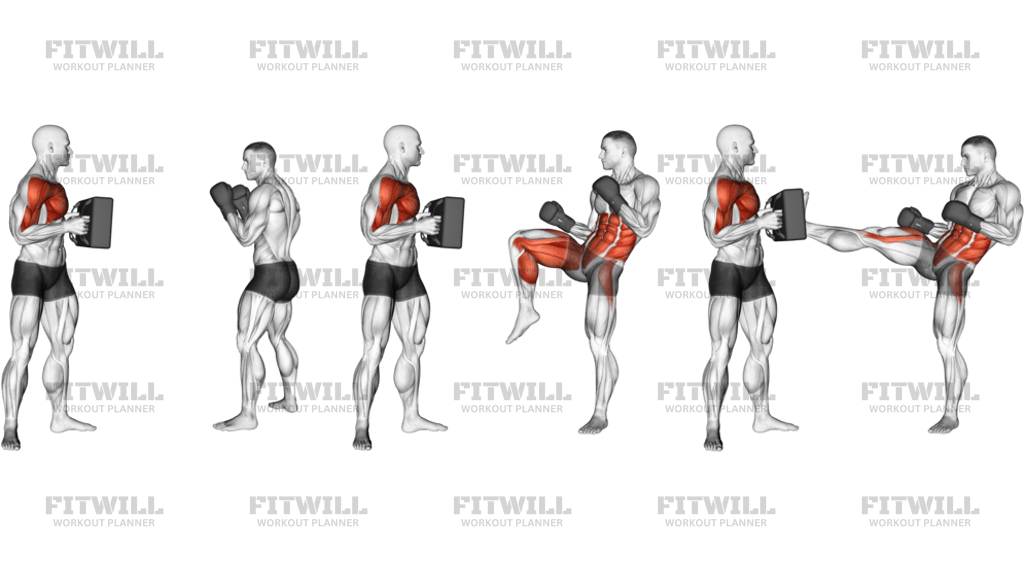
Front Snap Kick Kickboxing With Partner is a partner-held pad drill built around a fast knee lift, a sharp lower-leg extension, and an immediate recoil back to stance. The holder braces the pad at chest height while the kicker works from a fighting stance, using the front leg to strike straight ahead. It is a practical kickboxing pattern for building timing, balance, hip speed, and the ability to land a clean strike without leaning back or losing the guard.
The movement asks more from the lower body than the old metadata suggests. The kicking leg drives the knee up first, then snaps the lower leg out so the ball of the foot or the instep meets the pad, and then pulls back quickly under control. That sequence trains the quads, hip flexors, glutes, adductors, and core to work together while the standing leg stabilizes the body and keeps the torso from tipping toward the target.
Because a partner is holding the pad, the setup matters as much as the kick itself. A stable stance, light bounce, and a solid guard help you stay balanced when the leg leaves the floor and when the pad gives feedback on contact. The holder should present a firm target at a consistent height, and the kicker should think about lifting the knee first, not reaching the foot forward from the hip.
Front Snap Kick Kickboxing With Partner is useful in striking practice, warmups, conditioning rounds, or coordination drills where crisp technique matters more than brute force. The strike should stay direct and compact: chamber the knee, extend just enough to hit the pad cleanly, then retract immediately so the leg is ready to reset. That quick return is what keeps the drill sharp and protects the knee and hip from sloppy overextension.
When the kick is done well, the upper body stays tall, the guard stays active, and the standing foot stays rooted long enough to support the strike and the return. The goal is a repeatable front snap kick that feels snappy and balanced, not a swinging kick that throws the body off line. Used with good coaching, this exercise can teach cleaner mechanics, better reaction speed, and more efficient force transfer through the hips and core.
Fitwill
Log Workouts, Track Progress & Build Strength.
Achieve more with Fitwill: explore over 9600 exercises with images and videos, access built-in and custom workouts, perfect for both gym and home sessions, and see real results.
Start your journey. Download today!




Instructions
- Stand in a fighting stance facing your partner, with the pad held at about lower-chest height and both gloves or hands up in guard.
- Place your feet at a comfortable kickboxing width so you can lift the front knee without crossing your stance or losing balance.
- Brace your midsection, keep your chin tucked, and pick one clear target on the pad before you kick.
- Lift the front knee straight up toward your chest to chamber the kick, keeping the standing heel grounded or lightly pivoted for balance.
- Snap the lower leg forward so the ball of the foot or instep drives into the pad, and stop the strike at the point of contact rather than pushing through.
- Exhale sharply as you strike so the torso stays tight and the kick stays fast.
- Pull the kicking foot back along the same line to the chamber position before setting it back down under control.
- Reset your stance, reestablish your guard, and repeat for the planned number of reps or alternate sides if both legs are trained.
Tips & Tricks
- Think knee first, foot second; if the foot reaches before the knee chambers, the kick usually turns into a push.
- Keep the standing leg soft but stable so you can balance when the kicking leg leaves the floor.
- Use the ball of the foot or the instep, depending on how your coach wants the pad contacted, and keep that contact point consistent.
- Do not lean your torso back to chase the pad; the knee lift and snap should create the reach, not a backward arch.
- Hold the pad firmly at the same height for each rep so the kicker can learn a repeatable line of force.
- Retract the leg quickly after contact instead of leaving it extended, which helps train speed and protects the knee.
- If the kick feels weak, shorten the range slightly and clean up the chamber before trying to add more speed.
- Keep the guard active while you kick so the drill carries over to real striking mechanics instead of becoming a loose leg drill.
Frequently Asked Questions
What muscles does Front Snap Kick Kickboxing With Partner work?
It mainly trains the quads, hip flexors, glutes, adductors, and core, with the standing leg working hard to stabilize your balance during the kick.
Should I kick through the pad or stop on contact?
For this drill, snap the leg into the pad and recoil immediately. A clean contact with a fast return builds better kickboxing mechanics than trying to drive the partner backward.
Where should my support foot point during the Front Snap Kick Kickboxing With Partner?
Keep the support foot planted with a small natural pivot if needed, but do not spin it open so far that you lose the straight line of the kick or your balance.
Can beginners learn Front Snap Kick Kickboxing With Partner?
Yes, as long as the pad is held steady and the kick is kept low to moderate in height. Beginners should focus on chambering the knee first and returning to stance under control.
What is the most common mistake with this kick?
The biggest mistake is throwing the lower leg from a loose stance and leaning the torso back. That usually makes the strike slow, harder to control, and less accurate.
How high should the partner hold the pad?
Start around lower-chest height or wherever the kicker can strike without losing posture. The pad should be high enough to train the line of the kick, but not so high that the hips or back have to compensate.
Should the kicking leg stay straight the whole time?
No. Chamber the knee first, extend only at the end of the strike, and then pull the knee back in before you place the foot down.
How do I make Front Snap Kick Kickboxing With Partner feel more explosive?
Use a sharper knee chamber, shorten the contact time on the pad, and practice a fast recoil back to stance. The speed comes from the snap, not from muscling the kick through the target.