PVC External Rotation
PVC External Rotation is a standing shoulder mobility drill that uses a light PVC pipe as a lever to open external rotation at the shoulder. It is usually used before pressing, overhead work, throwing, or any session where the back of the shoulder feels tight. The goal is not to force a huge range, but to move the joint smoothly while keeping the ribcage and pelvis stacked.
The drill puts most of the work on the rotator cuff, especially the small external rotators at the back of the shoulder, while the upper back, lats, and core keep the torso quiet. When the setup is correct, you feel the movement deep in the shoulder rather than in the wrist or lower back. That makes PVC External Rotation useful for warm-ups, rehab-style accessory work, or movement prep between heavier lifts.
Start standing tall with your feet about hip-width apart and the PVC held vertically in front of your body. One hand sits high near shoulder height and the other hand controls the lower end near the hip. Keep the upper elbow bent roughly 90 degrees, keep the shoulder down, and avoid letting the chest flare forward as you rotate.
From there, turn the shoulder outward in a slow, controlled arc until you reach a comfortable end range. The pipe should move as a single unit, not jerk or twist through the hands. Pause briefly, breathe out, and then return the pipe to the start just as slowly. If you feel pinching at the front of the shoulder, shorten the range and keep the elbow from drifting.
Because the load is light, PVC External Rotation works best for low-rep, high-quality sets or as part of a shoulder warm-up circuit. It is especially useful for lifters who bench, overhead press, or need better shoulder positioning in the front rack. The best reps look calm and controlled, with the torso staying still and the shoulder doing the work.
Fitwill
Log Workouts, Track Progress & Build Strength.
Achieve more with Fitwill: explore over 9600 exercises with images and videos, access built-in and custom workouts, perfect for both gym and home sessions, and see real results.
Start your journey. Download today!




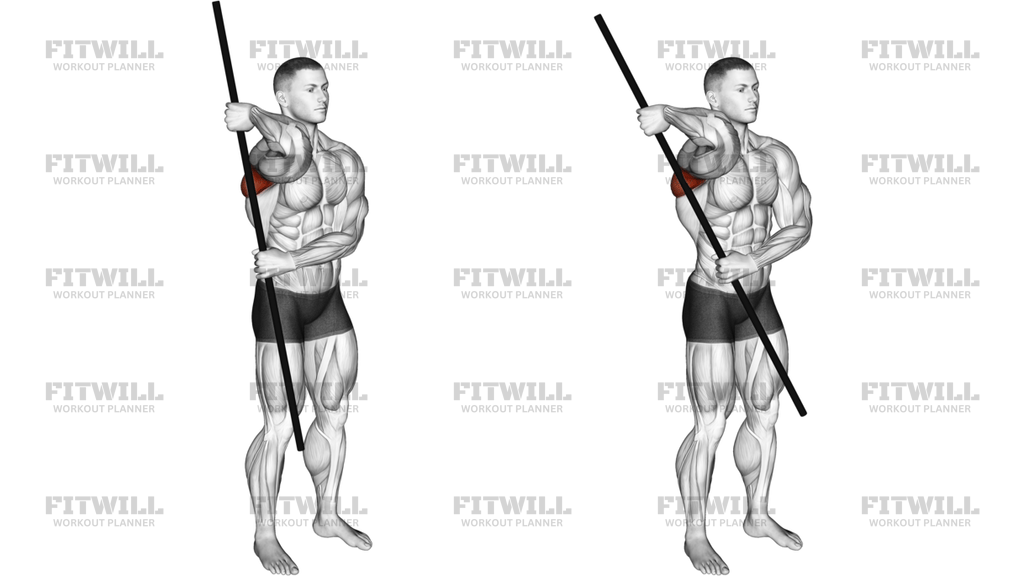
Instructions
- Stand tall with your feet about hip-width apart and hold a PVC pipe vertically in front of your body.
- Place one hand high near shoulder height and the other hand low near the hip so the pipe is secure without being squeezed.
- Bend the working elbow to about 90 degrees and keep that upper arm lifted at shoulder height.
- Set your ribs down, keep your chin neutral, and lightly brace your core so the torso does not lean.
- Rotate the working shoulder outward, letting the pipe guide the forearm away from your body in a smooth arc.
- Stop at the first point of firm, comfortable stretch through the back of the shoulder without forcing the range.
- Pause for a breath, then return the pipe to the start slowly and under control.
- Reset your shoulders and repeat for the planned reps, keeping each repetition quiet and symmetrical.
Tips & Tricks
- Keep the working elbow from drifting backward; once it moves, the stretch turns into a rib flare.
- Let the shoulder rotate, not the wrist, so the PVC acts like a lever instead of a curl.
- A light squeeze on the lower hand is enough; gripping hard usually makes the shoulder feel blocked.
- Exhale as you open the shoulder and inhale on the return so the ribs stay stacked.
- Shorten the range if the front of the shoulder pinches; this drill should feel controlled, not forced.
- Keep your neck long and your shoulders away from your ears so the upper traps do not take over.
- Use slower reps before bench press or overhead work so the joint wakes up without getting tired.
- If the pipe wobbles, slow down and make both hands move together instead of letting one side yank the other.
Frequently Asked Questions
What does PVC External Rotation train?
It mainly opens the back of the shoulder and trains the small external rotators of the rotator cuff. The upper back and core help you keep the position steady.
Is PVC External Rotation a strength exercise or a mobility drill?
It is mostly a mobility and activation drill with light positional strength work. Most people use it in a warm-up or accessory block rather than for heavy loading.
Should I feel it in my shoulder or my chest?
You should feel it mostly in the back and side of the shoulder, not the chest. If the chest takes over, the ribcage is probably flaring or the arm angle is off.
Can beginners do PVC External Rotation?
Yes. It is usually beginner-friendly because the PVC adds leverage without heavy resistance, as long as the range stays comfortable and the torso stays still.
What is the most common mistake with the PVC pipe?
The most common mistake is twisting the torso to steal range. Keep the ribs down and let the shoulder move instead of chasing a bigger arc with your lower back.
How do I know if I am going too far?
Stop when the stretch becomes sharp, pinchy, or unstable at the front of the shoulder. A firm stretch at the back of the joint is enough for this drill.
What can I use if I do not have a PVC pipe?
A broomstick, dowel, or other light straight pole works the same way. Keep the grip even and use the lightest tool that lets you control the motion.
When is the best time to use this exercise?
It fits well before bench press, overhead pressing, throwing work, or any session where your shoulders need to feel open and organized. It can also work as a low-fatigue drill on recovery days.