Lying Side To Side Knee
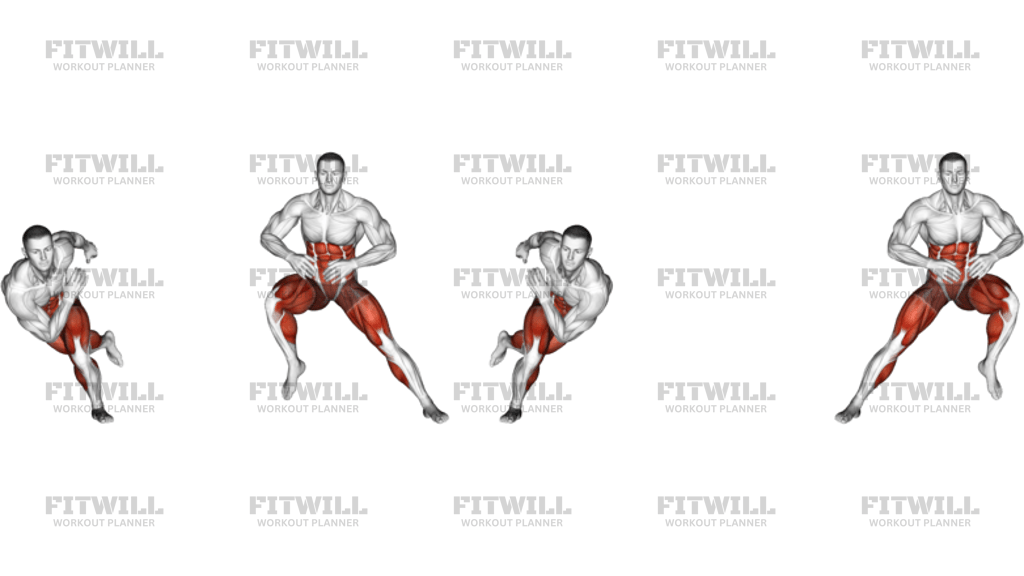
Lying Side to Side Knee is a floor-based hip and trunk control drill performed on your back with the knees bent, feet together, and the legs moving as one unit from side to side. The goal is not speed or range for its own sake. It is to keep the ribs down, the shoulders quiet, and the pelvis organized while the legs rotate across the midline.
This movement loads the obliques, deep abdominal wall, and hip rotators while giving the glutes and hip stabilizers a meaningful supporting role. Because the whole body stays on the floor, the exercise is useful when you want to train control without adding external resistance. It is also a practical way to teach people how to separate pelvic motion from shoulder movement and to find a clean, repeatable side-to-side rhythm.
The setup matters more than it looks. Start with the knees bent and lifted, feet together, and the lower back heavy against the floor. Keep the shoulders down and let the knees travel only as far as you can control without the opposite shoulder popping up or the low back arching. The return should feel like a controlled pull from the center of the abdomen rather than a throw back to the middle.
Use a smooth tempo and a small exhale as the legs come back through center. If the knees drift apart, the hips twist aggressively, or the motion turns into a swing, shorten the range immediately. The best reps feel even from side to side, with the torso quiet and the movement coming from the waist and hips rather than from momentum.
Lying Side to Side Knee fits well in warm-ups, core blocks, rehab-style training, or accessory work when you want low-load hip rotation and trunk awareness. Beginners can usually learn it quickly by keeping the knees higher and reducing the side-to-side distance. More advanced lifters can slow the lowering phase and insist on a longer pause at the end range, but the exercise should always stay controlled and pain-free.
Fitwill
Log Workouts, Track Progress & Build Strength.
Achieve more with Fitwill: explore over 9600 exercises with images and videos, access built-in and custom workouts, perfect for both gym and home sessions, and see real results.
Start your journey. Download today!




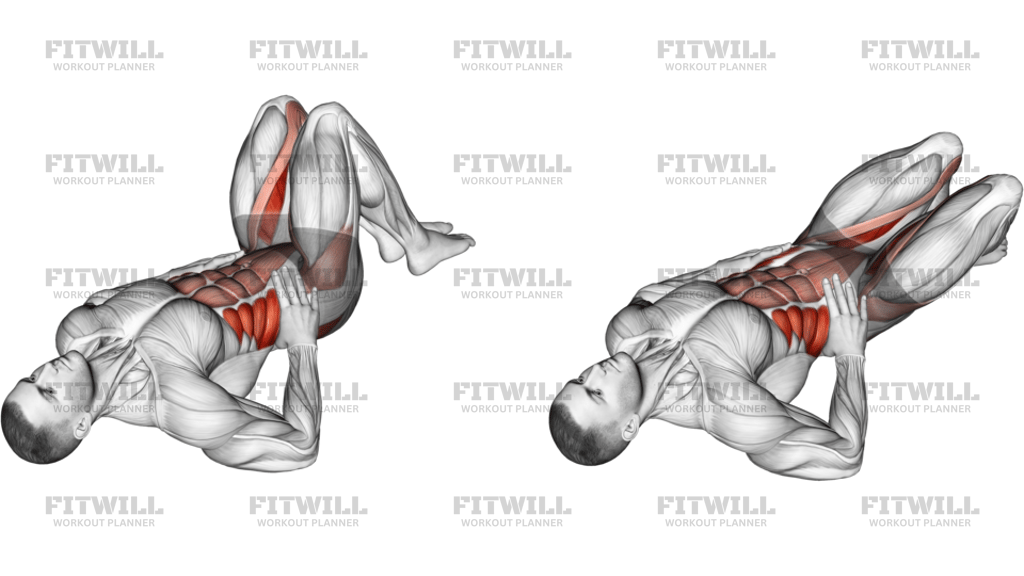
Instructions
- Lie on your back with your knees bent at about 90 degrees, your feet together, and your arms relaxed on the floor for balance.
- Keep both shoulders heavy on the floor and press your lower ribs down before you start the first rep.
- Let both knees travel together toward one side as a single unit while your chest stays mostly quiet.
- Stop the drop when you feel a strong stretch through the waist and outer hip without the opposite shoulder lifting.
- Pause briefly at the edge of the range, then use your lower abs to bring the knees back through center.
- Continue the same controlled arc to the other side, keeping the knees and ankles together the whole time.
- Exhale as you pass back through center and inhale as you lower into the side position.
- Return to a balanced center position before starting the next rep.
Tips & Tricks
- Keep the knees squeezed together so the hips rotate as one unit instead of each leg drifting separately.
- If the opposite shoulder starts to peel off the floor, shorten the range immediately.
- A small bend in the knees is fine, but do not let the hip angle open so much that the lower back arches.
- Move slowly enough that the side drop feels controlled instead of like a leg swing.
- Think about rolling from the waist and hips rather than throwing the knees across the body.
- If one side feels much tighter, match the control first and the range second.
- Keep the neck relaxed and let the head stay neutral against the floor.
- Stop the set when the knees separate, the pelvis twists sharply, or the low back starts to pinch.
Frequently Asked Questions
What muscles does Lying Side to Side Knee work most?
It mainly trains the obliques and deep abdominal wall, with the hip rotators and glutes helping control the side-to-side roll.
Is this more of a core exercise or a hip exercise?
It is both. The hips create the side-to-side motion, and the core keeps the ribs and pelvis organized while you move.
Should my shoulders stay on the floor the whole time?
Yes. If one shoulder lifts, the knees are going too far and the rep is losing control.
How far should the knees travel to each side?
Only as far as you can keep the opposite shoulder down and the low back comfortable. Range should come after control.
Why do I feel this in my hip flexors?
The hip flexors help hold the legs up, but they should not dominate the movement. If they burn first, reduce the range and slow the tempo.
Can beginners do this exercise?
Yes. Beginners usually do best with a smaller side-to-side range and a slower return to center.
What is the most common mistake?
The biggest error is swinging the knees from side to side and letting them separate instead of moving as one controlled unit.
How can I make it harder without adding weight?
Slow the lowering phase, add a brief pause at the edge of the range, and keep the knees together for every rep.
Can I use this as a warm-up?
Yes. It works well in a warm-up when you want light hip rotation and core awareness before heavier training.