Bodyweight Standing Around World Wall Supported
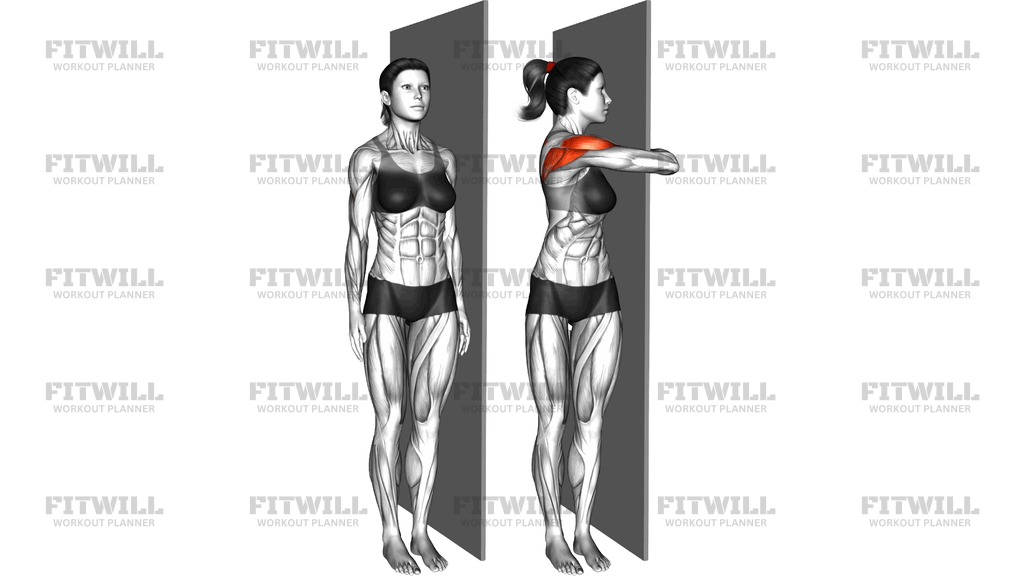
Bodyweight Standing Around World Wall Supported is a standing shoulder-control drill that uses the wall to keep your torso honest while your arms sweep in a large arc around the body. It is a good choice when you want to wake up the delts, upper back, and triceps without loading the joints heavily, or when you need a clean warm-up before pressing, pulling, or overhead work.
The wall support matters because it limits cheating. With the back, head, and ribcage kept quiet, the shoulders have to do the real work of lifting, opening, and lowering the arms through a smooth around-the-world path. That makes the exercise useful for shoulder awareness, scapular control, and finding a comfortable overhead position without shrugging or leaning back.
A good repetition starts with the arms low and long, then moves out to the sides, overhead, and back down in the same controlled arc. The motion should feel even on both sides, with the hands tracing a wide circle while the chest stays lifted but not flared. If you rush the sweep or let the low back arch off the wall, the shoulders lose the benefit of the drill and the movement turns into momentum.
Bodyweight Standing Around World Wall Supported is especially useful as a warm-up for pressing days, a light accessory on shoulder-focused sessions, or a low-stress movement for improving posture and range of motion. It is also a practical option when you want to train the shoulder girdle without bells, cables, or dumbbells. Use a range that keeps the shoulders comfortable, not pinched, and stop the set if the wall contact or arm path starts to break down.
The exercise should feel controlled and deliberate from start to finish, not fast or explosive. Keep the neck relaxed, the hands traveling in a clean circle, and the ribs stacked over the pelvis so the shoulders can move freely. When done well, Bodyweight Standing Around World Wall Supported gives you a simple way to build better overhead mechanics and upper-body control without needing much space or equipment.
Fitwill
Log Workouts, Track Progress & Build Strength.
Achieve more with Fitwill: explore over 9600 exercises with images and videos, access built-in and custom workouts, perfect for both gym and home sessions, and see real results.
Start your journey. Download today!




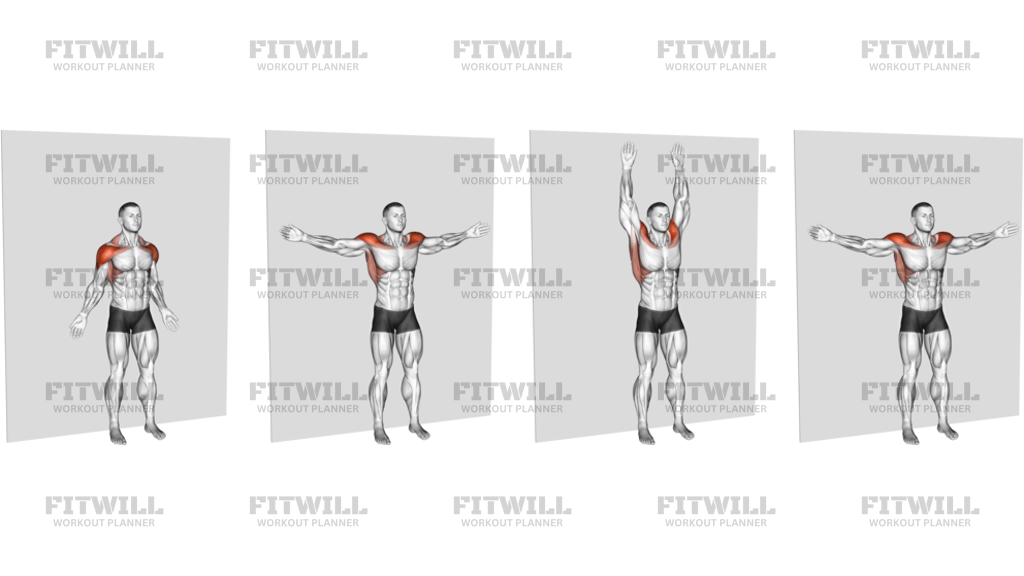
Instructions
- Stand with your back against a wall, feet a few inches forward, chest tall, chin tucked, and arms hanging by your sides with the palms facing slightly forward.
- Press the back of your head, upper back, and hips lightly into the wall without arching your low back.
- Brace your midsection and keep your ribs stacked over your pelvis before you move.
- Lift both arms out to the sides in a wide arc until they reach shoulder height.
- Continue the sweep overhead until your arms are straight above you and your biceps stay close to your ears.
- Lower the arms forward and out in the same controlled circle until they return to your sides.
- Keep the wall contact steady as you move and avoid leaning away from the wall to fake more range.
- Exhale as the arms rise and inhale as you lower them back down.
- Repeat for the planned reps, then lower your arms and step away from the wall without rushing.
Tips & Tricks
- Keep the back of your head on the wall if you can; if your chin pokes forward, the overhead path usually gets sloppy.
- Let the arms travel in a smooth circle instead of forcing a straight-up press, especially when they pass from shoulder height to overhead.
- Do not flare the ribs to reach the top position; the wall should stop you from turning this into a standing back extension.
- If one shoulder feels tighter, shorten the arc on that side rather than twisting the torso to match the other arm.
- Keep the elbows long but not locked hard so the sweep stays controlled and the triceps do not take over too much.
- Move slowly enough that the hands trace a clean path and the shoulders can stay even from rep to rep.
- Use a smaller range if the arms drift in front of the body or the lower back leaves the wall.
- This is a warm-up drill, so stop before the shoulders burn out and start shrugging.
- If overhead feels pinchy, keep the top of the circle just below the painful range and work that arc cleanly.
Frequently Asked Questions
What does Bodyweight Standing Around World Wall Supported train most?
It mainly trains the delts, with the upper back and triceps helping to control the arm sweep and keep the shoulders organized.
Do I need to keep my back on the wall the whole time?
Yes, as much as possible. Light contact from the head, upper back, and hips keeps the ribs from flaring and makes the shoulder path cleaner.
Why is this exercise wall supported?
The wall limits cheating through the torso, so the shoulders have to move the arms through the circle instead of the low back doing the work.
Should my hands touch overhead at the top?
Only if your shoulders can do it without shrugging or arching. A comfortable overhead finish is better than forcing the hands together.
Is Bodyweight Standing Around World Wall Supported a strength exercise or a warm-up?
It works best as a warm-up or light accessory drill. The goal is clean shoulder motion and control, not heavy fatigue.
What if one shoulder moves higher than the other?
Shorten the range and slow the rep down. Uneven shoulders usually mean you are twisting or shrugging to get through the top of the circle.
Can beginners do Bodyweight Standing Around World Wall Supported?
Yes. Beginners usually benefit from the wall feedback because it makes the setup obvious and keeps the movement gentle and controlled.
What is the biggest mistake to avoid?
Do not arch the low back to fake more overhead range. If the wall contact breaks, the rep has become a compensation instead of a shoulder drill.