Dumbbell Seated Tuck Twisting Crunch On Floor
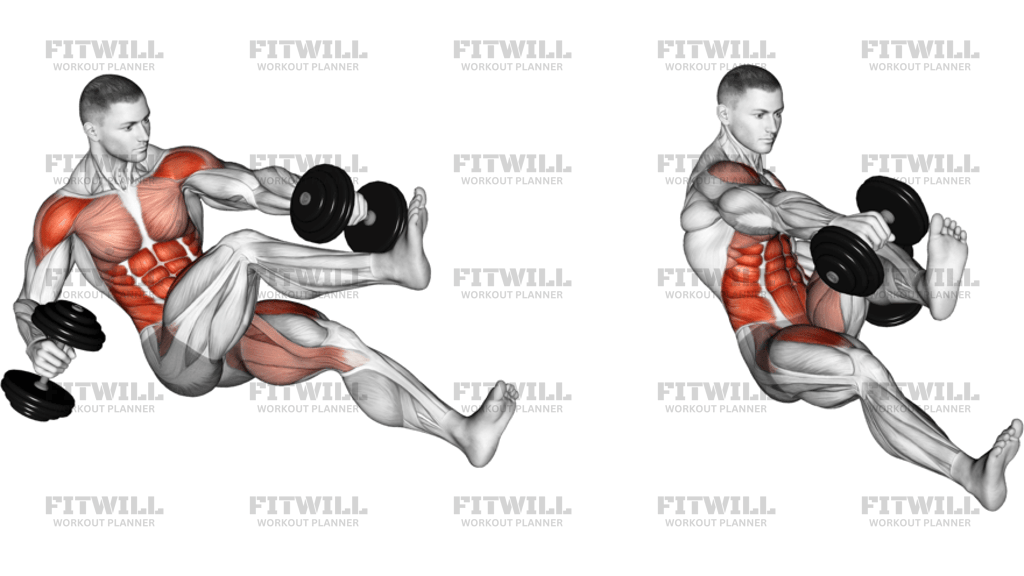
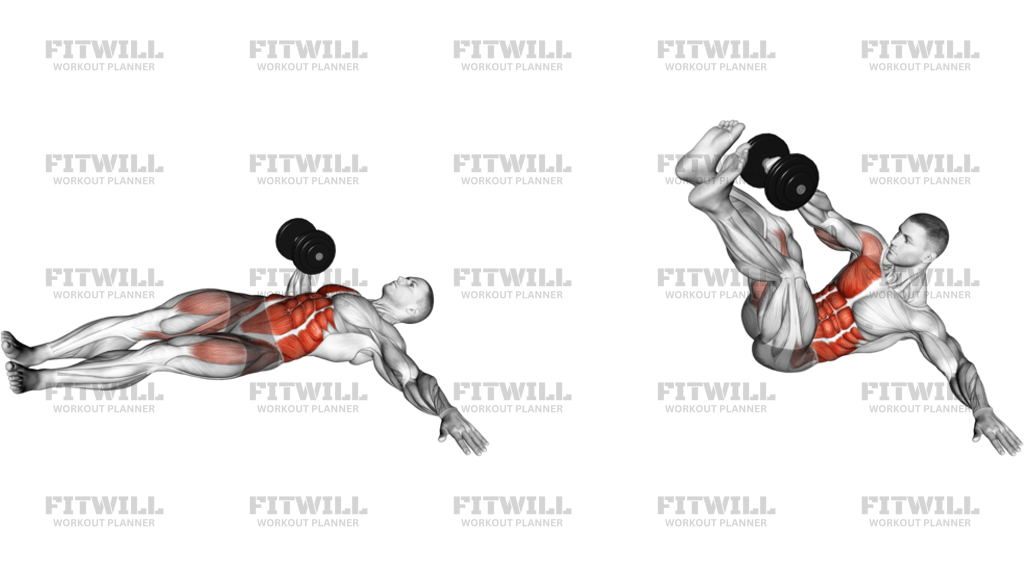
Dumbbell Seated Tuck Twisting Crunch On Floor is a floor-based core exercise that combines a tucked V-sit, trunk rotation, and an active crunch. It is designed to challenge the abdominals through both flexion and twisting while the hips stay lifted and the torso keeps working against gravity. The dumbbells increase the demand on the midsection by making the body control load while the legs and torso move together.
This movement emphasizes the rectus abdominis, obliques, and deep core stabilizers, with the hip flexors helping keep the legs up in the tuck position. Because the body is leaning back and the feet are off the floor, the set can get sloppy quickly if the lower back collapses or the shoulders round forward. A good rep stays compact, controlled, and deliberate rather than turning into a fast rocking motion.
The setup matters more here than in many other abdominal drills. Sit on the floor, lean back just enough to keep tension on the core, and lift the feet so the body starts in a balanced V-sit. Hold the dumbbells with enough control that your wrists, shoulders, and elbows stay steady while the torso rotates. If the position feels unstable before the first rep, the load is too heavy or the torso angle is too low.
During each repetition, rotate the chest toward one side as the knees tuck and the dumbbells travel across the front of the body toward the raised leg. Keep the movement driven by the ribs and waist rather than by swinging the arms. The crunch should shorten the front of the torso, not yank the head forward or kick the legs around. Exhale as you twist and tuck, then return with control and reset before changing sides.
This exercise fits well in an ab block, accessory circuit, or athletic conditioning session when you want a challenging floor-core variation that also trains coordination. It works best with light to moderate dumbbells and strict technique. Beginners can use it with a smaller lean-back angle or one foot lightly down until they can keep the pelvis steady, while more advanced lifters can increase the load only if the twist and tuck stay crisp from the first rep to the last.
[ Workout Log & Planner ]
Put your next workout in Fitwill
Keep your plan and training log ready when you are.


Instructions
- Sit on the floor and lean back into a balanced V-sit with your feet lifted, holding a dumbbell in each hand.
- Keep your chest up, ribs braced, and your lower back long instead of collapsing into the floor.
- Tuck one knee toward your chest as you rotate your torso toward that side.
- Bring the dumbbells across the front of your body toward the raised leg without letting your shoulders shrug.
- Squeeze your abs at the top of the twist and keep the tuck compact.
- Lower under control as you unwind back to the center.
- Switch sides and repeat the same path on the other leg and twist.
- Keep breathing steady, exhaling on the crunch and rotation and inhaling on the return.
Tips & Tricks
- Choose dumbbells that let you stay in the V-sit without the feet dropping or the torso jerking.
- If your hip flexors take over, shorten the lean-back angle and make the tuck smaller.
- Let the ribs initiate the twist; do not just swing the hands from side to side.
- Keep the dumbbells close to the body so the shoulders do not turn this into a long lever front raise.
- A quiet neck matters here: keep the chin gently tucked instead of craning forward to chase the weight.
- Stop each rep before the lower back starts to round hard or you lose control of the untwist.
- If balance is an issue, lightly touch one heel down between reps until the torso stays steady.
- Use a smooth tempo so the obliques do the work instead of momentum from the legs.
Frequently Asked Questions
What muscles does Dumbbell Seated Tuck Twisting Crunch On Floor work?
It primarily works the abdominals, especially the obliques and rectus abdominis, while the hip flexors help hold the tuck position.
Is the dumbbell load supposed to be heavy?
No. This is a control-based core movement, so the dumbbells should be light enough to keep the twist, tuck, and balance clean.
What should I feel moving during each rep?
You should feel the waist and upper abs shorten as you twist, with the hips staying lifted and the legs held in the tuck.
What is the most common mistake on this exercise?
The biggest mistake is swinging the dumbbells and legs together instead of rotating the torso under control.
Can beginners do this on the floor?
Yes, but beginners should use very light dumbbells and reduce the lean-back angle until they can keep the trunk stable.
Should my feet stay off the floor the whole time?
Ideally yes, but if you cannot hold the tuck without losing control, briefly touching a heel down can make the rep safer.
Where do the dumbbells move during the crunch?
They travel across the front of the torso toward the side of the raised knee, not outward away from the body.
How can I make this exercise harder without cheating?
Use a slightly heavier dumbbell only if you can keep the same V-sit angle, clean twist, and controlled return.