Kneeling Pulse
Kneeling Pulse is a bodyweight quadruped glute drill that uses a short, repeated lift to create tension in the hips without needing load. It is useful when you want to wake up the glutes, reinforce pelvic control, or add a low-impact accessory set at the end of a lower-body workout. Because the range is small, the quality of each rep matters more than the number of reps you can squeeze out.
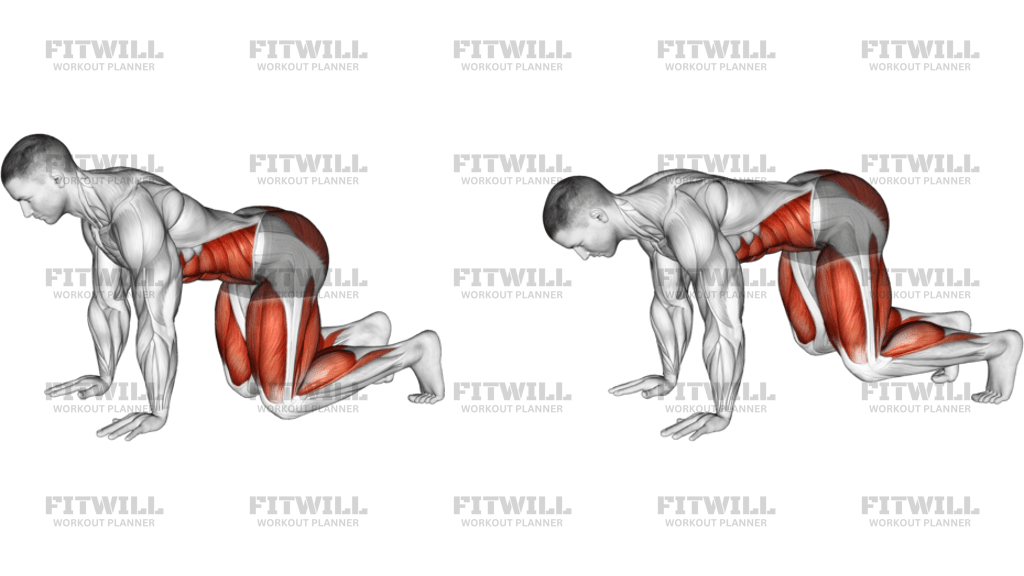
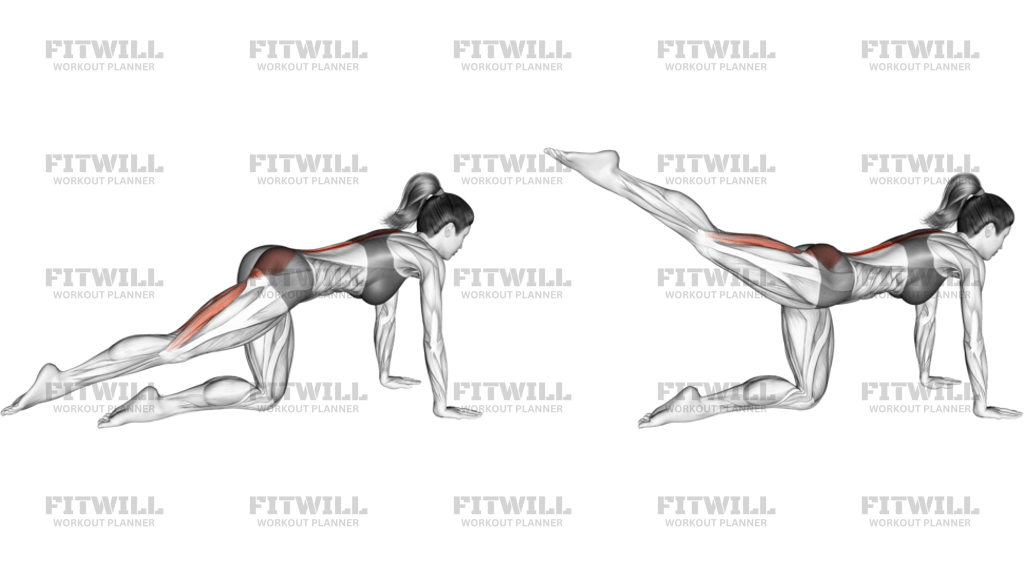
Set up on hands and one knee with the shoulders stacked over the wrists, the support knee under the hip, and the working leg lifted behind you. Keep the working knee bent and the foot flexed so the heel leads the motion. The core should stay gently braced and the hips should stay square to the floor, which keeps the effort in the glute instead of spilling into the low back or rotating the pelvis.
From that position, press the heel up in a short pulse, then lower only until you still feel tension on the working side. The movement should feel deliberate and controlled, not like a kick or a swing. Exhale as you lift, inhale as you return, and keep the neck long so the upper back does not collapse between the shoulders.
Kneeling Pulse is especially useful as a warm-up, activation drill, or accessory exercise for glute-focused sessions, running prep, and single-leg work. It can also help people who need a simpler way to learn hip extension before progressing to cables, bands, or loaded floor work. If the low back starts taking over, shorten the range and slow the pulse until the pelvis stays still.
Use clean, even reps and stop the set once you can no longer keep the ribs stacked and the pelvis level. The best versions of Kneeling Pulse look almost small from the outside because the tension is built through position, not momentum. That makes it a practical bodyweight option for beginners, but it still rewards precision and awareness from experienced lifters.
Fitwill
Log Workouts, Track Progress & Build Strength.
Achieve more with Fitwill: explore over 9600 exercises with images and videos, access built-in and custom workouts, perfect for both gym and home sessions, and see real results.
Start your journey. Download today!




Instructions
- Start on hands and one knee with your wrists under your shoulders, the support knee under your hip, and the other leg lifted behind you with the knee bent.
- Flex the working foot and point the heel upward while keeping both hip bones facing the floor.
- Brace your abs lightly so your lower back stays quiet and your rib cage does not flare.
- Lift the working heel a few inches by squeezing the glute, stopping before your pelvis twists or your lumbar spine arches.
- Pause briefly at the top of the pulse with the thigh and heel still reaching back.
- Lower only partway, keeping tension on the glute instead of letting the knee drop to the floor.
- Repeat the short pulse rhythm with steady breathing, exhaling on the lift and inhaling on the lower.
- Finish the set by bringing the knee back under the hip, setting both knees down, and resting without collapsing through the shoulders.
Tips & Tricks
- Keep the lift small; a high swing usually means your low back is doing the work.
- Think heel to ceiling instead of foot to ceiling so the glute stays on.
- If your pelvis opens, shorten the range until both hip bones stay square.
- Press evenly through both palms so one shoulder does not sink.
- Keep the support knee under the hip; drifting it too far back turns the rep into a back bend.
- Use a slower two-count lower if the pulse starts turning into bouncing.
- A folded mat under the support knee helps you hold the position longer without shifting.
- Stop the set when heel height drops or your ribs start to flare.
Frequently Asked Questions
What muscles does Kneeling Pulse work most?
It mainly targets the glute of the working leg, with the hamstrings, glute medius, abs, and shoulders helping you hold the position.
Is Kneeling Pulse the same as a donkey kick?
It is very similar, but Kneeling Pulse usually uses a shorter, more constant pulse to keep tension on the glute instead of a full kick.
How high should I lift my leg in Kneeling Pulse?
Lift only as high as you can without arching your lower back or letting the hips rotate open.
Why do my wrists or knees get sore during Kneeling Pulse?
The position can load the hands and support knee for time, so a mat helps. Keep your wrists stacked under your shoulders and stop the set before your support points get sloppy.
Can beginners do Kneeling Pulse?
Yes. It is beginner-friendly because the load is bodyweight and the range is small, as long as the torso stays stable.
Should the working knee stay bent the whole time?
In this version, yes. Keeping the knee bent helps shift the work toward the glute and makes the pelvis easier to control.
What is the most common mistake with Kneeling Pulse?
The biggest mistake is kicking the leg higher by arching the lower back instead of keeping the pulse small and controlled.
How can I make Kneeling Pulse harder?
Add a light ankle weight, place a mini band above the knees, or hold the top of each pulse for a second before lowering.