Side Lying Hip Adduction
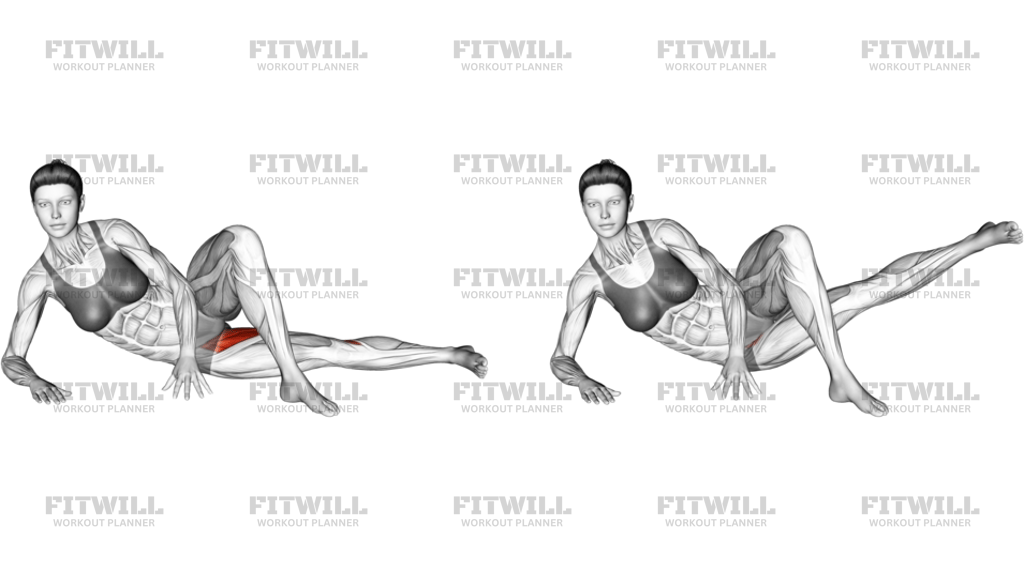
Side Lying Hip Adduction is a bodyweight inner-thigh exercise performed while lying on your side and lifting the lower leg toward the ceiling. The setup shown in the image is important: the bottom leg stays long and active, while the top leg bends in front of the body to help brace the pelvis and keep the torso from rolling backward. That makes the movement useful for training hip adduction control without needing a machine, cable, or heavy load.
This exercise primarily targets the adductors on the inside of the thigh. Those muscles help bring the leg back toward the midline, support pelvic stability, and contribute to controlled single-leg work in running, cutting, skating, and change-of-direction sports. Because the body is supported on the floor, the challenge comes less from external resistance and more from keeping the hips stacked, the trunk quiet, and the leg path clean through each repetition.
The best repetitions start with a stable side-lying position and a deliberate brace. The shoulder, ribs, and pelvis should all stay organized before the bottom leg leaves the floor. As the leg lifts, think about moving the inner thigh rather than swinging the foot. The range is usually small and precise, and that is the point: when the pelvis starts to tip or the low back twists, the adductors are no longer doing the work cleanly.
Use a slow lowering phase and reset each rep with control instead of chasing speed. Side Lying Hip Adduction fits well as accessory work, warm-up activation, rehab-style strength work, or a finisher when you want targeted inner-thigh tension without compressing the spine. It is also a good choice for beginners because the load is easy to scale, but the exercise still demands attention to alignment, breathing, and range of motion.
If the movement feels awkward, shorten the lift and focus on keeping the top foot planted, the chest open, and the pelvis stacked. The exercise should feel concentrated in the inner thigh of the moving leg, with only light help from the core and shoulder support. Stop the set if you have to twist the torso, hike the hip, or swing the leg to complete the rep.
[ Workout Log & Planner ]
Put your next workout in Fitwill
Keep your plan and training log ready when you are.


Instructions
- Lie on your side on a mat with the bottom leg straight, the top knee bent, and the top foot planted on the floor in front of the lower leg.
- Prop your torso on the forearm or hand that is on the floor, and keep your chest slightly open instead of collapsing into the shoulder.
- Stack your hips and shoulders so your pelvis is square, then set the bottom foot in a neutral position with the toes pointing mostly forward.
- Brace your midsection lightly and keep the ribs down before the first rep starts.
- Let the bottom leg rest long on the floor or hover just off it at the start position.
- Lift the bottom leg upward in a straight, controlled arc by pulling from the inner thigh, not by swinging the foot.
- Raise until the pelvis starts to move or the leg reaches its clean top position, then pause briefly without rolling backward.
- Lower the leg slowly to the start, keep tension through the inner thigh, and reset your breath before the next repetition.
Tips & Tricks
- Keep the top foot planted in front of you; if it slides away, your pelvis will usually roll open.
- Think about lifting the inner thigh toward the ceiling instead of trying to kick the foot higher.
- A small, clean range is better than a big lift that twists the hips.
- If you feel the front of the hip doing most of the work, reduce the height and keep the leg straighter.
- Press the forearm gently into the floor so the shoulder helps stabilize without shrugging.
- Exhale as the leg lifts and inhale as it lowers to keep the trunk from bracing too hard.
- Keep the toes mostly forward or slightly up; turning the foot out often shifts work away from the adductors.
- Stop the set when the pelvis starts rocking or the lower back arches to finish the rep.
Frequently Asked Questions
What muscle does Side Lying Hip Adduction target most?
It mainly targets the adductors on the inside of the thigh of the moving leg.
Can beginners perform this exercise?
Yes. It is beginner-friendly because the body is supported on the floor and the load is just body weight.
What should the top leg do during the movement?
The top knee stays bent with the foot planted in front to help brace the body and keep the hips stacked.
How high should I lift the bottom leg?
Lift only as high as you can without rolling the pelvis open or swinging the leg.
Why do I feel this in my hip flexor instead of my inner thigh?
You are probably lifting too high, turning the foot out, or letting the torso rotate backward.
Should my bottom leg stay straight the whole time?
Yes. Keeping it long helps the adductors work through a cleaner range of motion.
Can I use ankle weights or bands?
Yes, but only after you can keep the pelvis still with body weight and a slow lowering phase.
What is the safest way to stop a set?
Finish the rep, lower the leg under control, relax the brace, and reset on the floor before changing sides.