Palm-Up Palm Down Rotation
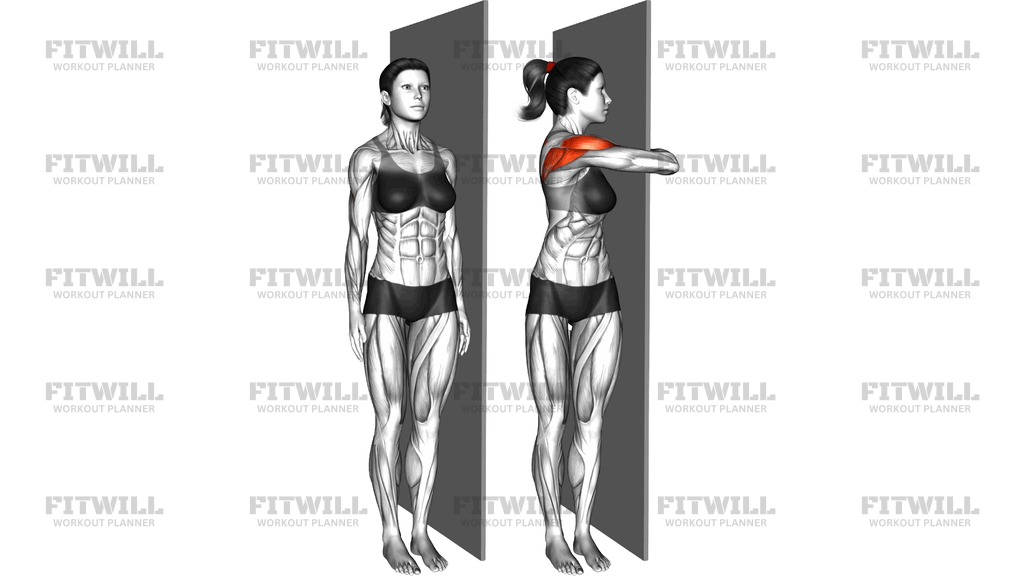
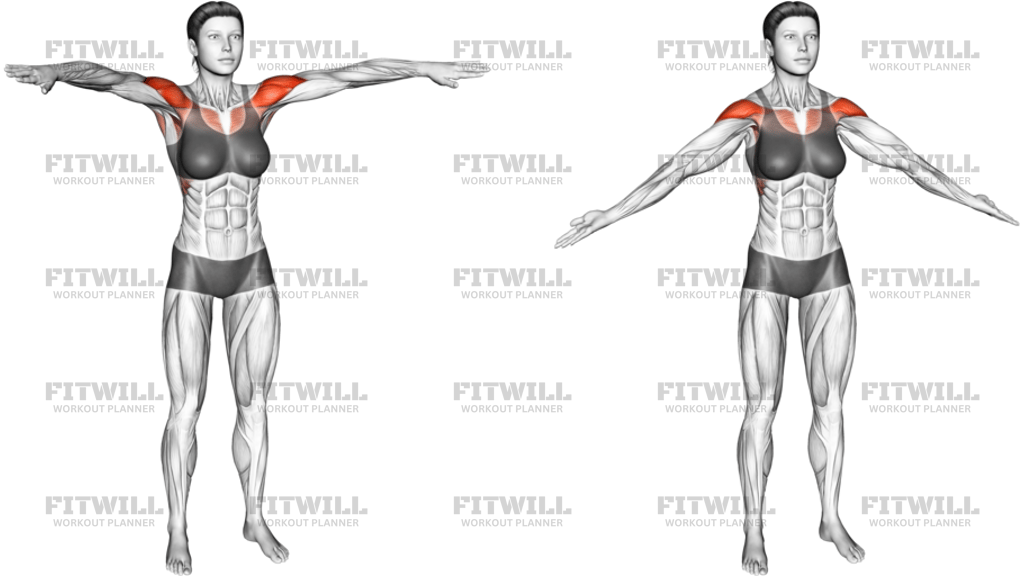
Palm-Up Palm Down Rotation is a standing shoulder-control drill that asks you to keep the arms long at shoulder height while you rotate from palms up to palms down and back again. It looks simple, but the real work is keeping the upper arms level, the torso quiet, and the motion smooth through the shoulders and upper back. That makes it useful as a warm-up, a light accessory movement, or a reset between heavier pressing and pulling sets.
The exercise mainly trains the deltoids, with help from the trapezius, rhomboids, and triceps brachii as stabilizers. Because the movement is slow and controlled, it also asks the rotator cuff and scapular muscles to organize the shoulder joint without letting the ribs flare or the neck tense up. The goal is not to chase fatigue; it is to teach the shoulders to stay stacked and coordinated through rotation.
Start by standing tall with your feet about hip-width apart and your arms extended out from your sides at shoulder height. From there, keep the elbows straight but soft, turn the palms upward, and then slowly rotate until the palms face down without dropping the arms or twisting the torso. If the shoulders begin to shrug or the arms drift forward, shorten the range and make the rotation smaller.
A clean rep should feel even on both sides, with the chest quiet and the shoulder blades moving just enough to keep the arms organized. Breathe steadily and avoid rushing the turn, because momentum will make the wrists and upper traps take over. If you are using the drill before bench pressing, overhead pressing, or rows, treat it like a position primer rather than a strength test.
Use Palm-Up Palm Down Rotation when you want better shoulder awareness, smoother arm control, or a low-load way to wake up the upper body before training. It is especially helpful when pressing volume tends to make the shoulders feel stiff or uneven. Keep every repetition crisp, pain-free, and symmetrical, and stop if the rotation causes pinching, numbness, or a loss of control.
[ Workout Log & Planner ]
Put your next workout in Fitwill
Keep your plan and training log ready when you are.


Instructions
- Stand tall with your feet about hip-width apart and raise both arms straight out to the sides at shoulder height, forming a T.
- Keep the elbows straight but not locked, wrists neutral, and shoulders set down away from the ears.
- Brace your ribs and pelvis so your torso does not lean, twist, or arch as you rotate.
- Begin with the palms facing up, then slowly turn both hands until the palms face down while the upper arms stay level.
- Reverse the motion and rotate back to palms up without letting the arms drift forward or drop.
- Keep the movement smooth and even; the rotation should come from the shoulders and forearms, not from swinging the body.
- Exhale during the turn and inhale as you return, maintaining a relaxed neck and quiet face.
- Lower the arms to your sides when you finish the set, then reset your stance before the next round.
Tips & Tricks
- Use the smallest range that lets both palms flip without shrugging or bending the elbows.
- If the front of the shoulder pinches, bring the arms slightly in front of the body instead of straight out to the sides.
- Keep the hands at the same height; one hand drifting higher usually means the torso is twisting.
- Move slowly enough that you can pause briefly at palms-up and palms-down without losing position.
- Think about rotating the humerus, not whipping the hands.
- If the wrists feel stressed, keep the fingers long and avoid clenching.
- This is a warm-up, so a few clean reps beat a long set done with momentum.
- Stop the set if the neck starts working harder than the shoulders.
Frequently Asked Questions
What muscles does Palm-Up Palm Down Rotation work?
Primarily the delts and shoulder stabilizers, with help from the traps, rhomboids, and triceps. It also challenges shoulder control and coordination.
Is Palm-Up Palm Down Rotation a good warm-up before pressing?
Yes. It is a useful prep drill before bench press, overhead press, or rows because it wakes up shoulder rotation without heavy loading.
Should my arms stay straight during Palm-Up Palm Down Rotation?
Keep them straight but not locked. A tiny bend is fine, but if the elbows start flexing a lot you are no longer doing the same movement.
Why do my shoulders shrug when I rotate?
Usually the arms are too high, the range is too big, or the neck is tensing up. Lower the arms slightly and slow the turn so the upper traps do not take over.
Can beginners do Palm-Up Palm Down Rotation?
Yes. It is beginner-friendly because it uses body weight only and can be scaled with a smaller range of motion.
What if I cannot fully turn the palms over?
That is fine as long as the motion stays smooth and pain-free. Use the range you can control and keep the arms level instead of forcing the end position.
Should I feel this in my chest or upper back?
Mostly the shoulders, with upper-back muscles helping keep the arms steady. The chest should stay quiet and should not be doing the main work.
How many reps should I do?
Use short sets of 8-15 slow reps, or time-based sets of 20-30 seconds, especially in a warm-up or accessory block.