Bent Knee Back To Side Kick
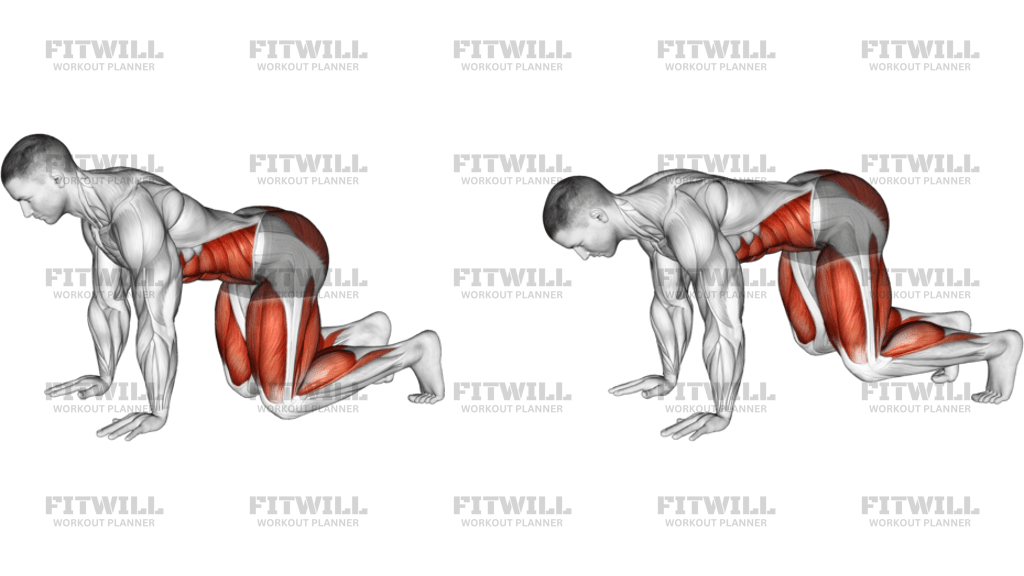
Bent Knee Back To Side Kick is a bodyweight glute and hip control drill performed on hands and knees. It combines a bent-knee hip extension with a small side kick, so the working leg has to move behind you and then out away from the midline without letting the pelvis twist. That makes it useful for warming up the hips, teaching cleaner glute engagement, and building control in a pattern that often exposes side-to-side differences.
The exercise is especially helpful when you want to train the glutes without heavy loading or spinal compression. Because the torso stays supported by the hands and opposite knee, the hips can do the work while the core and shoulder stabilizers keep the body steady. Bent Knee Back To Side Kick is often used in activation work, glute-focused accessory blocks, rehab-style conditioning, or lower-body warm-ups before squats, lunges, or running.
The setup matters because a small shift in hand position, knee spacing, or pelvic angle changes where the tension goes. Start on all fours with the shoulders stacked over the wrists and the knees under the hips, then bend one knee to roughly 90 degrees so the sole of the foot can travel upward. Keeping the ribs tucked and the low back quiet helps the movement come from the hip instead of the spine.
During the rep, drive the bent leg up until the thigh is in line with or slightly above the torso, then sweep it out to the side in a controlled arc. The goal is not a big swing; it is a clean path that keeps tension in the glute while the core resists rotation. Pause briefly at the top, then lower the leg back to the start with control and reset before the next repetition.
Bent Knee Back To Side Kick is a good option if you want a low-impact exercise that still challenges hip stability and coordination. It can be done slowly for activation or with more deliberate tension for accessory work, but it should never turn into a jerky swing. If the pelvis rocks, the low back arches, or the shoulders collapse, shorten the range and make the movement smaller until the hips can stay in charge.
[ Workout Log & Planner ]
Put your next workout in Fitwill
Keep your plan and training log ready when you are.


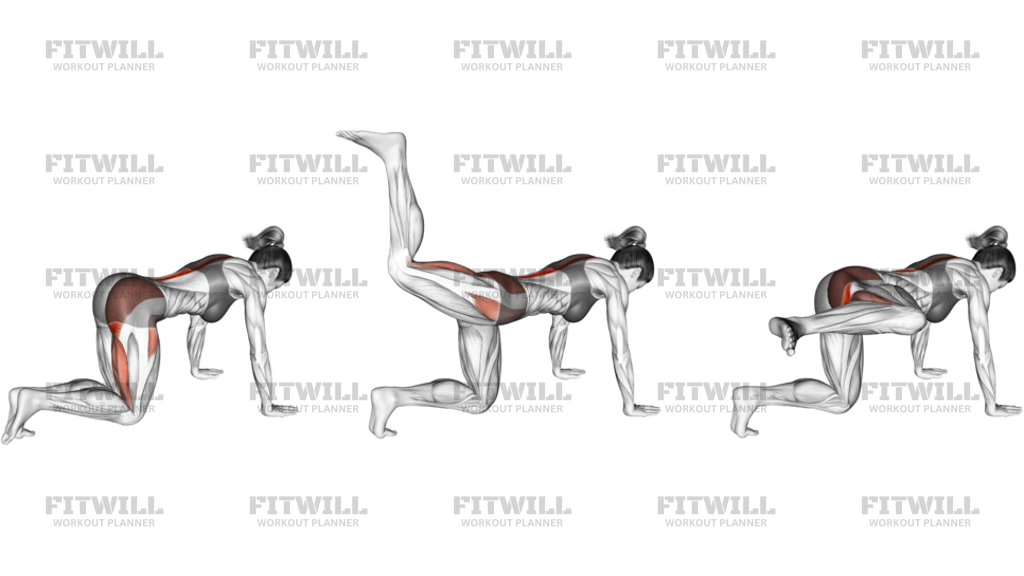
Instructions
- Come onto your hands and knees with your shoulders stacked over your wrists and your knees under your hips.
- Keep your spine long, your ribs gently tucked, and your gaze down so your neck stays in line with your back.
- Bend one knee to about 90 degrees and lift that foot slightly off the floor behind you.
- Brace your midsection before each rep so your lower back does not arch when the leg moves.
- Drive the bent leg up behind you until your thigh is level with or slightly above your torso.
- From the top, sweep the lifted knee or foot out to the side in a small controlled arc.
- Pause for a beat at the top of the side kick while keeping both hips facing the floor as much as possible.
- Lower the leg back to the starting position with control and reset the pelvis before the next rep.
- Repeat for the target reps, then place the knee down and switch sides.
Tips & Tricks
- Keep the working knee bent; straightening the leg turns this into a different kick and usually shifts tension away from the glute.
- If your low back arches on the lift, lower the leg height and focus on a smaller hip-driven range.
- Think about lifting the thigh first and only then opening it to the side, rather than swinging the foot outward right away.
- Press the floor away evenly with both hands so the shoulders do not sag toward the working side.
- Hold the pelvis level; if one hip opens toward the ceiling, the side kick is getting bigger than your control.
- Exhale as the leg lifts and moves out, then reset your breath before the next rep.
- Use a pad under the knees if the floor pressure makes you shift or rush the set.
- Slow the lowering phase to keep tension in the glute instead of letting the leg drop back to the floor.
- Stop the set when the torso starts rocking side to side or the neck starts craning forward.
Frequently Asked Questions
What does Bent Knee Back To Side Kick train?
It mainly trains the glutes and hip stabilizers, with the core and shoulders working to keep the body steady on all fours.
Can beginners perform this exercise?
Yes. It is beginner-friendly because the floor supports most of your body weight, and you can keep the movement small while you learn the hip path.
Should my knee stay bent the whole time?
Yes. Keeping the knee bent is what makes the lift and side kick more glute-focused and keeps the movement from turning into a straight-leg swing.
How high should I lift the leg?
Lift only as high as you can without arching your low back or shifting your hips open. A smaller, cleaner range is better than chasing height.
Is Bent Knee Back To Side Kick the same as a fire hydrant?
It is similar, but this version adds a back kick before the side opening, so you train hip extension and abduction in one sequence.
Where should I feel the exercise most?
You should feel it mostly in the working-side glute and outer hip, with some bracing in the abs and pressure through the shoulders and hands.
What is the biggest form mistake?
The most common mistake is letting the torso twist while the leg swings out. Keep the ribs down and the hips as square to the floor as possible.
Can I use this before squats or running?
Yes. It works well as a warm-up drill when you want to wake up the glutes and hips before lower-body training or cardio.