Bar Band Standing Single-Arm Upright Row
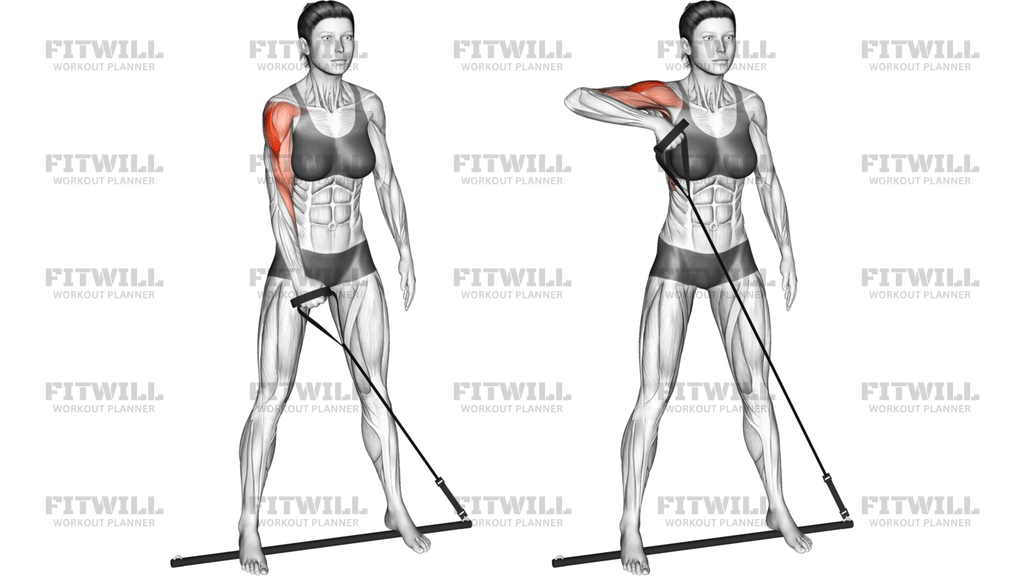
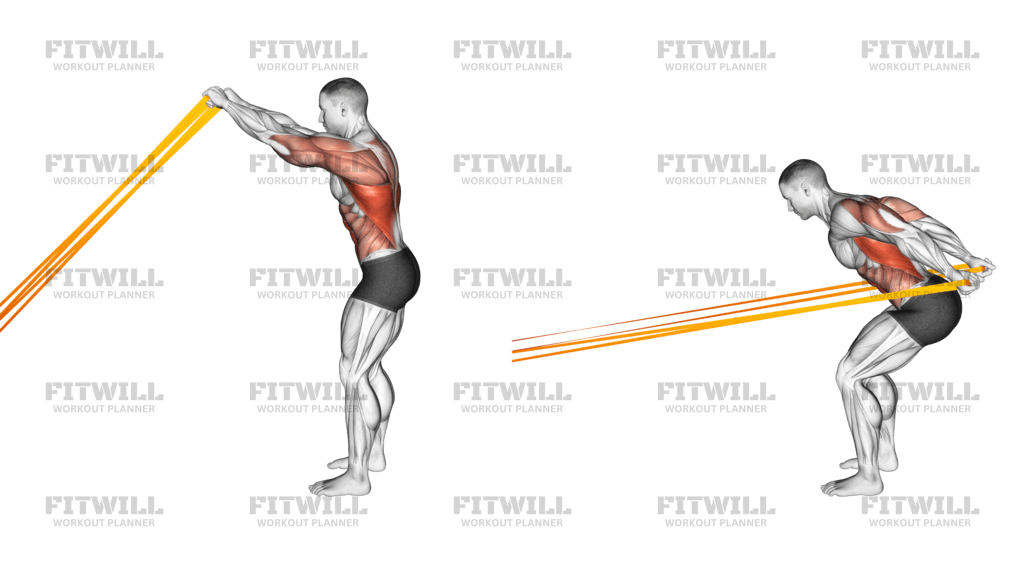
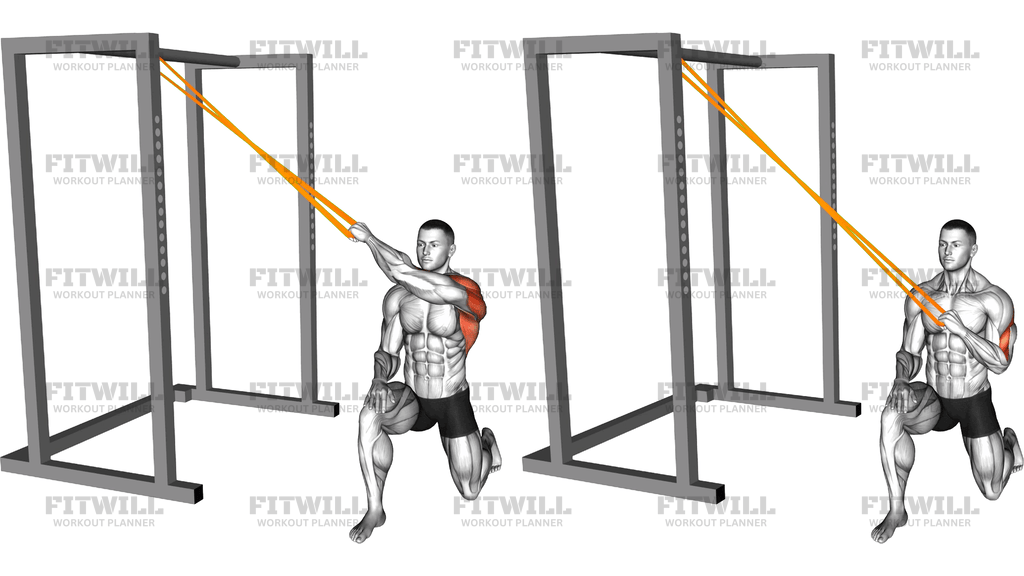
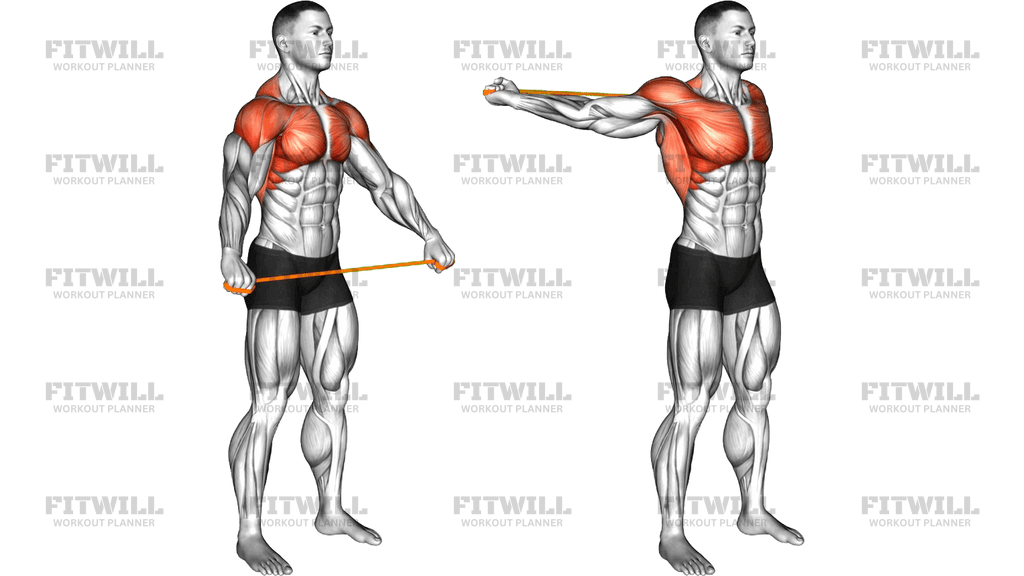
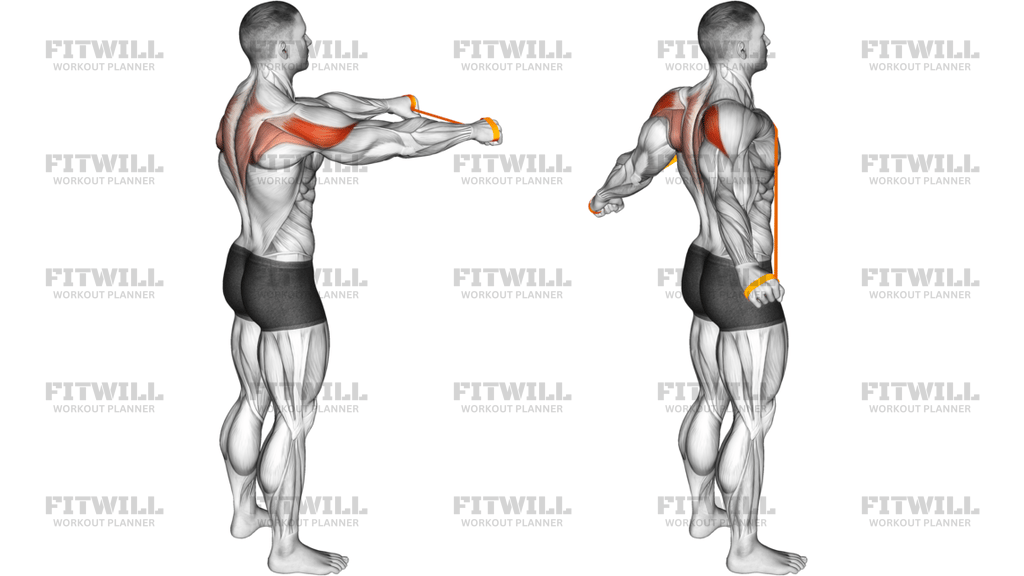
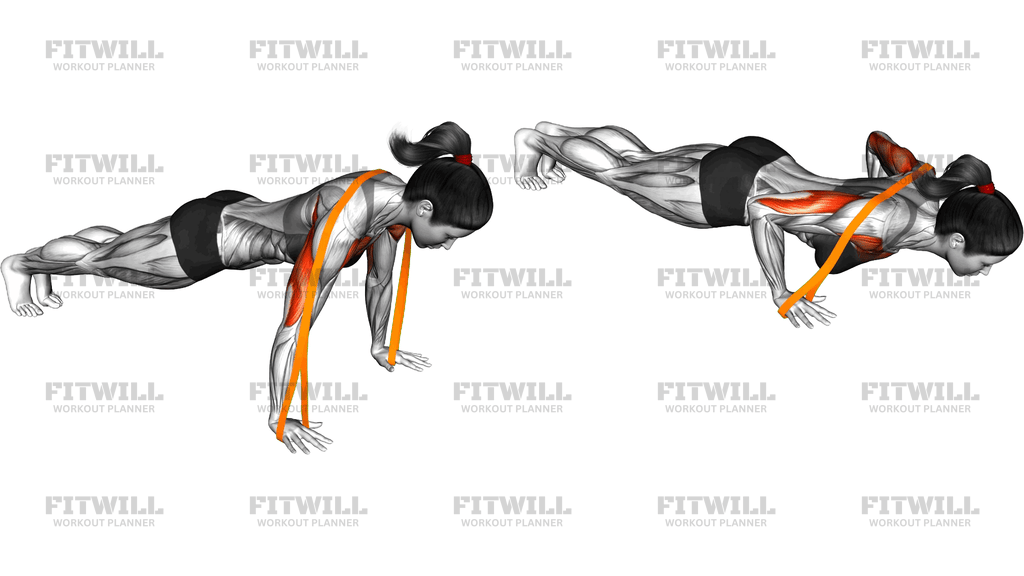
Bar Band Standing Single-Arm Upright Row is a single-side band pull that trains shoulder elevation with a strong emphasis on the side delts and upper traps. The setup shown here uses a low anchor, so the line of pull starts below the hand and climbs straight up the front of the body. That low-to-high path is what makes the exercise feel different from a curl or a standard row: the elbow leads, the wrist stays below or near the elbow, and the shoulder has to stay organized while the band gets tighter.
This movement is useful when you want direct shoulder work without loading a barbell. The band keeps tension highest near the top, which makes the finishing range very honest. If you rush the setup or stand too close to the anchor, the band gets slack and the rep turns sloppy; if you stand too far away, the pull can drag you forward or rotate the torso. A good rep starts with a stable stance, a square chest, and a handle or grip that stays close to the body as the elbow travels upward.
The exercise should feel like a controlled lift rather than a shrugging yank. As the elbow rises, the shoulder blade and upper arm move together, but the neck should stay long and the ribs should not flare forward. The working shoulder can climb, yet the torso should stay mostly still. That matters because the goal is to load the delts and upper traps with clean tension, not to hide the effort behind sway, lean-back, or a half-turn of the trunk.
Use this movement for accessory shoulder volume, warm-up activation, or higher-rep work when you want a simple unilateral pattern that is easy to scale. It is especially practical when one side feels weaker or less coordinated, because the band exposes side-to-side differences quickly. Beginners can use it if the range stays pain-free and the band tension is light enough to keep the elbow path smooth. If the shoulder pinches at the top, shorten the range slightly and keep the elbow below the point where discomfort starts.
[ Workout Log & Planner ]
Put your next workout in Fitwill
Keep your plan and training log ready when you are.


Instructions
- Anchor the band low and stand tall facing forward with feet about hip-width apart, holding the handle in the working hand in front of the thigh.
- Keep the chest square, knees soft, and the free arm relaxed at your side so the torso does not twist when the band gets tight.
- Set the working wrist neutral and let the shoulder stay down before you start the pull.
- Brace your midsection, then drive the elbow upward and slightly out, leading the rep with the elbow rather than the hand.
- Keep the handle close to the front of the body as it travels up toward the lower chest or collarbone area.
- Stop when the upper arm reaches a strong, pain-free top position and the shoulder is not rolling forward or shrugging hard.
- Pause briefly at the top, then lower the handle in a slow, controlled path back to the starting position.
- Reset your posture and repeat for the planned reps, exhaling as you lift and inhaling as you return.
Tips & Tricks
- Use a light enough band that the last few inches of the pull stay smooth instead of jerky.
- If the band tugs you off balance, stand a little farther from the anchor or widen your stance slightly.
- Keep the handle traveling close to your torso; letting it drift away usually turns the rep into a front raise.
- Let the elbow lead the motion and keep the wrist from climbing higher than the elbow too early.
- Do not yank the shoulder toward the ear; a hard shrug should appear only briefly at the finish if at all.
- A neutral wrist and closed grip are easier on the shoulder than letting the hand fold inward.
- Stop just below the point where the shoulder feels pinched, even if that means a shorter range on one side.
- Lower the band under control, because the return phase is where the shoulder and upper back have to resist the tension.
Frequently Asked Questions
What does Bar Band Standing Single-Arm Upright Row train most?
It mainly targets the side delts and upper traps, with the upper back and arms helping to guide the pull.
How should my elbow move during the band pull?
Lead with the elbow and let it travel up and slightly out in front of the body while the handle stays close to your torso.
Where should the band be anchored for this exercise?
Use a secure low anchor so the resistance rises from below the hand, which keeps the pull path vertical and controlled.
Should I keep the handle close to my body?
Yes. If the handle drifts away from the front of your thigh and torso, the movement usually turns into a sloppy front-delt lift.
Why do I feel this in my neck or traps so quickly?
That usually means the band is too heavy or the shoulder is shrugging too early. Lighten the band and keep the neck long.
Can beginners use a single-arm upright row with a band?
Yes, as long as the resistance is light and the top position stays pain-free and controlled.
What if my shoulder pinches at the top of the rep?
Shorten the range, lower the band tension, and stop before the upper arm reaches the painful position.
How can I make the band harder without changing the exercise?
Step a little farther from the anchor or use a stronger band, but keep the same upright elbow path and stable torso.