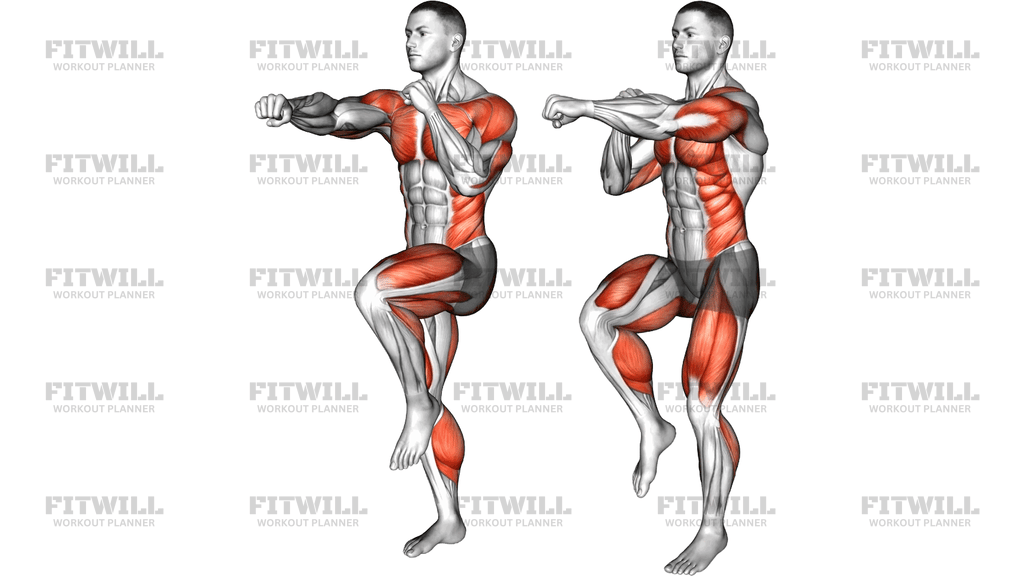
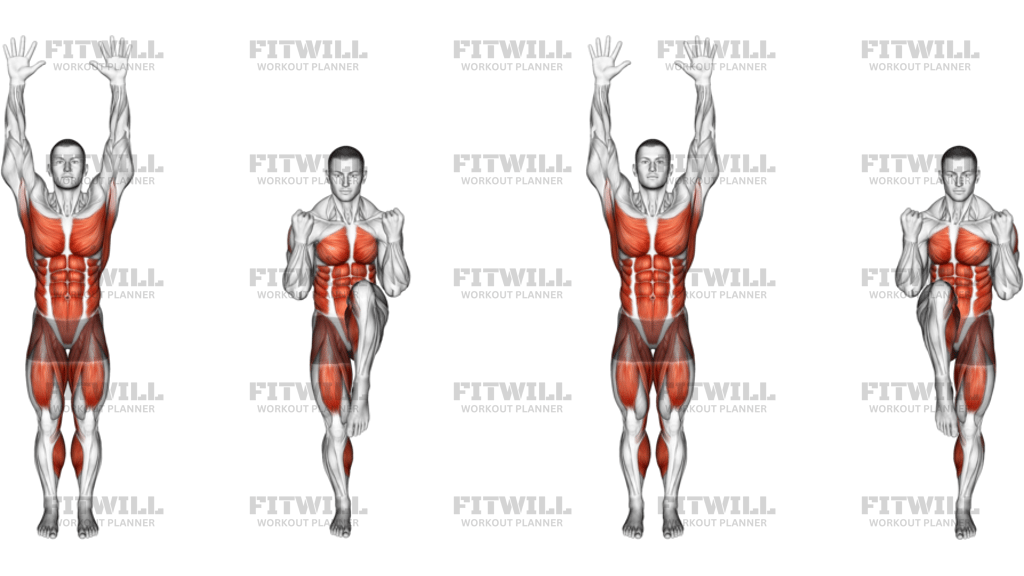
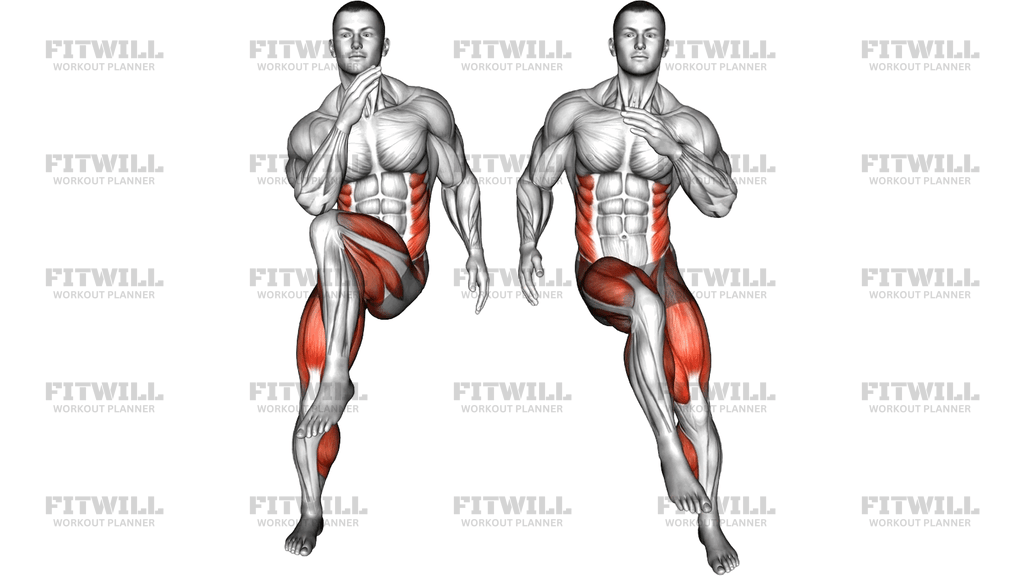
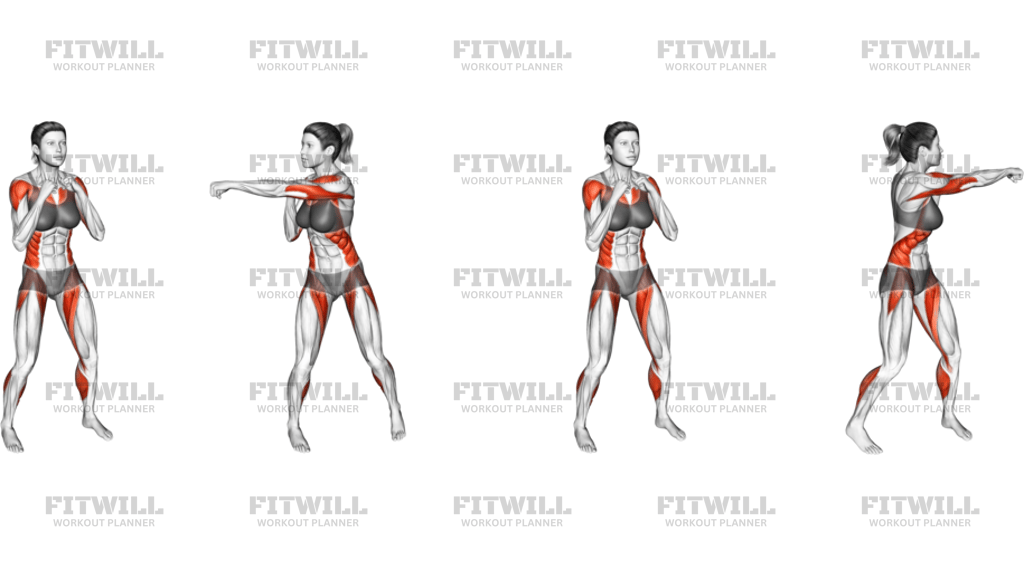
Jump Step Jump
Jump Step Jump is a bodyweight plyometric drill that blends a small jump, a quick step reset, and another jump into one continuous rhythm. It is built to train lower-body power, foot speed, landing control, and coordination rather than raw strength. The value of the exercise comes from how cleanly you can move from one contact to the next while keeping your torso organized and your landings quiet.
Because the movement is fast, the setup matters. Start in a short athletic stance with your feet under your hips, knees softly bent, chest tall, and weight centered over the midfoot. That position lets you absorb force through the ankles, knees, and hips instead of collapsing forward or bouncing on stiff legs. The step portion should feel like an active reset, not a pause that breaks the rhythm.
Each repetition should stay small and springy. Jump with enough height to create a crisp transition, then land softly and immediately step into the next position. Keep your knees tracking in line with your toes, and avoid letting one side twist or cave in as you change direction. If the drill is done well, the contacts will feel quick and controlled rather than loud and frantic.
Jump Step Jump fits well in warm-ups, athletic conditioning blocks, and plyometric circuits where you want to prepare the nervous system without heavy loading. It can also be used as a low-equipment drill for developing coordination and elastic power in the feet and lower legs. Beginners can use it if they keep the jumps small and the step controlled, but anyone with ankle, knee, or hip irritation should shorten the range and slow the cadence.
The best result comes from repeatable rhythm, not fatigue-driven chaos. Stop the set when the landings get noisy, the torso starts swinging, or the step loses its precision. A clean rep should look quick, balanced, and easy to repeat from one side to the other.
Fitwill
Log Workouts, Track Progress & Build Strength.
Achieve more with Fitwill: explore over 9600 exercises with images and videos, access built-in and custom workouts, perfect for both gym and home sessions, and see real results.
Start your journey. Download today!




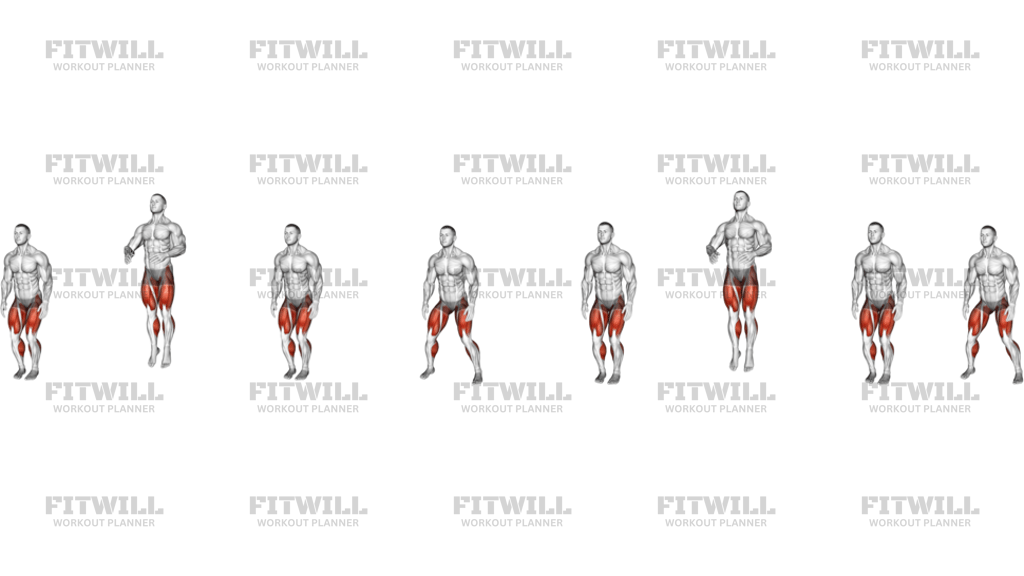
Instructions
- Stand in a short athletic stance with your feet under your hips, knees slightly bent, chest tall, and arms relaxed.
- Lower a few inches to preload your ankles, knees, and hips before the first jump.
- Drive off the floor for a small vertical jump and land softly on the balls of your feet.
- Absorb the landing by letting your ankles, knees, and hips bend together instead of locking out.
- Step one foot out to the side to create a quick reset position without leaning your torso.
- Bring the other foot in and re-center your stance so you are ready for the next jump.
- Jump again with the same short, springy takeoff and quiet landing.
- Alternate the step direction and keep the rhythm smooth for the planned number of reps.
Tips & Tricks
- Keep the jumps low; this drill should feel elastic, not like a max-height box jump.
- Land quietly. A loud landing usually means you are dropping too hard or not absorbing force well.
- Let the step be quick and purposeful instead of shuffling your feet into position.
- Keep your chest stacked over your hips so the torso does not pitch forward during the landing.
- Track each knee over the middle toes to avoid collapsing inward on the step or jump.
- Use the arms only if they help your rhythm; do not let a big arm swing throw off balance.
- If the cadence gets messy, shorten the jump before you shorten the step.
- Stop the set as soon as the contacts become heavy or you start losing side-to-side control.
Frequently Asked Questions
What does Jump Step Jump train most?
It mainly trains lower-body power, foot speed, landing control, and coordination through repeated jump-and-step transitions.
How high should the jump be?
Only high enough to make the transition crisp. The drill works better when the jump stays small and springy.
What should the step portion feel like?
The step should feel like an active reset into the next position, not a slow walk or a full pause.
Where should I feel this exercise?
You should feel it most in the calves, quads, glutes, and the stabilizers around the ankles and hips.
Can a beginner do Jump Step Jump?
Yes, as long as the jumps stay low and the step is controlled. Start with short sets and focus on clean landings.
What is the biggest form mistake?
The most common mistake is landing too hard and letting the knees cave inward while the torso falls out of position.
Is this more of a strength exercise or cardio exercise?
It is primarily a plyometric and conditioning drill, with strength benefits coming from repeated force absorption and takeoff.
How do I progress the drill?
Progress by adding a few more reps, moving a little faster, or covering slightly more space while keeping the same landing quality.