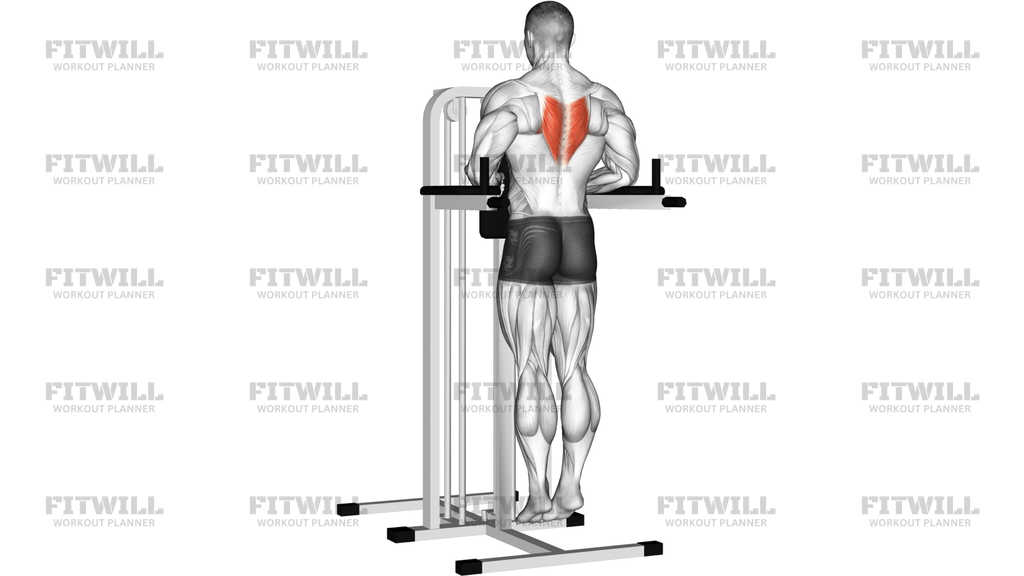
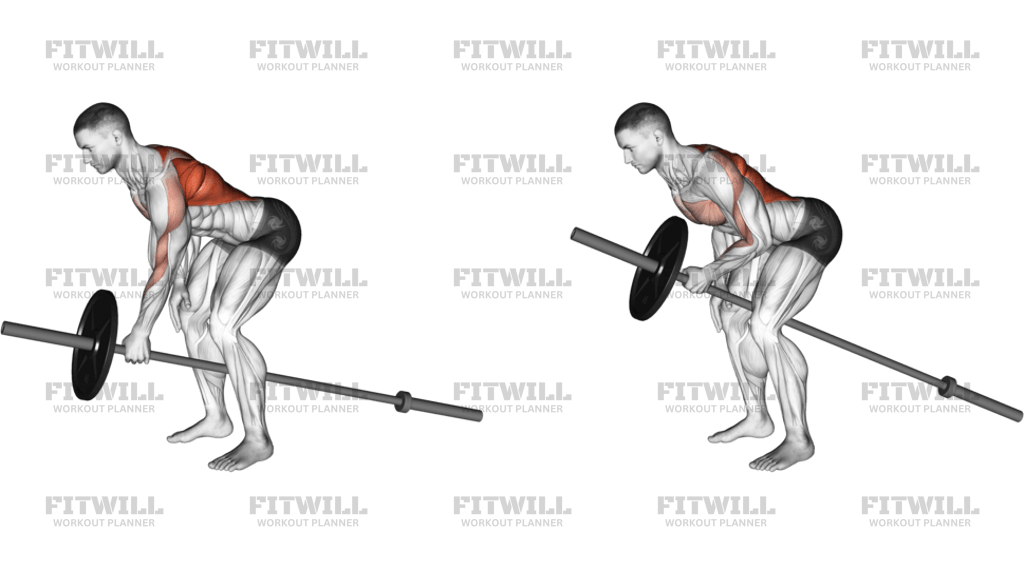
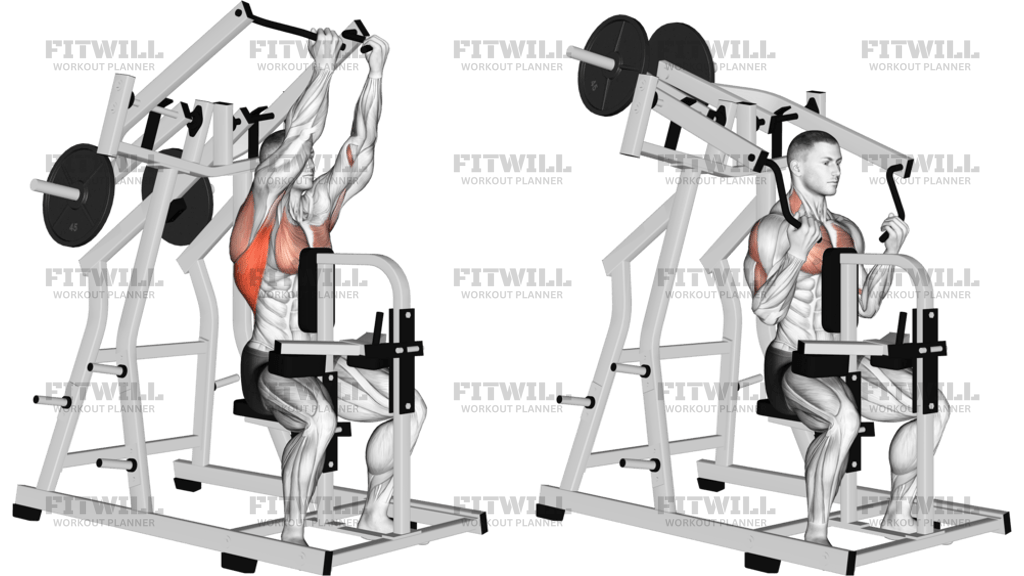
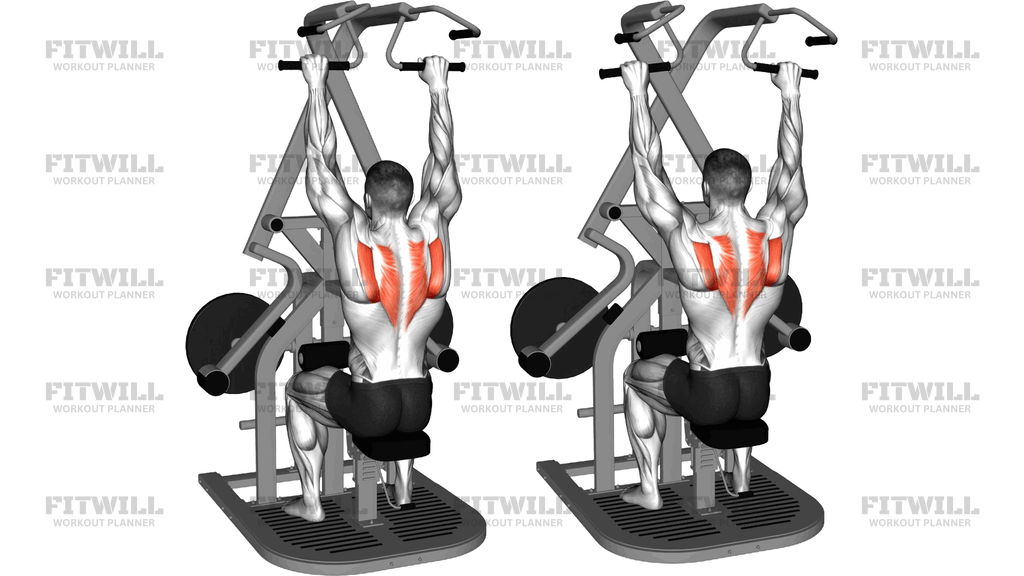
Commando Pull-Up
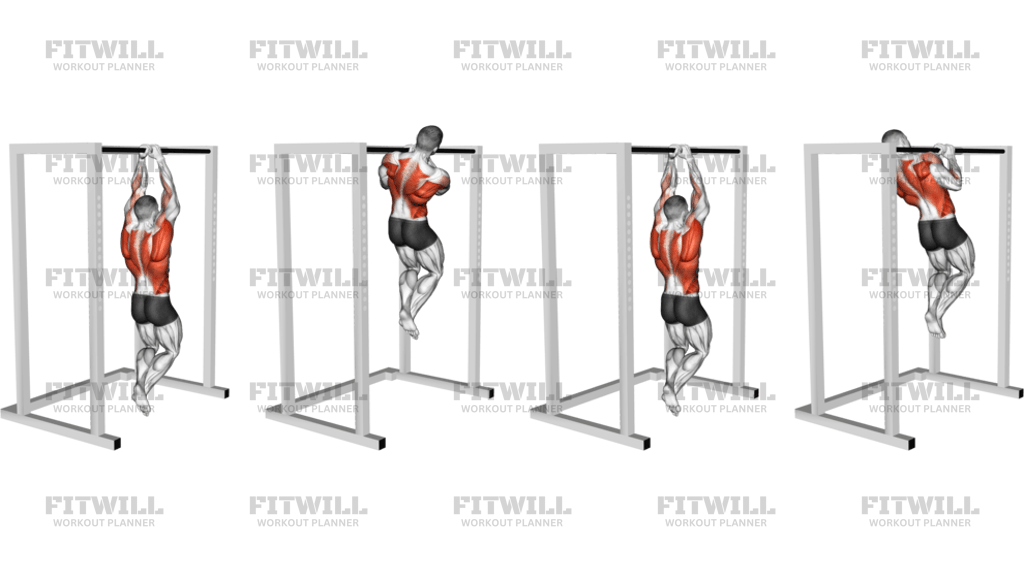
Commando Pull-Up is a close-grip bar pull-up performed with your hands offset on the same overhead bar, so one side of the torso works a little harder on each rep. The position changes the pull compared with a standard pull-up: you are still training the back hard, but the angled grip and body rotation add more demand to the lats, upper back, biceps, forearms, and trunk control.
The exercise is useful when you want vertical pulling strength with a strong unilateral feel without needing a cable station or special handle. Because your hands are close together and your body is slightly turned, the set is only as good as the setup. A stable hang, a firm grip, and a controlled shoulder position matter more here than they do in a straight, symmetrical pull-up.
Commando Pull-Up works best when you pull one side of the chest or shoulder toward the bar instead of swinging into the top position. The elbow on the working side should drive down and back while the opposite arm helps stabilize the hang. That makes the rep feel strong through the mid-back and lats without turning it into a kipping movement.
This is a strong accessory for back-focused sessions, calisthenics work, and grip training. It can also be a useful regression toward stricter pull-ups because the close hand position often lets you get more quality reps than a wide overhand pull-up. For some lifters, the offset grip also makes it easier to keep the shoulders packed and the chest up than on a wide bar pull-up, which is helpful when you are building toward harder vertical pulling work.
Safety comes from keeping the rib cage controlled, avoiding excessive twisting, and lowering under control all the way to a dead hang before the next rep. If you rush the descent or let the legs kick, the movement turns into momentum work instead of a clean upper-body pull. Treat each side as its own repetition, keep the same path and finish on both sides, and shorten the range if the top position starts to feel jammed at the shoulder or wrist.
[ Workout Log & Planner ]
Put your next workout in Fitwill
Keep your plan and training log ready when you are.


Instructions
- Grip a fixed overhead pull-up bar with your hands close together and offset, one hand slightly in front of the other, and keep your chest turned a little toward one side.
- Hang with straight arms, shoulders pulled down away from your ears, legs quiet, and ankles crossed or feet together so the lower body does not swing.
- Set your ribs down and brace your midsection before the first pull so the torso stays organized under load.
- Pull the elbow on the working side down and back while driving the upper chest or shoulder toward that side of the bar.
- Keep the opposite arm active so it stabilizes the hang instead of letting you twist wildly at the top.
- Pause briefly when your chin or upper chest reaches the bar-height finish on that side, then avoid shrugging into the neck.
- Lower yourself slowly until both arms are straight again and the shoulders return to a controlled dead hang.
- Switch the lead side on the next repetition or the next set so both sides get equal work.
- Breathe out as you pull and breathe in as you lower, then reset your body before starting the next rep.
Tips & Tricks
- Keep the grip close but not jammed together; if the wrists feel forced, move one hand a little farther forward or back on the bar.
- Pull with the elbow, not just the hand, so the lat on the working side does the main job instead of turning the rep into a biceps curl.
- If your torso spins, shorten the range and slow the top half of the pull until both sides look the same.
- Touch the same point on the bar or bar height on every rep so you do not drift higher on one side and lower on the other.
- A small pause at the top makes the exercise stricter and reduces the temptation to kick the legs for extra height.
- Crossing the ankles or keeping the feet lightly together helps stop the lower body from counter-rotating.
- Use a controlled lower all the way to straight arms; half reps make this movement feel more like a shrug than a pull-up.
- If one shoulder complains at the top, reduce the twist and finish each rep with the chest slightly lower rather than forcing a hard side lean.
- Use assistance if needed so you can keep the same path on both sides instead of grinding out uneven reps.
- Stop the set when the hang turns sloppy; once the swing starts, the exercise stops training the intended muscles well.
Frequently Asked Questions
What muscles does Commando Pull-Up train most?
It mainly trains the lats, with strong help from the upper back, biceps, and forearms. Your core also has to resist rotation while you pull.
Is Commando Pull-Up harder than a regular pull-up?
Usually yes, because the close offset grip and body rotation demand more control at the top. Many lifters find it easier to cheat, so the strict version feels challenging even with moderate strength.
What is the right hand position for Commando Pull-Up?
Keep both hands close on the same bar with one slightly in front of the other, then pull toward one side of the bar. The exact offset can vary a little, but it should stay close enough to keep the movement compact.
Should I switch sides every rep in Commando Pull-Up?
That is the cleanest way to balance the work. If you finish all reps on one side before switching, keep the sets matched so neither side gets ignored.
Can beginners do Commando Pull-Up?
Yes, if they can already hang and control a basic pull-up or assisted pull-up. Start with assistance or a reduced range so the body does not swing or rotate excessively.
Why does my body twist during Commando Pull-Up?
A little rotation is part of the exercise, but big twisting usually means the legs are swinging or the pull is too fast. Tighten the abs, cross the ankles, and slow the descent to clean it up.
What should I do if my wrists or shoulders feel awkward?
Reduce the offset between the hands and shorten the top range before forcing a full rep. If the discomfort stays sharp, swap to assisted pull-ups or a neutral-grip variation.
What is a good substitution for Commando Pull-Up?
Assisted pull-ups, chin-ups, or close-grip lat pulldowns are the closest options. They keep the vertical pulling pattern while reducing the rotation and grip demand.