Dumbbell Bench Dip With Legs Elevated
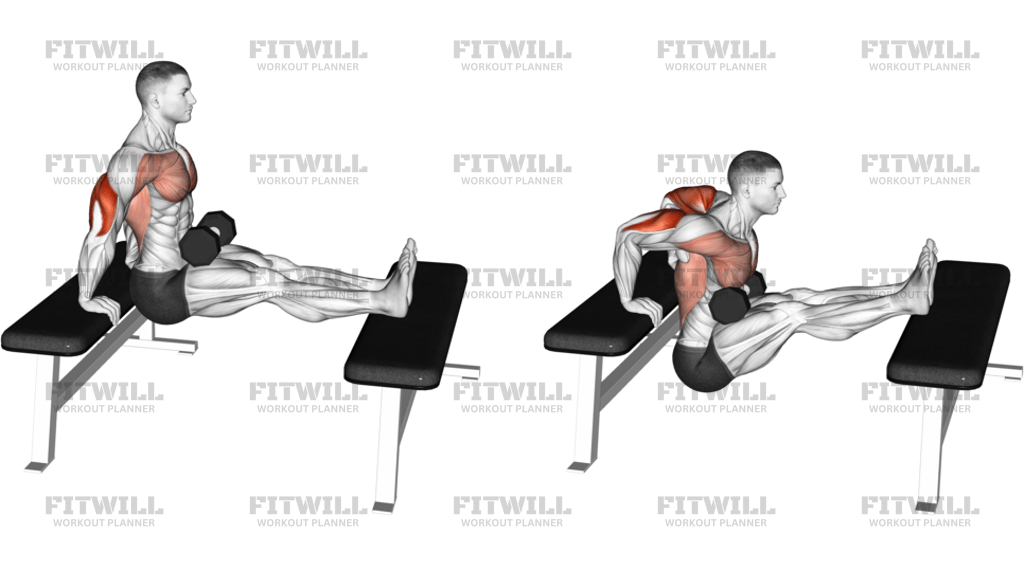
Dumbbell Bench Dip With Legs Elevated is a bodyweight-plus-load pressing exercise that emphasizes the triceps while also challenging the chest, front shoulders, and trunk to keep the body steady. With the hands behind the body and the heels supported on an opposite bench, the movement puts the shoulder and elbow joints in a demanding position, so the setup matters as much as the rep itself. The dumbbell on the lap or hips adds resistance without changing the basic dip pattern.
This exercise is useful when you want a hard triceps finisher, a closed-chain pressing accessory, or a movement that makes you control your own body weight while the feet are lifted. Elevating the legs shifts more load onto the arms and makes it harder to cheat with the legs. That makes Dumbbell Bench Dip With Legs Elevated more demanding than a flat bench dip and more appropriate for lifters who already have enough shoulder comfort and pressing control to own the position.
The best setup is a stable bench behind you for the hands and another bench or box in front for the heels. Sit between them, place the palms on the bench edge with the fingers pointing forward or slightly outward, and slide the feet onto the elevated support. Keep the chest open, the shoulders packed down, and the dumbbell balanced across the lap before you start the first descent. If the shoulders feel jammed in the bottom, shorten the range rather than forcing depth.
Each repetition should follow a clean vertical pattern: bend the elbows to lower the hips, then press through the hands to straighten the arms without letting the shoulders shrug. Keep the elbows tracking back rather than flaring wide, and let the torso stay close to the bench instead of drifting forward. Exhale as you press up, inhale on the way down, and finish each rep by re-stacking the shoulders over the hands before the next descent.
Dumbbell Bench Dip With Legs Elevated works best when the goal is localized upper-arm strength, hypertrophy, or a demanding bodyweight accessory after heavier presses. It is not a movement to rush, and it is not the best choice for anyone with irritated shoulders or poor control in deep shoulder extension. Clean reps, a controlled bottom position, and a stable foot support will make the exercise more useful and much safer.
[ Workout Log & Planner ]
Put your next workout in Fitwill
Keep your plan and training log ready when you are.


Instructions
- Sit on the floor between a flat bench behind you and a second bench or box in front of you, then place your hands on the rear bench edge beside your hips.
- Set your heels or lower calves on the front bench so your legs are elevated, and balance a dumbbell across your lap or hips before you start.
- Press through your palms to lift your hips clear of the floor, keeping your chest up, shoulders down, and elbows pointing back.
- Lower your body by bending your elbows until your upper arms approach parallel to the floor or you reach a comfortable shoulder stretch.
- Keep the dumbbell steady on your lap and let the torso travel straight down rather than sliding forward away from the bench.
- Drive through your hands to straighten the elbows and bring your hips back up until your arms are nearly straight.
- Exhale as you press up and inhale as you lower, keeping the descent slow enough to control the shoulder position.
- Reset your shoulders over your hands before each rep, then repeat for the planned number of repetitions.
- Step off the benches carefully when finished and remove the dumbbell from your lap before standing up.
Tips & Tricks
- Keep the heels elevated on a bench that lets your knees stay softly bent; straight, locked legs often pull the hips forward and reduce control.
- If the front of your shoulders feels pinched, shorten the bottom range before your elbows drop below bench level.
- A small forward tilt of the torso can help the triceps work harder, but do not let the chest collapse or the shoulders roll forward.
- Use a dumbbell that stays stable on the lap; if it slides, wrap a towel around it or go lighter.
- Think about bending and straightening the elbows, not pushing the shoulders up and down at the top.
- Keep your hands close enough to the hips that the triceps stay loaded; placing them too far back makes the bottom position awkward.
- Pause for a brief count at the top if you tend to bounce through the dip and lose tension.
- Stop the set when you can no longer keep the ribs down and the upper arms tracking in a clean line.
- If bodyweight plus the dumbbell is too much, remove the load first before changing the bench setup.
Frequently Asked Questions
What muscles does Dumbbell Bench Dip With Legs Elevated work most?
It mainly targets the triceps, with the chest and front shoulders helping during the press.
Why are the legs elevated in Dumbbell Bench Dip With Legs Elevated?
Elevating the legs increases the amount of body weight your arms have to move and makes the dip more demanding on the triceps and shoulders.
Where should I place the dumbbell during Dumbbell Bench Dip With Legs Elevated?
Balance it across the lap or hips before the first rep so it does not shift as you lower and press.
How deep should I go in the bottom of the dip?
Lower only until you feel a strong triceps stretch without forcing the shoulders into a painful pinch or letting the chest collapse.
Is Dumbbell Bench Dip With Legs Elevated safe for sore shoulders?
Not always. If deep shoulder extension bothers you, use a shorter range, a lower step-up, or choose a different triceps exercise.
Should my elbows flare out during Dumbbell Bench Dip With Legs Elevated?
No. Keep them tracking back so the press stays focused on the triceps and the shoulders do not take over.
Can beginners do Dumbbell Bench Dip With Legs Elevated?
Yes, but only if they can control their body weight on the benches. Start with no load and a shorter range before adding the dumbbell.
What can I use instead of Dumbbell Bench Dip With Legs Elevated?
A standard bench dip, assisted bench dip with the feet on the floor, or a cable triceps pressdown can be easier substitutes.