Dumbbell Decline Sit-Up
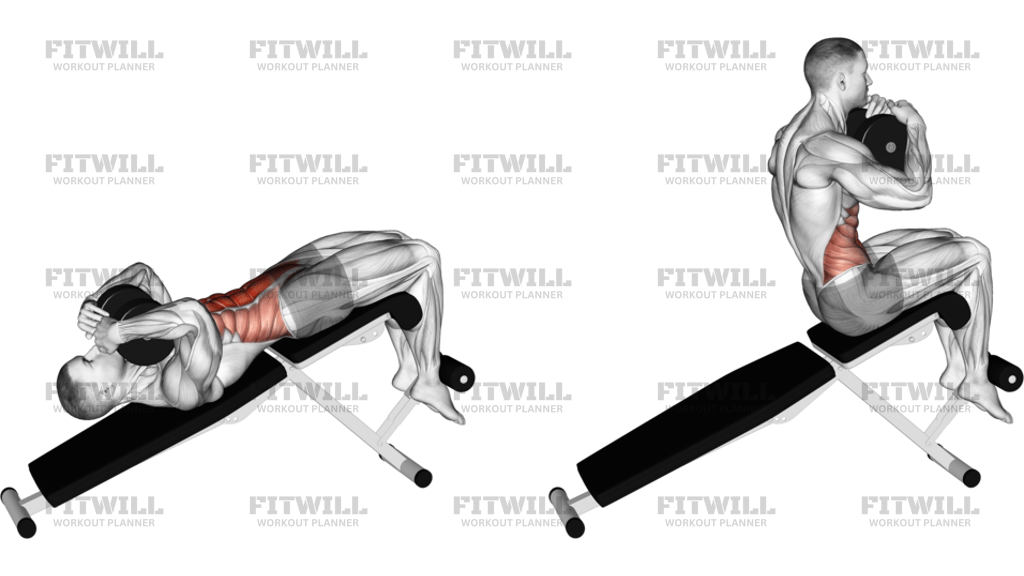
Dumbbell Decline Sit-Up is a weighted abdominal exercise performed on a decline bench with the feet secured under the pads and the load held close to the chest. The decline angle increases the demand on the trunk compared with a flat sit-up, so the rep is built around deliberate torso flexion, not speed. In the image, the lifter starts reclined on the bench, then curls the ribcage toward the pelvis while keeping the dumbbell tucked in and the neck relaxed.
This movement is best understood as a controlled sit-up pattern for the abdominal wall, with the hip flexors and other stabilizers helping to keep the body organized on the descent and ascent. Because the bench places the torso below horizontal, the setup matters more than it does on a floor sit-up: secure the ankles, center the hips on the pad, and choose a load that lets the torso move without jerking or swinging. When the setup is sloppy, the rep usually turns into a hip-dominant heave instead of a clean trunk curl.
A good repetition begins with a brace and an exhale as you lift. Keep the dumbbell against the chest or upper sternum so the load does not pull the shoulders forward, then curl up until the chest is stacked over the hips. The top of the rep should feel like a hard abdominal squeeze, not a yank from the neck or a bounce from the bench. Lower under control and let the upper back return to the pad before resetting the brace for the next rep.
Dumbbell Decline Sit-Up is useful when you want a direct, loaded core exercise that can be progressed without changing the pattern completely. It fits well in accessory work, core blocks, or finishing work after the main lifts. Use it only through a pain-free range and keep the tempo honest, because the decline bench amplifies every mistake. If the lower back arches, the neck tightens, or the rep speed starts to climb, the load is too heavy or the bench angle is too aggressive for the current set.
[ Workout Log & Planner ]
Put your next workout in Fitwill
Keep your plan and training log ready when you are.


Instructions
- Set the decline bench to a moderate angle and hook your feet securely under the ankle pads.
- Sit on the bench with your hips centered, then hold one dumbbell against your upper chest with both hands.
- Lie back until your shoulder blades are supported, keeping your chin tucked and your neck long.
- Brace your abs and exhale as you begin curling your ribcage toward your pelvis.
- Lift your torso smoothly until your chest comes over your thighs and the dumbbell stays close to your sternum.
- Squeeze your abs briefly at the top without yanking your head or letting the weight drift forward.
- Lower your torso slowly until your upper back returns to the pad under control.
- Reset your brace at the bottom before starting the next repetition.
Tips & Tricks
- Hold the dumbbell at the chest instead of reaching it overhead; the closer load path makes the rep more controlled.
- Choose a decline angle you can own for every rep. A steeper bench makes hip flexor cheating more likely.
- Keep the feet anchored, but do not push hard through the pads to launch the torso upward.
- Think ribs-to-pelvis on the way up instead of chest-up-first or head-forward-first.
- Lower for two to three seconds so the abs stay loaded on the way back down.
- If your neck feels it more than your abs, shorten the range and keep your gaze on the ceiling.
- Let the shoulders come off the bench together; avoid twisting or reaching one elbow ahead of the other.
- Stop the set when the dumbbell starts drifting or the ascent turns into a swing.
Frequently Asked Questions
What does Dumbbell Decline Sit-Up work most?
It mainly trains the abdominal wall, especially the rectus abdominis, with the hip flexors and obliques helping stabilize the rep.
Where should I hold the dumbbell during the sit-up?
Hold it against the upper chest with both hands so it stays close to your torso and does not pull your shoulders forward.
Can beginners use a decline bench for this movement?
Yes, but they should start with bodyweight or a very light dumbbell and use a moderate decline angle.
How high should I come up on each rep?
Rise until the chest is over the thighs and the abs are fully curled, not until you jerk yourself upright.
Why are my hip flexors taking over?
The bench angle may be too steep, the load may be too heavy, or you may be driving hard through the feet instead of curling the ribs down.
Should my lower back stay flat on the decline bench?
Keep it controlled against the pad on the way down, but do not force a hard arch or bounce off the bench.
What is the biggest form mistake on this exercise?
The biggest mistake is using momentum from the legs, neck, or shoulders instead of a slow abdominal curl.
How can I make Dumbbell Decline Sit-Up harder?
Increase the dumbbell load, slow the lowering phase, or use a slightly steeper decline only if you can still control every rep.