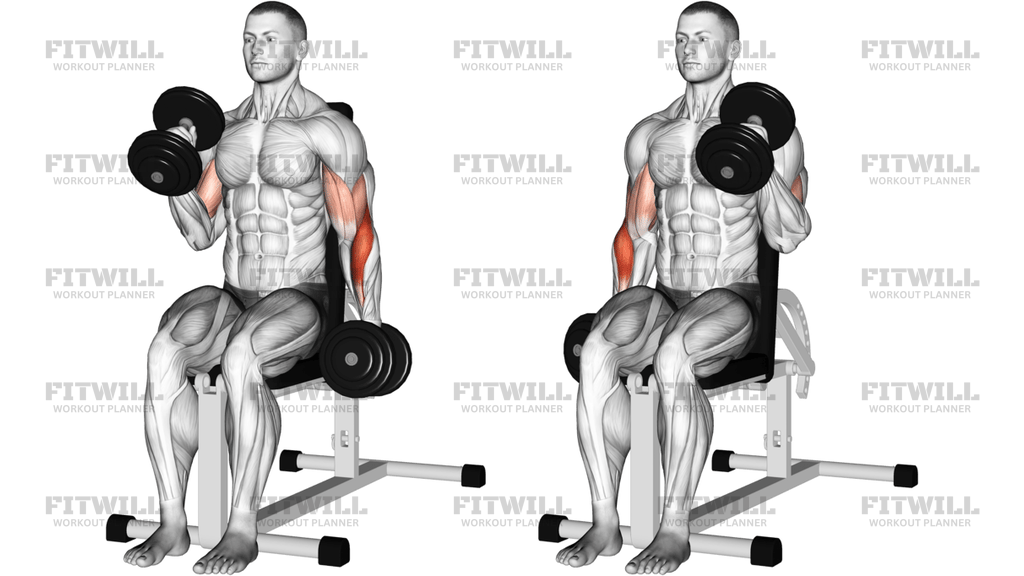
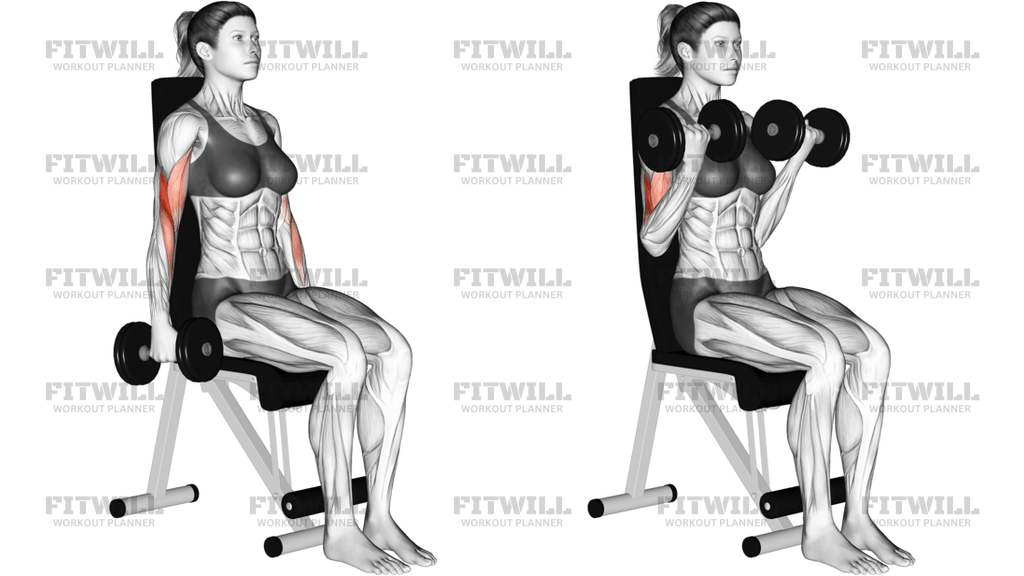
Dumbbell Incline Biceps Curl Version 2
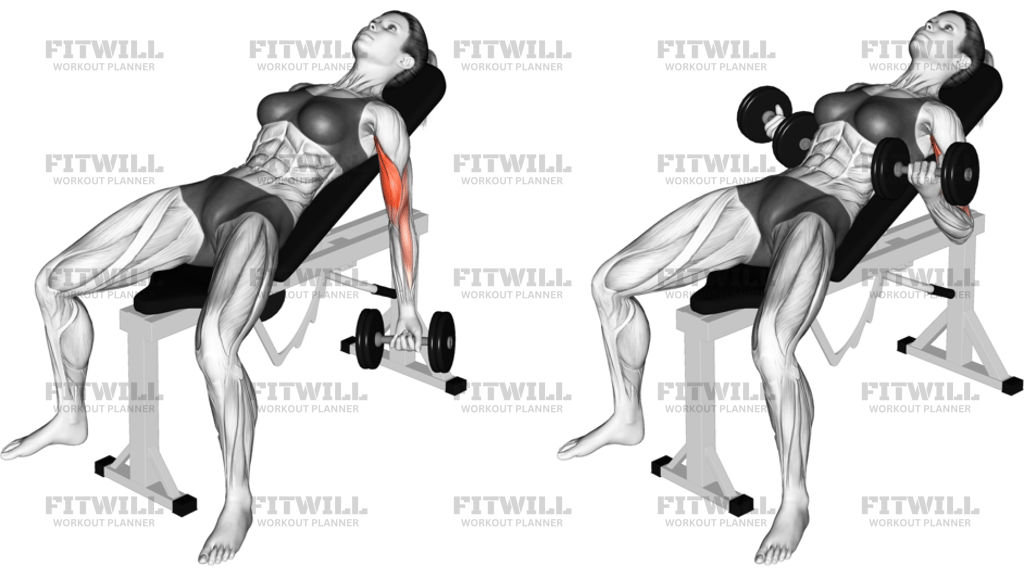
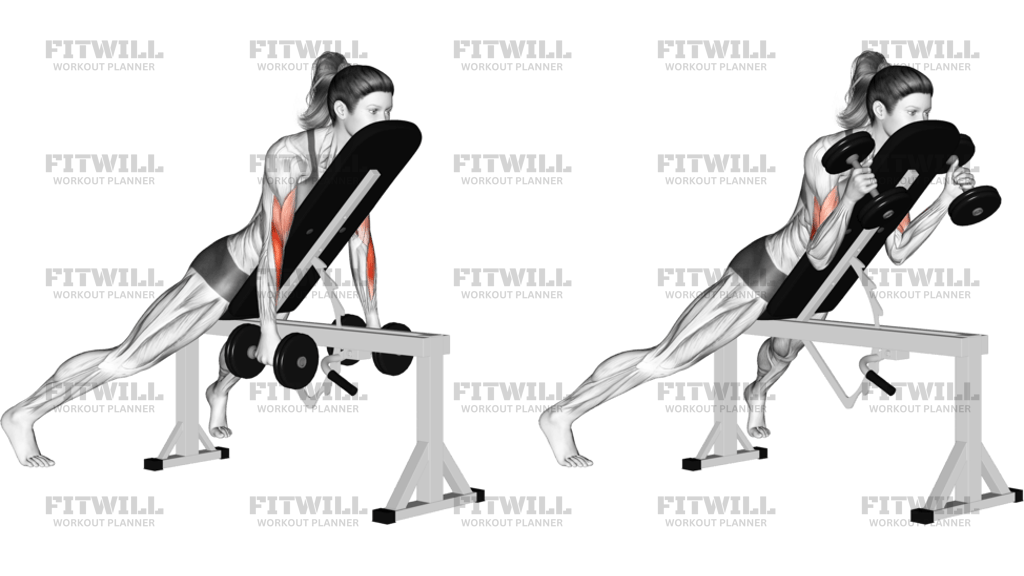
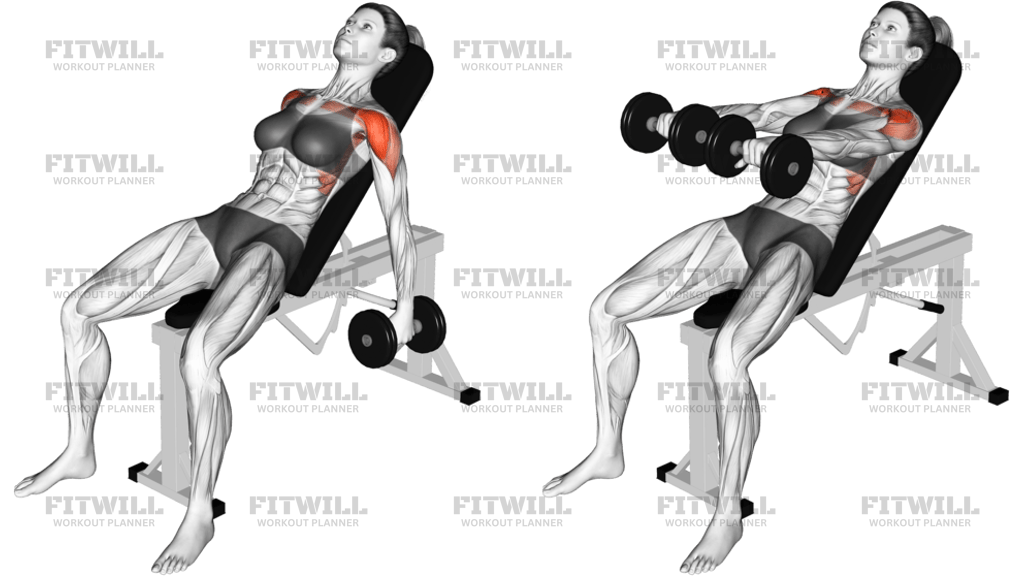
Dumbbell Incline Biceps Curl Version 2 is a dumbbell curling exercise performed while lying back on an incline bench. The bench angle changes the arm position so the upper arm starts slightly behind the torso, which puts the biceps under tension before the first rep begins. That setup is the main difference from a standing curl: once you are reclined, the shoulders stay pinned to the bench and the curl has to come from the elbow, not from swinging the torso.
This variation is mainly used to train the biceps with a long, controlled range of motion. Because the arms hang behind the body at the bottom, the movement emphasizes a stretched start and makes cheating harder. The forearms, brachialis, and brachioradialis assist, while the front of the shoulder only stabilizes the arm position. It works well when you want strict arm work that feels more isolated than a standing dumbbell curl.
Good setup matters more here than on many arm exercises. Set the bench to a moderate incline, keep your head, upper back, and hips supported, and let both dumbbells hang straight down with the palms facing forward. The elbows should stay slightly behind the torso at the start, not flared out in front of the shoulders. If the bench is too steep or the weights drift forward, the rep turns into a shoulder-driven curl and the biceps lose the best line of pull.
Each repetition should move in a smooth arc: curl the dumbbells toward the front of the shoulders, squeeze briefly near the top, then lower them slowly until the elbows are open and the biceps are stretched again. Keep the wrists stacked over the forearms, avoid shrugging the shoulders, and keep the upper arms quiet. Breathing should stay simple and steady, with the exhale during the curl and the inhale on the way down.
Use this exercise for focused arm hypertrophy, accessory work after pressing or pulling, or any session where you want strict biceps tension without momentum. It is especially useful when a lifter needs a cleaner curl pattern and less body English than a standing version. Light to moderate loads usually work best, because the incline position makes sloppy reps obvious quickly. If you feel the lower back, shoulders, or neck taking over, the bench angle or load is usually too aggressive.
[ Workout Log & Planner ]
Put your next workout in Fitwill
Keep your plan and training log ready when you are.


Instructions
- Set an incline bench to a moderate angle and sit with your back, head, and hips supported against the pad.
- Hold a dumbbell in each hand with your arms hanging straight down, palms facing forward, and your elbows slightly behind your torso.
- Plant your feet flat and keep your chest open without lifting your ribs off the bench.
- Brace your torso and keep your upper arms still before starting the first curl.
- Curl both dumbbells toward the front of your shoulders by bending only at the elbows.
- Keep your wrists straight and your elbows from drifting forward as the weights rise.
- Squeeze the biceps briefly at the top without shrugging the shoulders.
- Lower the dumbbells slowly until your arms are nearly straight and the biceps feel fully lengthened.
- Exhale as you curl up, inhale as you lower, and stop the set if you start swinging or losing bench contact.
Tips & Tricks
- A bench angle around 30-45 degrees usually keeps the biceps loaded without turning the curl into a front-shoulder raise.
- Let the dumbbells hang behind the bench line at the bottom; if they start in front of your chest, the stretch is lost.
- Keep your elbows fixed in space instead of letting them travel forward as the rep gets harder.
- Use a supinated grip for the whole set so the forearms do not rotate into a hammer curl halfway through.
- Lower the bells slowly enough that you can feel the biceps lengthen without losing shoulder contact on the pad.
- Choose lighter dumbbells than you would for a standing curl, because the incline position makes cheating much harder.
- If your wrists bend back, reduce the load and stack the knuckles over the forearms before each rep.
- Stop the set when your shoulders begin to roll forward or your upper arms leave the bench angle you set at the start.
Frequently Asked Questions
What does the incline bench change in this curl?
The incline puts the upper arms slightly behind the torso, so the biceps start from a stretched position and have to work without much room to cheat.
Which part of the arm should I feel most?
You should feel the biceps doing most of the work, with the forearms helping to hold the dumbbells and the front delts only stabilizing.
How steep should the bench be for this movement?
A moderate incline is usually best. Too steep and the curl starts to feel like a front-delt exercise; too low and the stretch is less noticeable.
Should my elbows stay in one place during the rep?
Yes. Let the elbows stay slightly behind the torso at the bottom and avoid letting them drift forward as you curl.
Can I use a hammer grip instead of palms-up?
You can, but that changes the exercise toward a neutral-grip curl and shifts more work toward the brachialis and forearms.
Why does this version feel harder than a standing curl?
The bench removes most body swing and keeps the biceps under tension from the stretched start, so the same weight usually feels heavier.
What is the most common form error here?
The biggest mistake is turning the curl into a shoulder movement by shrugging, rolling forward, or letting the upper arms drift.
Is this a good exercise for beginners?
Yes, if the load is light and the bench position is set correctly. Beginners usually need to focus on still upper arms and slow lowering.