Dumbbell Sit-Up
Dumbbell Sit-Up is a weighted floor core exercise performed with the dumbbell hugged tightly to the chest while you curl from the floor to a seated position. The image shows a classic sit-up setup: knees bent, feet planted, torso on the floor, and the load kept close so the trunk has to do the work instead of the arms or shoulder girdle. That makes it a simple movement to recognize, but a demanding one to execute well.
The exercise is built around spinal flexion under control. It trains the front of the trunk, especially the abdominal wall, while also asking the hips to stay organized as the torso rises and lowers. Holding the dumbbell at the chest changes the leverage compared with a bodyweight sit-up: the load stays centered, the rep feels more honest, and any loss of control shows up quickly in the neck, hips, or lower back.
The setup matters because the dumbbell should stay pinned to the sternum for the whole rep. Lie back on a mat, bend the knees, and place the feet flat and close enough that the legs can stay stable without dominating the lift. Keep the elbows wrapped in, breathe out as you curl up, and keep the chin slightly tucked so the head follows the torso instead of leading it. If the weight drifts away from the chest, the rep turns sloppy fast.
At the top, sit tall without throwing the rib cage forward or jerking the shoulders. The goal is a smooth curl into a strong seated position, not a violent snap of the torso. On the way down, reverse the path slowly and let the low back touch the floor one segment at a time. That controlled return is where a lot of the training effect lives, because it keeps tension on the abs instead of letting gravity do all the work.
Dumbbell Sit-Up fits well in core-focused sessions, accessory blocks, or conditioning circuits where you want a clear, repeatable abdominal exercise with a load you can standardize. It is usually best performed with moderate or light resistance and clean reps rather than chasing a huge dumbbell. Beginners can use it if they can sit up without yanking the neck or losing the feet, and anyone with a sensitive lower back should shorten the range and stop before the movement turns into a hip-flexor tug-of-war.
Fitwill
Log Workouts, Track Progress & Build Strength.
Achieve more with Fitwill: explore over 9600 exercises with images and videos, access built-in and custom workouts, perfect for both gym and home sessions, and see real results.
Start your journey. Download today!




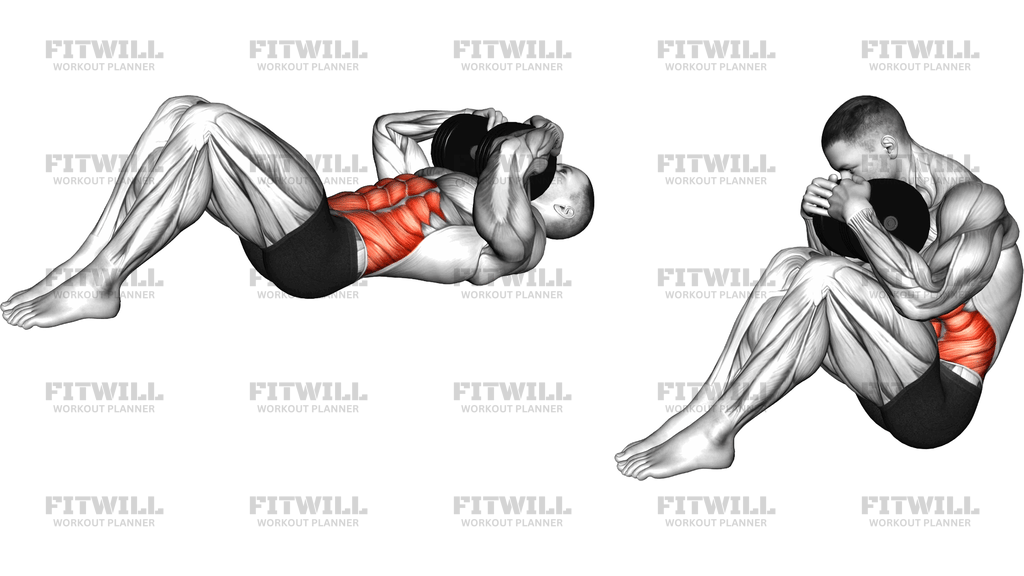
Instructions
- Lie on your back on a mat with your knees bent and your feet flat on the floor.
- Hold a dumbbell against the center of your chest with both hands and keep your elbows tucked in.
- Set your ribs down, brace your abdomen, and keep your lower back gently in contact with the floor.
- Exhale and curl your head, shoulders, and upper back off the floor without letting the dumbbell drift away from your chest.
- Continue sitting up until your torso is tall and your chest is stacked over your hips.
- Pause briefly at the top while keeping the dumbbell hugged in and your neck relaxed.
- Lower yourself back to the mat under control, rolling down one section of the spine at a time.
- Reset fully on the floor before the next rep and keep the same breathing pattern throughout the set.
Tips & Tricks
- Keep the dumbbell glued to your sternum; if it floats forward, the rep becomes harder on the neck and easier on the hips.
- Choose a light to moderate load first, because the centered position makes the sit-up feel heavier than bodyweight reps.
- Keep your chin slightly tucked so you rise with the torso instead of craning the head forward.
- If your feet pop up, move them a little closer to your hips and keep pressure through the whole foot.
- Lower slowly enough that you can feel each segment of the spine touching down instead of dropping back.
- Do not yank with the arms; the hands only hold the dumbbell in place while the trunk does the work.
- Stop the rep short of a painful low-back arch or hip pinch and reduce range before you increase load.
- Breathe out on the way up and inhale as you lower so the abdomen stays organized through the whole rep.
Frequently Asked Questions
What muscles does Dumbbell Sit-Up work?
It mainly challenges the abdominal wall and the rest of the anterior core, with the hip flexors helping as the torso comes up.
How should I hold the dumbbell during the rep?
Hold it tightly against the middle of your chest with both hands so the load stays centered and does not pull your shoulders forward.
Do my feet need to be anchored?
Not usually. A stable flat-foot position is enough for most people, and excessive anchoring can make the movement more about the legs than the trunk.
Is this harder than a bodyweight sit-up?
Usually yes, because the dumbbell adds front-loaded resistance and makes it harder to cheat the top half of the rep.
What is the most common mistake?
Letting the dumbbell drift away from the chest or jerking the torso up with momentum instead of curling smoothly.
Can beginners use this exercise?
Yes, if they start with a very light dumbbell and keep the movement smooth. If a full sit-up is too much, shorten the range first.
What if I feel it in my neck?
That usually means the head is leading the rep or the dumbbell is too far from the body. Tuck the chin slightly and keep the load pinned to the chest.
How can I make the exercise more challenging?
Use a heavier dumbbell, slow the lowering phase, or pause briefly at the top while keeping the chest stacked over the hips.