Dumbbell Step Back Lunge And Row
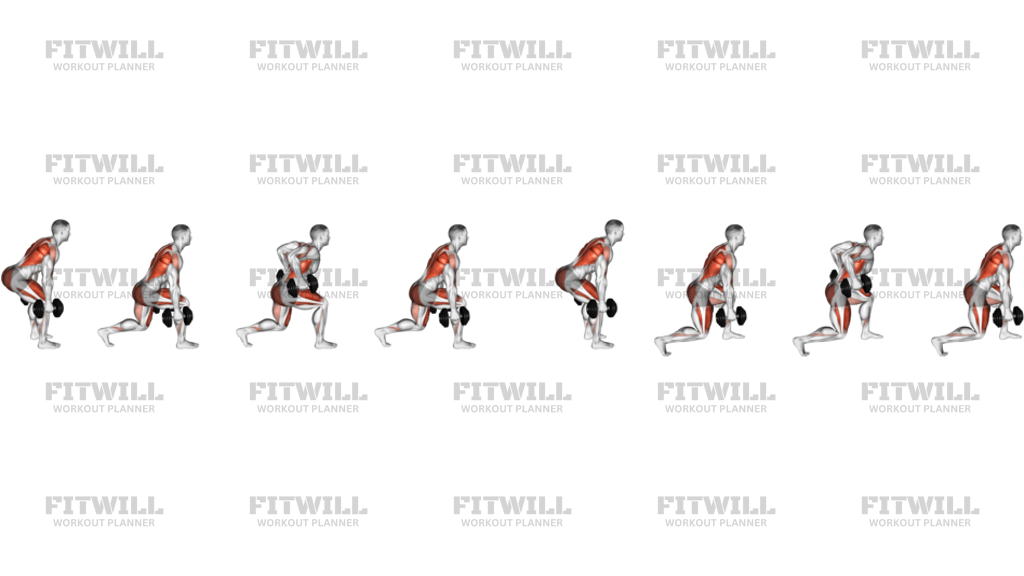
Dumbbell Step Back Lunge And Row is a compound exercise that combines a reverse lunge with a dumbbell row. You step one leg back into a split stance, lower under control, and pull the dumbbells toward your lower ribs while keeping your torso steady. The movement blends lower-body strength, upper-back pulling, and trunk control in one repetition, so the quality of the setup matters as much as the load.
This exercise is useful when you want to train the quads, glutes, hamstrings, lats, upper back, biceps, and core together without turning the rep into a fast, swinging pattern. The front leg does most of the standing work, while the rowing action adds demand to the back and helps reinforce posture through the torso. Because balance is part of the lift, the best results come from controlled reps, not from chasing momentum or using a load that forces the body to twist.
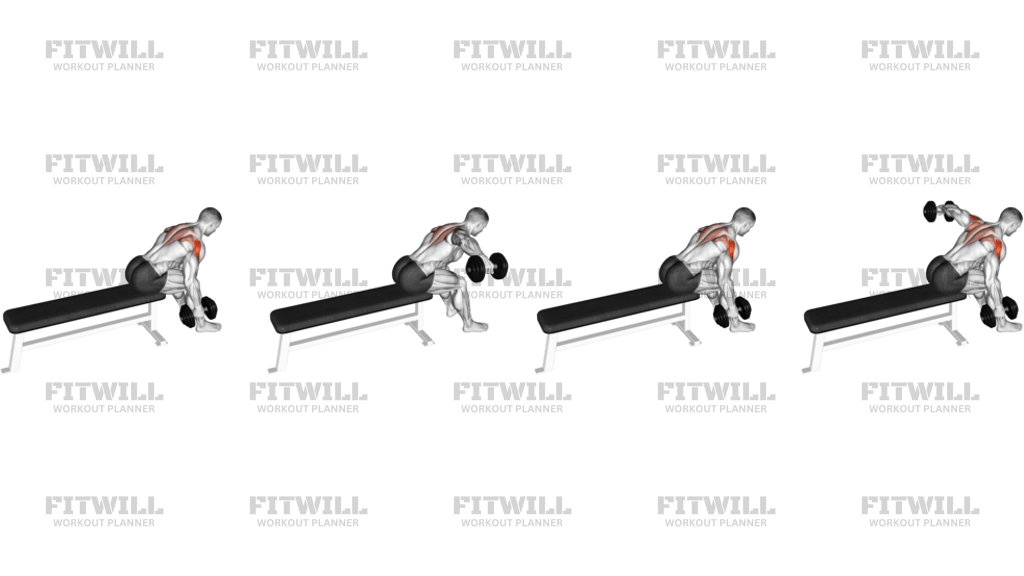
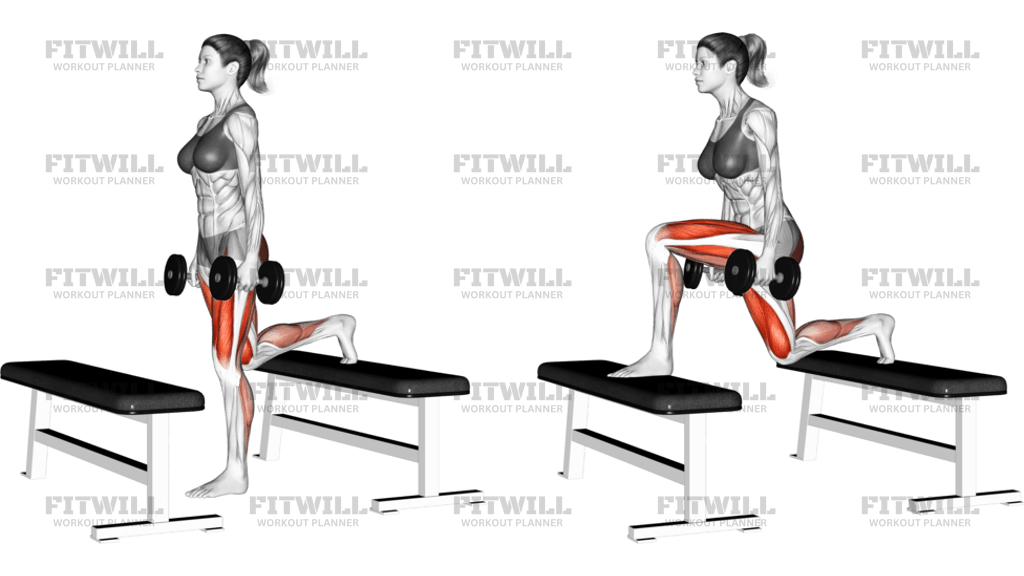
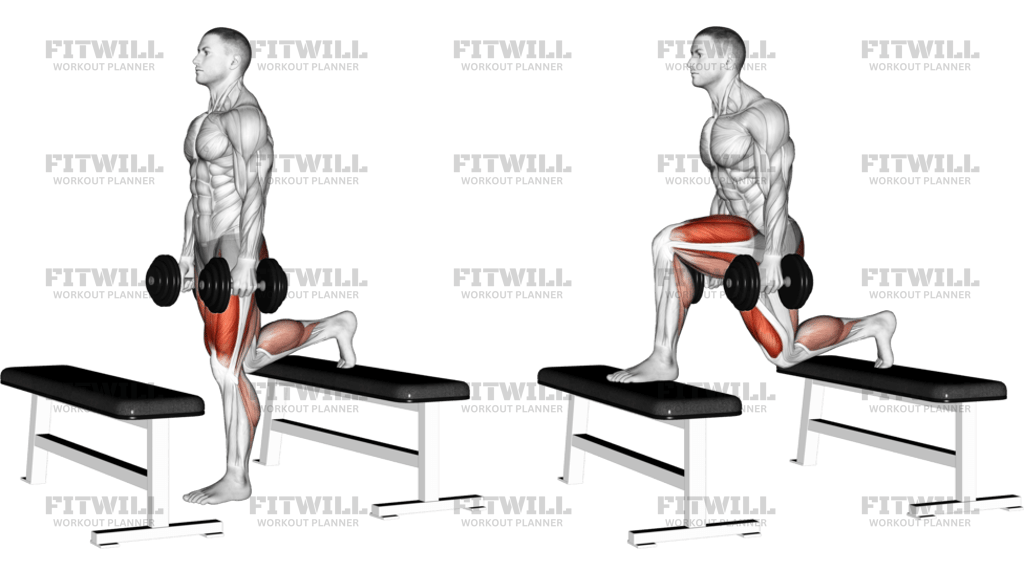
Start with your feet about hip width apart and the dumbbells hanging at your sides. Step back long enough that the front heel stays planted and the front knee can track over the toes as you lower. Keep the chest proud, ribs stacked, and the shoulders level as you move into the bottom of the lunge. The image shows a slightly hinged torso, which is normal here, but the hinge should stay deliberate and braced rather than collapsing into the lower back.
At the bottom, row the dumbbells toward the lower ribs or pockets by driving the elbows back, not by shrugging the shoulders. Hold the split stance steady while you row, then press through the front heel and stand back up under control. If your version alternates sides, reset your balance before the next rep. If it stays on one side for a set, keep the same step length and torso angle so every repetition matches the last.
Use this movement for full-body strength work, unilateral leg training, or conditioning blocks where you want a lower-body pattern with an upper-back pull built in. It is beginner-friendly when the load is light and the step back is short enough to stay balanced. If the dumbbells drift away from the body, the torso starts twisting, or the front knee caves inward, reduce the load and clean up the path before adding resistance again.
Fitwill
Log Workouts, Track Progress & Build Strength.
Achieve more with Fitwill: explore over 9600 exercises with images and videos, access built-in and custom workouts, perfect for both gym and home sessions, and see real results.
Start your journey. Download today!




Instructions
- Stand tall with your feet about hip width apart and hold a dumbbell in each hand at your sides.
- Brace your midsection, keep your shoulders level, and shift your weight onto the working leg before you move.
- Step the opposite leg straight back into a split stance so your front foot stays flat and your rear heel stays lifted.
- Lower into the reverse lunge until the front knee bends deeply and the back knee hovers close to the floor.
- Keep your chest proud and your torso slightly hinged forward without rounding your lower back.
- From the bottom position, row the dumbbells toward your lower ribs by driving your elbows back.
- Keep your hips square and avoid twisting your torso or shrugging your shoulders during the row.
- Press through the front heel to stand back up while letting the dumbbells return to full arm extension under control.
- Reset your stance, breathe out as you rise, and repeat for the planned reps before switching sides or alternating as programmed.
Tips & Tricks
- Use a lighter load than you would for a standard lunge or row, because balance usually limits this exercise first.
- Let the back foot stay on the ball of the foot with the heel light; do not push off hard from the back leg.
- Row the dumbbells toward your lower ribs or front pockets, not up toward your shoulders.
- Keep the front knee tracking over the middle toes instead of collapsing inward as you descend and stand.
- Step back far enough that the front heel stays planted and the torso can stay braced without wobbling.
- Move slowly into the lunge so the bottom position is controlled instead of dropping and bouncing.
- Keep your neck long and your eyes slightly ahead of you so the upper back stays organized.
- If your torso rotates during the row, shorten the step, reduce the load, or perform the lunge and row as separate drills first.
Frequently Asked Questions
What muscles does Dumbbell Step Back Lunge And Row work?
It primarily challenges the quads, glutes, and hamstrings while also training the lats, upper back, biceps, and core.
Is this more of a leg exercise or a back exercise?
It is a full-body compound movement. The reverse lunge drives the leg work, and the row adds a pulling demand for the upper back.
Where should the dumbbells travel during the row?
Pull them toward your lower ribs or front pockets with your elbows traveling back, not up toward your ears.
Can beginners do this exercise safely?
Yes, but start with light dumbbells or bodyweight and a shorter step back so you can stay balanced through the lunge and row.
What is the most common form mistake?
The biggest errors are twisting the torso, letting the front knee cave inward, or shrugging the shoulders during the row.
How far should I step back into the lunge?
Step back far enough that your front heel stays down and your front shin can lean forward naturally without losing balance.
Should I alternate sides or do all reps on one side?
Either works, depending on the program. Alternating sides is useful for conditioning, while same-side sets make it easier to keep the setup consistent.
What should I do if I feel my lower back taking over?
Reduce the load, shorten the hinge, and keep your ribs stacked over your pelvis so the row stays in the upper back instead of the low back.