Elevated Standing Single Leg Calf Raise
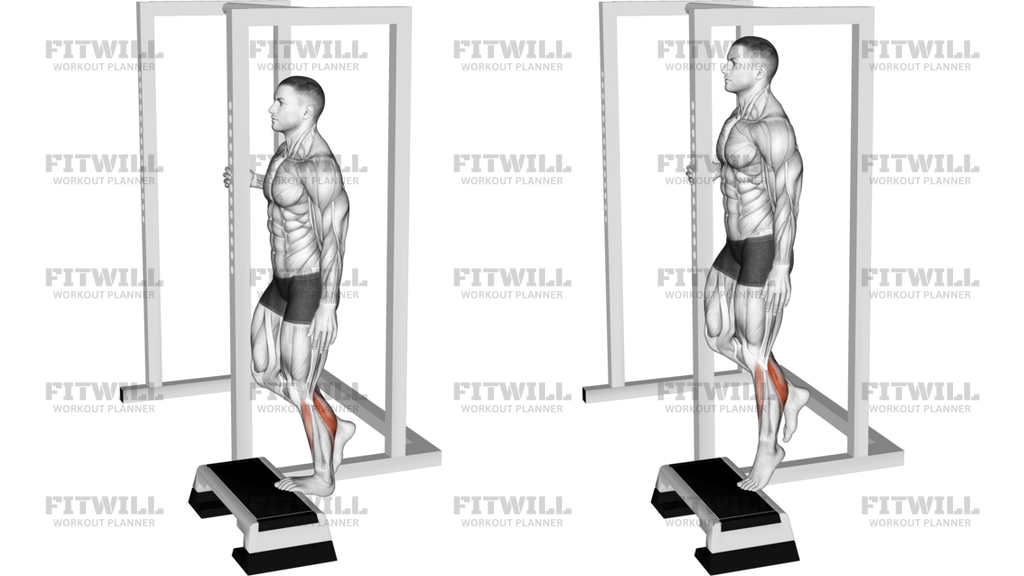
Elevated Standing Single Leg Calf Raise is a unilateral calf exercise performed on the edge of a step or small platform while lightly holding a support post for balance. The raised surface lets the heel drop below the forefoot, so each rep moves through a longer stretch at the bottom and a harder contraction at the top. That makes it useful for building calf strength, ankle control, and single-leg stability without needing heavy equipment.
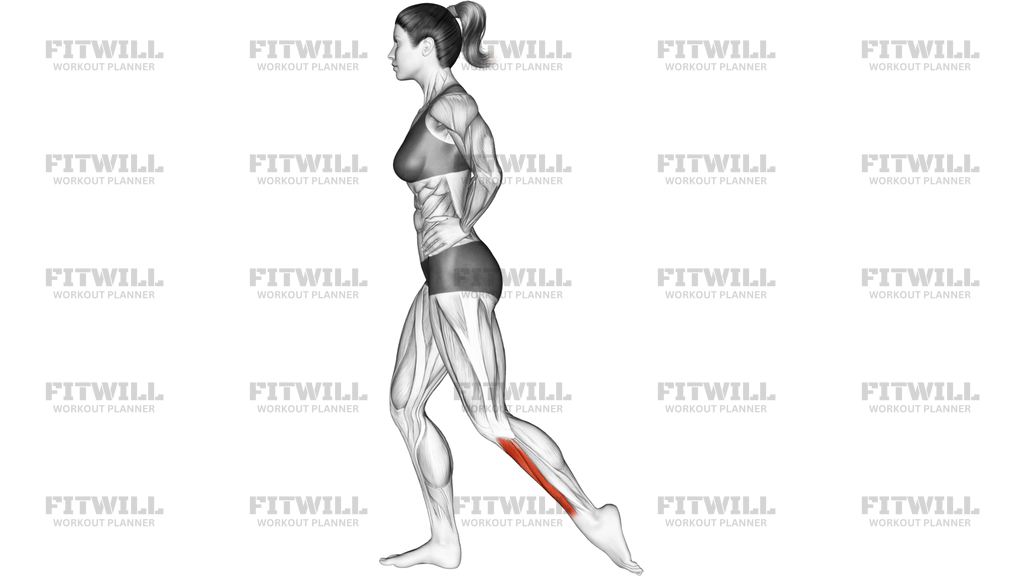
The image shows a bodyweight setup inside a rack or frame, with one forefoot planted on the step and the other leg held off the floor behind the body. That position matters: the working foot needs enough edge clearance for the heel to lower freely, and the torso needs to stay tall so the calf does the lifting instead of a forward lean or a push from the support arm. A light fingertip hold is enough; if the hand is carrying your bodyweight, the working calf is no longer doing the job.
Most of the work comes from the calf complex, especially the gastrocnemius and soleus, with the foot intrinsics and ankle stabilizers helping keep the ankle from rolling in or out. Keep the knee of the working leg mostly straight but not locked, lower the heel under control until you feel a clean stretch, then drive up through the big toe and second toe until you reach a high, quiet top position. The rep should feel smooth, not bouncy.
Because the bottom position places a strong stretch on the Achilles and calf tendons, setup quality is more important here than on a flat-floor calf raise. Use a platform with a firm edge, stay square through the hips, and match the tempo on both sides so one ankle does not take over the set. If the stretch turns into pain or the foot starts to cramp, shorten the range slightly and slow the descent before adding load.
This variation fits well as accessory work, ankle-prep work, or a lower-body finisher when you want direct calf tension and better single-leg balance. Beginners can use it bodyweight only and keep the support hand close for safety. More advanced lifters can progress with a dumbbell, slower eccentrics, or a pause at the top, but the rep quality should stay clean before the difficulty goes up.
[ Workout Log & Planner ]
Put your next workout in Fitwill
Keep your plan and training log ready when you are.


Instructions
- Stand on the edge of a step or platform with one forefoot planted and the heel hanging freely off the back edge.
- Hold the upright frame or post lightly with one hand for balance, and keep the other arm relaxed by your side.
- Set the working knee mostly straight with a soft unlock, and keep your hips level instead of twisting toward the support side.
- Lower the free heel below the step until you feel a strong stretch through the calf and Achilles.
- Pause briefly at the bottom without bouncing or shifting weight into the hand.
- Drive through the ball of the working foot and rise as high as you can onto the toes.
- Squeeze the calf at the top for a moment while keeping the ankle stacked and the heel centered.
- Lower under control back to the full stretch, then repeat for the same number of reps on the other leg.
Tips & Tricks
- Use the support hand only as a balance guide; if you are pushing hard on the frame, the calf is getting less work.
- Keep the working knee nearly straight to bias the gastrocnemius more; a deep knee bend turns the set into a different calf emphasis.
- Let the heel sink below the step only as far as you can control without the arch collapsing or the ankle rolling outward.
- Think about driving through the big toe and second toe so the foot stays centered instead of drifting onto the outside edge.
- A one-second pause in the stretched bottom position removes bounce and makes the set much harder without extra load.
- Use a slower lowering phase if your calves cramp or if the Achilles feels sensitive near the bottom.
- Match the rep count on both sides so one ankle does not become stronger simply because it gets more work.
- Stop the set when the top range turns into a shoulder shrug, torso lean, or a hop off the step.
Frequently Asked Questions
What muscles does Elevated Standing Single Leg Calf Raise train most?
It mainly targets the calf muscles, especially the gastrocnemius and soleus, while the foot and ankle stabilizers help keep the standing leg steady.
Why stand on the edge of a step instead of the floor?
The step lets the heel drop below the forefoot, which creates a deeper bottom stretch and a more complete calf contraction than a flat-floor calf raise.
How much weight should my hand take on the support post?
Only enough to keep balance. If the hand is doing most of the work, the standing calf is no longer the main limiter.
Should my working knee stay locked out?
No. Keep it mostly straight with a soft unlock so the calf can work hard without jamming the knee joint.
What should I do if my heel cannot drop very far?
Use a smaller range at first and build control before forcing depth. The goal is a smooth stretch, not a painful drop below the step.
Why do my calves cramp on this exercise?
Cramps usually show up when the descent is too fast, the set is too long, or the foot is losing alignment. Slow the lowering phase and reduce the range if needed.
Can I load this movement with weights?
Yes. Once bodyweight reps are clean, hold a dumbbell or use another small load only if you can keep the same full range and balance.
Is this better for beginners or advanced lifters?
Both can use it. Beginners should start with bodyweight and a light hand hold, while advanced lifters can add pauses, slower eccentrics, or external load.