Jump Split With Hands On Hip
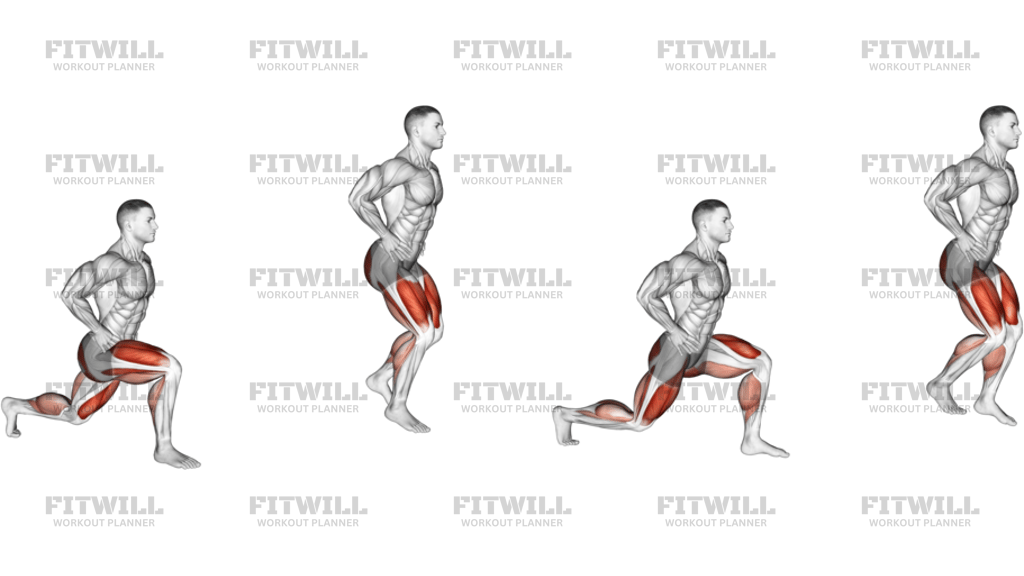
Jump Split With Hands On Hip is a bodyweight plyometric built around quick split-stance switches and controlled landings. The hands stay on the hips so the legs and trunk have to do the work without help from arm swing. It is a useful drill for developing lower-body power, single-leg coordination, and the ability to absorb force cleanly when the feet change position.
This movement is not about chasing height. The real value comes from how crisply you can leave the floor, switch the legs, and land in a stable split stance without wobbling or collapsing at the knees. Because the position is narrow and alternating, it asks a lot from the glutes, quads, calves, and core while also challenging balance and rhythm.
The setup matters more than it looks. Start in a split lunge with one foot forward, the other foot back, torso tall, chest open, and both hands resting on the hips. Keep most of your weight centered between the two feet, then brace before each jump so the hips do not twist as you leave the floor. A clean start makes the landing much easier to control.
On each rep, drop into the split stance, then drive through both legs to jump and switch the legs in the air. Land softly with the opposite foot forward, absorb through bent knees and hips, and immediately settle back into a balanced lunge. The feet should land under control, not far apart and not crossing over. Keep the torso stacked over the hips so the jump stays athletic instead of turning into a forward fall.
Jump Split With Hands On Hip works well as a power drill in a warm-up, athletic session, or lower-body conditioning block when the goal is speed and coordination rather than load. It is useful for people who already tolerate basic split squats and want a more explosive variation. If your landings get loud, your knees cave in, or your balance breaks down, shorten the jump and slow the tempo before adding more reps.
[ Workout Log & Planner ]
Put your next workout in Fitwill
Keep your plan and training log ready when you are.


Instructions
- Stand in a split stance with one foot forward and the other foot back, hands resting on your hips and torso upright.
- Keep your front heel grounded, your back heel lifted, and your feet about hip-width apart side to side so you can load both legs evenly.
- Lower into a shallow lunge by bending both knees until the back knee moves close to the floor without touching it.
- Brace your midsection, keep your chest tall, and look straight ahead before you leave the floor.
- Drive through both legs and jump straight up, switching the front and back legs in the air.
- Land softly in the opposite split stance with the knees bent and the hips square to the front.
- Absorb the landing quietly, then sink right back into the lunge to set up the next rep.
- Keep your hands on your hips for every repetition so the jump stays driven by the legs instead of arm swing.
- Breathe out as you jump and breathe in as you settle into the next landing.
- Finish the set by stepping both feet together under control if you need to reset your balance.
Tips & Tricks
- Keep the torso tall on takeoff and landing; folding forward turns the drill into a balance struggle instead of a clean split jump.
- Land with the front knee tracking over the middle toes, not collapsing inward toward the arch.
- Make the jump quick and elastic, but keep the landing quiet; loud contact usually means you are dropping too hard from the air.
- Hold the hands on the hips the entire time so you do not use arm swing to fake extra height.
- Keep the feet on two separate rails, not in a straight line, so the stance stays stable during the switch.
- Use a smaller jump if you cannot hold the back knee under control near the floor on every rep.
- Stop the set when the split stance starts to wobble or when the hips begin twisting side to side.
- Treat this like power work, not cardio; crisp reps matter more than high speed for a long set.
- If your ankles or knees feel beaten up, reduce the range and switch to alternating split squats before returning to jumps.
- A short pause in the split stance can help you reset rhythm when the cadence starts getting sloppy.
Frequently Asked Questions
What muscles does Jump Split With Hands On Hip work most?
It mainly trains the quads, glutes, calves, and core while also challenging balance and landing control.
Is Jump Split With Hands On Hip appropriate for beginners?
Yes, but only if they already control basic split squats and can land softly without losing balance. Start with small jumps and low reps.
Why are my hands kept on my hips during Jump Split With Hands On Hip?
Keeping the hands on the hips removes arm swing, so the legs have to create the jump and control the landing on their own.
How low should I go before jumping in Jump Split With Hands On Hip?
Lower into a controlled split lunge until the back knee is close to the floor, but do not force a deeper range if it makes the landing unstable.
What is the biggest mistake in Jump Split With Hands On Hip?
The most common problem is landing hard with the front knee caving inward or the torso pitching forward.
Can Jump Split With Hands On Hip help with sports performance?
Yes. It develops leg power, quick force absorption, and the ability to switch positions fast, which carries over well to running and change-of-direction work.
Should Jump Split With Hands On Hip be done for high reps?
Usually no. Short sets with clean landings work better than long fatigue-based sets, because technique drops off quickly once the jumps get sloppy.
What should I do if my landing feels unstable?
Shorten the jump, slow the switch, and keep the split stance a little wider side to side until you can land quietly and square.