Kneeling Straight Leg Kickback Version 2
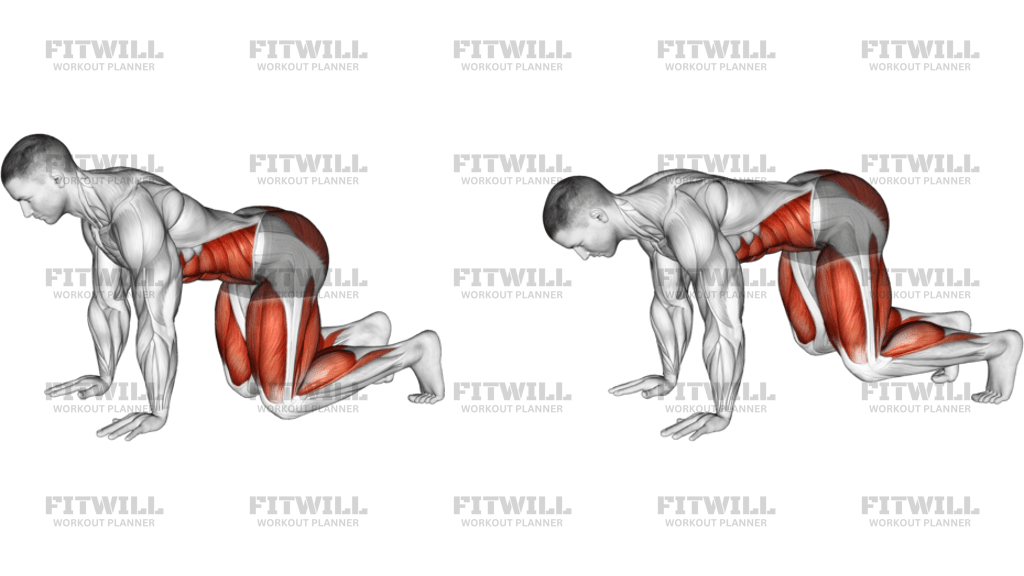
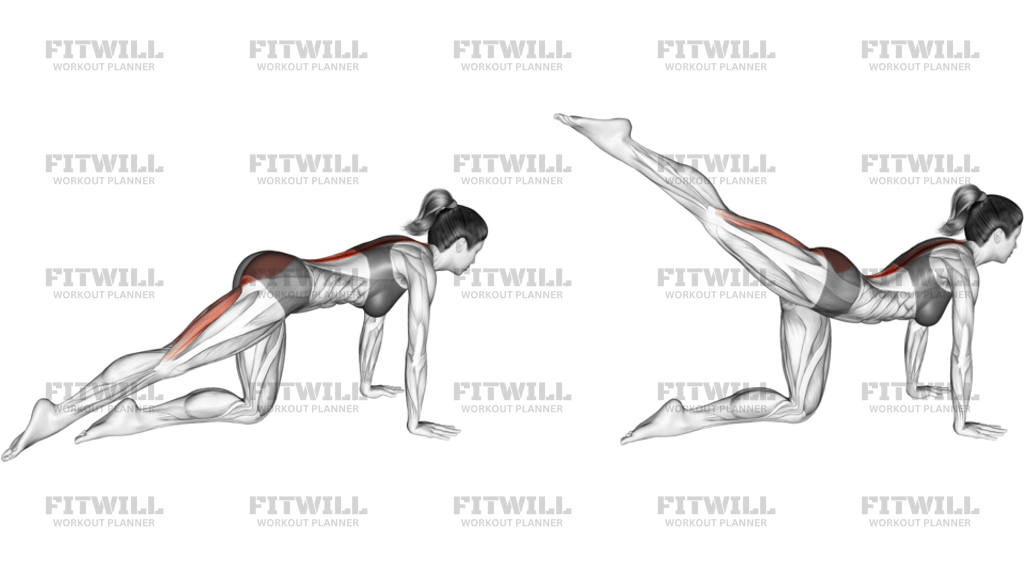
Kneeling Straight Leg Kickback Version 2 is a bodyweight floor exercise performed from an all-fours kneeling position. It trains the glutes through hip extension while the hands, opposite knee, and trunk work to keep the pelvis steady. The straight-leg version shifts the feeling away from a simple bent-knee donkey kick and asks for more control through the hamstrings, glute max, and lower back line that helps hold the leg in place.
The setup matters because the exercise only works well when the torso stays level and the working leg moves behind the body instead of swinging up from the low back. Place both hands under the shoulders and one knee under the hip, then extend the other leg straight back with the toes lightly pointed or neutral. From there, keep the ribs pulled in and the pelvis square to the floor so the movement starts from the hip, not from a twist through the spine.
At the top of each rep, the heel travels up and back on a long line while the knee stays nearly straight. The leg should rise only as far as you can maintain a firm brace, even if that means a smaller range of motion. A brief squeeze in the glute is enough; the goal is to feel tension at the back of the hip without arching or swinging.
This is a useful accessory movement when you want extra glute work without loading the spine or needing equipment. It fits well in warm-ups, activation work, lower-body circuits, and home training. Because the exercise is done on the floor, it is also easy to scale by changing tempo, adding a pause, or pairing it with other single-leg stability drills.
Good reps look smooth and controlled from the start of the lift to the return. If the low back takes over, the knee bends a lot, or the hips open toward the ceiling, the set is too aggressive. Keep the movement clean, breathe steadily, and stop the set when you can no longer hold the pelvis square and the leg path controlled.
[ Workout Log & Planner ]
Put your next workout in Fitwill
Keep your plan and training log ready when you are.


Instructions
- Start on hands and knees on a mat, with your shoulders over your wrists and your supporting knee under your hip.
- Extend the working leg straight back behind you so the thigh is in line with your torso and the foot is relaxed.
- Set your spine neutral, draw your ribs in, and square both hip bones to the floor before the first rep.
- Press the floor away with both hands and keep your support knee planted as you begin the kickback.
- Lift the straight leg up and back from the hip, keeping the knee long and the pelvis as still as possible.
- Stop when you feel a strong glute squeeze without arching your lower back or rotating the hips open.
- Pause briefly at the top, then lower the leg under control until it is almost level with the floor.
- Reset the brace between reps and keep breathing evenly throughout the set.
- Switch sides after the planned reps are complete.
Tips & Tricks
- Think about moving the heel toward the ceiling, not throwing the foot upward from the low back.
- A smaller kickback with a locked-in pelvis is better than a higher rep that twists the torso.
- Keep the working knee long but not forcibly hyperextended; the leg should feel active, not stiff.
- If your wrist or shoulder position feels cramped, move the hands slightly wider and keep the elbows soft.
- Use a mat under both knees, especially if you plan to hold the top position for a pause.
- Exhale as the leg lifts and avoid holding your breath while the pelvis tries to stay square.
- The lowering phase should be slow enough that you do not drop the leg and lose tension at the hip.
- If you feel the movement mostly in your hamstrings or low back, reduce the range and refocus on the glute squeeze.
- Stop the set when the standing hip starts to shift side to side or the lower back begins to arch.
Frequently Asked Questions
What muscles does Kneeling Straight Leg Kickback Version 2 work?
It mainly targets the glutes, especially the glute max, while the hamstrings, core, and shoulders help stabilize the body.
Why keep the kicking leg straight instead of bending the knee?
Keeping the knee long makes the exercise more of a true hip extension drill and reduces the tendency to turn it into a bent-knee donkey kick.
How high should the straight leg lift on the floor?
Only lift until the glute is fully engaged and the pelvis stays level. If the low back arches, the leg is going too high.
Is this the same as a donkey kick?
It is a straight-leg version of that pattern. The knee stays much longer, so the glute has to control the hip instead of relying on a bent-leg swing.
Can beginners do this exercise?
Yes. It is beginner-friendly because it uses body weight, but beginners should keep the range small and prioritize a square pelvis.
What usually goes wrong with the hands-and-knees setup?
Common mistakes are shrugging into the shoulders, letting the lower back sag, or shifting all the weight to one side instead of staying centered.
Where should I feel the top of the rep?
You should feel a strong squeeze at the back of the hip on the working side, not pressure in the spine.
How can I make the exercise harder without equipment?
Slow the lowering phase, add a pause at the top, or keep the leg hovering just above the floor between reps.