Narrow Seated Chin-Up
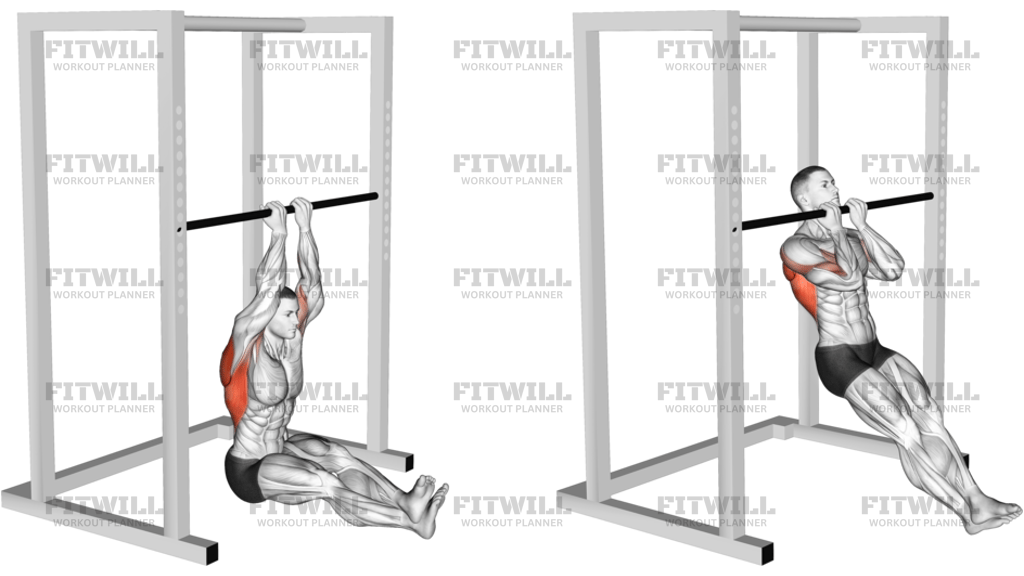
Narrow Seated Chin-Up is a bodyweight pulling exercise performed from a seated position with the feet on the floor and the torso leaning back under a fixed bar. The narrow hand position changes the feel of the pull and encourages a strong elbow drive, which makes the movement useful for building upper-back, lat, and arm strength while still keeping the body anchored and easy to control.
The seated setup is the key feature of the exercise. Because your legs stay forward and your heels or feet stay planted, you can use the floor to help organize your posture and keep the rep strict. That makes this a good choice when you want a pulling pattern that is easier to scale than a full hanging chin-up, but still demanding enough to train clean scapular control and smooth elbow flexion.
At the start, the arms are long, the shoulders are set down away from the ears, and the torso is slightly leaned back so the body can travel toward the bar instead of yanking it with a shrug. From there, each rep should follow the same path: chest tall, elbows drive down and back, chin moves toward the bar, then the body returns under control without collapsing through the shoulders or snapping the neck forward.
The exercise works best when the motion stays deliberate. If the torso rocks or the hips shoot forward, the set quickly turns into momentum work instead of a strict seated chin-up. Keep the neck neutral, the ribcage controlled, and the grip even on both sides so the pull stays centered and smooth.
Use Narrow Seated Chin-Up as a technique-focused pulling drill, an accessory after heavier back work, or a regression toward fuller chin-up patterns. It is also useful for beginners who need a more stable version of vertical pulling. Stop the set when you can no longer keep the lean, elbow path, and shoulder position consistent, because the quality of the setup is what makes this variation effective.
Fitwill
Log Workouts, Track Progress & Build Strength.
Achieve more with Fitwill: explore over 9600 exercises with images and videos, access built-in and custom workouts, perfect for both gym and home sessions, and see real results.
Start your journey. Download today!




Instructions
- Sit on the floor beneath the bar and take a narrow grip that lets your hands stay close without crowding your wrists.
- Extend your legs forward with your heels or feet planted, then lean your torso back just enough to create a straight line from shoulders to hips.
- Set your shoulders down and away from your ears before you start the pull.
- Begin with straight arms and a tall chest so the first rep starts from a controlled dead-stop position.
- Pull by driving your elbows down and back, bringing your chest and chin toward the bar without shrugging.
- Keep your torso firm as you rise so the movement comes from the arms and upper back instead of a swing.
- Lower yourself slowly until your arms are straight again and your shoulders stay controlled at the bottom.
- Exhale as you pull and inhale as you return, then repeat for the planned reps without losing the seated position.
Tips & Tricks
- Use the floor pressure from your heels or feet to keep the body anchored while you pull.
- If your shoulders creep up toward your ears, reset and start the rep with the shoulder blades pulled down first.
- A narrow grip should feel strong, not cramped; move your hands slightly wider if your wrists or elbows pinch.
- Keep the chest moving toward the bar instead of just tipping the head back to fake the top position.
- Stop the set when you have to kick the legs or rock the torso to finish the rep.
- Control the lowering phase so your shoulders do not dump forward at the bottom.
- Use a smoother, shorter range if the bar position makes full chin-over-bar reps impossible without losing posture.
- Treat each rep like a strict pull from a seated anchor, not a mini row with momentum.
Frequently Asked Questions
What muscles does Narrow Seated Chin-Up train?
It mainly trains the lats, upper back, and biceps, with the shoulders and core helping keep the seated body position steady.
Why do my feet stay on the floor during the rep?
The floor contact anchors the body so you can keep the pull strict and controlled instead of hanging freely and swinging.
How narrow should my grip be?
Use a close grip that feels strong and keeps the wrists comfortable; if the hands are too close, the elbows and shoulders may feel cramped.
Should I lean back a lot to make the rep easier?
No. A small lean is enough to line up the pull; leaning too far back usually turns the movement into a swing instead of a strict seated chin-up.
Is this a good beginner exercise?
Yes. The seated setup makes it easier to control than a free-hanging chin-up, especially if you focus on slow lowering and a stable torso.
What should I do if I cannot get my chin all the way to the bar?
Keep the pull strict and use the highest clean range you can control, even if that means stopping just short of the bar at first.
What is the most common mistake on this exercise?
The biggest mistake is jerking the torso or kicking the legs to create momentum instead of pulling smoothly from the seated anchor.
Where should I feel the working tension?
You should feel it across the lats and upper back first, then in the biceps and forearms as you finish the pull.