Seated Chin-Up Low Bar Position
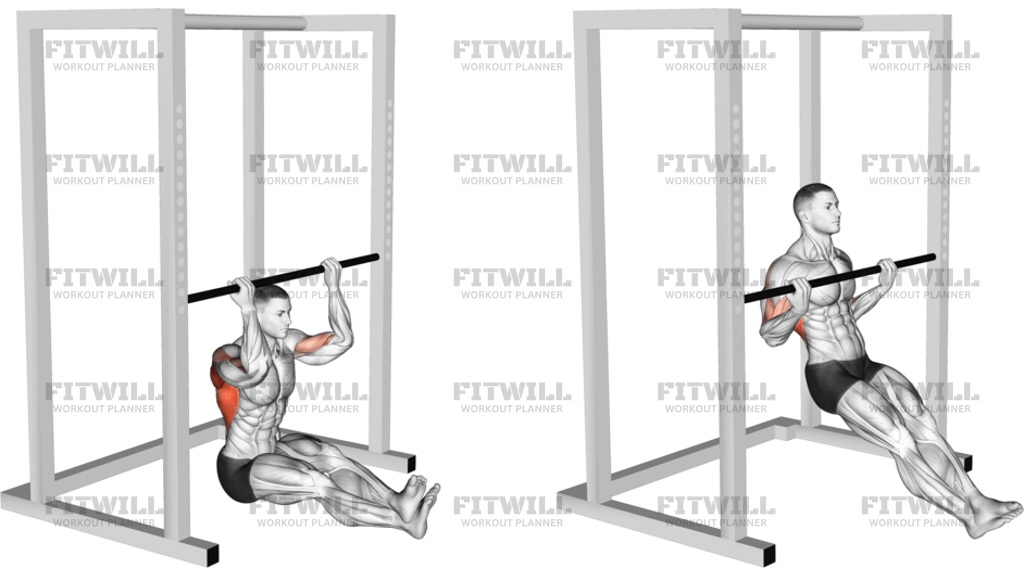
Seated Chin-Up (Low Bar Position) is a bodyweight vertical pull performed from the floor or a low seat under a fixed bar. Instead of hanging freely, you keep your hips supported, extend your legs forward, and use the low bar to train the chin-up pattern with less load than a full hanging rep. The exercise still emphasizes the lats, upper back, biceps, and shoulder control, but the seated setup makes the movement more accessible and easier to repeat with clean technique.
The low-bar position changes the challenge in an important way: your lower body helps manage part of the load, so the focus shifts toward pulling mechanics, scapular control, and torso position. That makes the drill useful for beginners learning to coordinate a chin-up, lifters returning to pulling work after a break, or anyone who needs a strict accessory movement that builds strength without the demands of full bodyweight hanging reps. The goal is not to bounce through reps, but to create a controlled vertical pull with a clear start, a strong top position, and a slow return.
Set up directly under the bar so your hands can reach it without sliding forward or twisting. Sit tall with the legs straight or nearly straight in front of you, place the heels lightly on the floor, and take a shoulder-width chin-up grip that feels secure. Before the first pull, set the shoulders down away from the ears, brace the midsection, and keep the chest lifted so the spine stays organized instead of collapsing into the finish.
Each rep should begin by pulling the shoulder blades down and then driving the elbows toward the ribs. Think about bringing the chest up to the bar rather than pulling the hands to your face. The body should stay long and quiet while the back and arms do the work. At the top, pause briefly with the elbows bent and the upper back tight, then lower under control until the arms are straight again and the shoulders can open without losing posture.
Use this exercise as a technique builder, an assisted strength movement, or a strict accessory pull inside a back or upper-body session. It should feel smooth, deliberate, and repeatable from rep to rep. If you have to kick, slide, or rock to finish the set, the setup is too hard or the bar is too low for your current control. Adjust the amount of leg support and keep every repetition honest.
[ Workout Log & Planner ]
Put your next workout in Fitwill
Keep your plan and training log ready when you are.


Instructions
- Sit on the floor under a low fixed bar, extend your legs forward, and take a shoulder-width chin-up grip with your body centered under the bar.
- Keep your heels lightly on the floor, let the arms straighten, and sit tall with a slight backward lean so your torso can move without sliding.
- Set the shoulders down and away from the ears, then brace your abs and ribs before the first pull.
- Start each rep by pulling the shoulder blades down, then bend the elbows and drive them toward your sides.
- Pull your chest toward the bar while keeping the legs long and still instead of kicking or scooting forward.
- Squeeze briefly at the top when your chin or upper chest reaches the bar and your upper back is tight.
- Lower slowly until the elbows are straight again and the shoulders can open under control.
- Reset your breath at the bottom, keep the torso organized, and repeat for the planned reps.
Tips & Tricks
- Use just enough foot pressure to stay organized; if your heels are driving hard, the set is probably too easy or the bar is too low.
- Keep the chest lifted and the ribs stacked so the pull comes from the lats and upper back instead of a lower-back arch.
- Think about pulling the elbows toward your back pockets to keep the arms close to your sides.
- Do not shrug at the top; the shoulders should stay down while the chest rises toward the bar.
- Keep the wrists neutral and let the bar sit deep in the hand instead of cranking the wrists backward.
- Lower for two to three seconds so the descent trains control instead of just dropping back to the floor.
- If the rep gets sloppy, shorten the set or give yourself a little more foot support rather than swinging through it.
- Breathe out as you pull and inhale on the way down so your trunk stays braced without locking up.
Frequently Asked Questions
What muscle does Seated Chin-up (low bar position) target most?
It mainly targets the lats and upper back, with the biceps helping strongly during the elbow bend.
Is this easier than a full hanging chin-up?
Yes. The seated setup lets your legs share some of the load, so you can practice the pulling pattern with less bodyweight.
Where should my feet be during the set?
Keep your heels lightly on the floor in front of you so they help with balance without turning the rep into a leg push.
How wide should I hold the bar?
A shoulder-width grip is the best starting point because it keeps the elbows close and makes the pull path easier to control.
Where should I pull to at the top?
Aim to bring your chin or upper chest toward the bar without jamming your neck forward or losing your shoulder position.
Can beginners use this movement safely?
Yes. It is a good regression for learning chin-up mechanics as long as the reps stay smooth and the body does not swing.
What is the biggest form mistake?
The most common error is turning the set into a sit-up or swing by rocking the torso and pushing hard through the feet.
How do I make this harder?
Straighten the legs more, use less foot help, slow the lowering phase, or raise the bar if your setup allows it.