Seated Commando Pull-Up
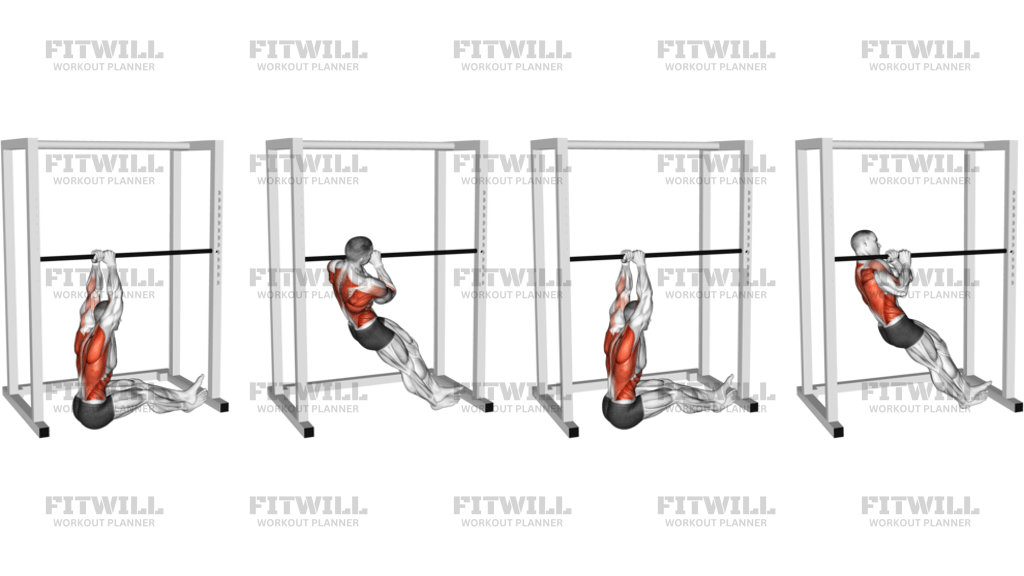
Seated Commando Pull-Up is a bodyweight pulling exercise performed under a fixed bar with one hand placed slightly in front of the other. The seated start changes the challenge from a pure hanging pull-up into a controlled, side-to-side climb that asks for strong lats, biceps, upper back, forearms, and trunk stability. Because the body stays low and the grip stays close together, the exercise also challenges anti-rotation control and shoulder positioning.
The seated setup matters because the bar, hand position, and torso angle decide how clean the first pull feels. Sit directly under the bar with the legs forward, then take a narrow mixed or offset grip as shown so one elbow can drive down while the other side stays organized. If the hands are too wide or the torso drifts too far away from the bar, the movement turns into a loose swing instead of a tight pull.
Each rep should travel up toward one side of the bar, not straight in the middle. Pull the chest and chin toward the active hand, keep the ribs from flaring, and avoid shrugging the shoulders toward the ears. On the way down, lower under control until the elbows are nearly straight again, then repeat to the other side or the next side in the sequence. Smooth breathing and a steady torso matter more here than speed.
This variation is useful when you want a strict vertical pull that still exposes side-to-side control weaknesses. It fits accessory work, upper-body strength sessions, or assisted pull-up progressions, especially when you want to train pulling strength without the full load of a free dead-hang rep. The seated position can also make it easier to keep the neck and spine honest, provided you do not collapse backward or yank with momentum.
Use a bar height and grip position that let you start with tension already set, not with a jump or a reach. If the shoulders feel crowded, reduce range, slow the lowering phase, or use assistance until each side can pull evenly. Clean repetition quality is the goal: one smooth pull, one controlled lower, then a deliberate switch to the other side.
[ Workout Log & Planner ]
Put your next workout in Fitwill
Keep your plan and training log ready when you are.


Instructions
- Sit on the floor directly under a fixed pull-up bar with your legs extended forward and your torso slightly leaned back.
- Grip the bar close together, with one hand slightly in front of the other as shown in the commando setup.
- Set your shoulders down and back lightly, then brace your midsection before the first pull.
- Pull your chest and chin toward the hand that is leading the rep, keeping your elbows driving down instead of flaring wide.
- Keep the opposite shoulder from rolling forward as you rise, and avoid twisting the hips away from the bar.
- Pause briefly near the top with your chin close to the bar and your torso tight.
- Lower yourself under control until your elbows are nearly straight and the shoulders are still packed.
- Shift the pull to the other side on the next rep or the next side in the sequence, keeping the motion smooth and even.
Tips & Tricks
- Keep the hands close enough that the leading elbow can travel down beside the ribcage without the shoulders cramping upward.
- If the image setup is hard to reproduce, start with your hips slightly closer to the bar rather than reaching away from it.
- Think about pulling your chest toward one hand, not just trying to get your chin above the bar.
- Let the body stay mostly quiet; a small lean is fine, but swinging turns the exercise into momentum work.
- Lower slowly enough that each side feels the same on the way down.
- Do not let the leading shoulder shrug toward your ear at the top of the rep.
- Exhale as you pull and inhale on the controlled descent so your trunk stays braced.
- If one side is much weaker, match the weaker side's range and speed instead of forcing the stronger side to race ahead.
Frequently Asked Questions
What muscles does the seated commando pull-up work?
It emphasizes the lats, biceps, upper back, forearms, and the muscles that keep your torso from twisting as you pull side to side.
Why is one hand in front of the other on the bar?
That offset grip creates the commando pattern and lets you pull toward one side of the bar at a time instead of doing a straight-up pull.
Do I stay seated on the floor the whole time?
Yes. In this variation you start seated under the bar, keep your legs forward, and pull without standing or jumping into the rep.
How do I know which side to pull to first?
Start on either side, then alternate sides or repeat the same pattern your program calls for. The important part is that each rep clearly pulls toward one hand.
What is the biggest form mistake with this bar setup?
Letting the body swing and the shoulders shrug. The rep should stay tight, with the elbow driving down and the torso staying controlled.
Can beginners use a modified version?
Yes. A band-assisted setup, a higher bar position, or a smaller range can make the seated commando pull-up much more manageable.
Should my chin go over the bar?
It helps if your chin gets close to or just above the bar on the working side, but the cleaner cue is to pull the chest toward that side without losing position.
What should I do if my shoulders feel pinched?
Shorten the range, slow the lowering phase, and keep the shoulders down instead of forcing a higher rep. If pain persists, stop the set and change the variation.