Seated Pull-Up Low Bar Position
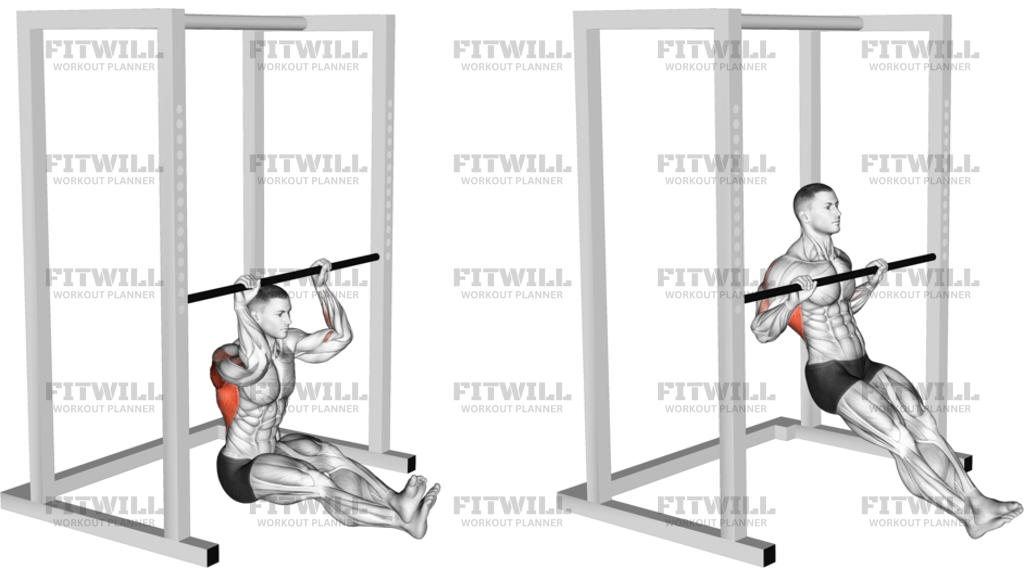
Seated Pull-Up Low Bar Position is a seated bodyweight pulling exercise performed from the floor beneath a fixed low bar. In the image, the lifter sits with the legs extended, heels on the ground, and the torso angled back so the arms can pull the chest toward the bar. That makes this movement a controlled upper-back and arm builder with a strong demand on scapular control, trunk stiffness, and honest tempo.
The setup matters because the exercise only works well when the body starts in a long, organized line. With the hands on the bar, the shoulders should stay set and the chest should be ready to travel toward the hands instead of the hips collapsing forward. If the bar is too high, the pull turns into a sloppy shrug; if it is too low, the range becomes cramped and the shoulders lose a clean path.
Use this exercise to train the lats, rhomboids, rear delts, and elbow flexors through a horizontal pull pattern that is easier to scale than a full pull-up. It is useful for beginners, for controlled accessory work, and for higher-rep back training when you want bodyweight resistance without hanging from a bar. The legs staying on the floor also let you reduce or increase difficulty by changing the angle of the torso and the amount of help from the feet.
Each rep should start from a braced seated hang, then finish with the chest lifted toward the bar and the elbows pulling back alongside the ribcage. The return should be slow and deliberate so the shoulder blades can protract under control instead of snapping forward. Keep the neck long, the ribs down, and the lower back from over-arching as fatigue builds.
This is a good choice when you want a strict pull that teaches positioning, rhythm, and full-range control. Keep the reps smooth, stop before the shoulders roll forward, and use a bar height and body angle that let you own the movement instead of cheating it.
Fitwill
Log Workouts, Track Progress & Build Strength.
Achieve more with Fitwill: explore over 9600 exercises with images and videos, access built-in and custom workouts, perfect for both gym and home sessions, and see real results.
Start your journey. Download today!




Instructions
- Sit on the floor under a low fixed bar and extend your legs forward with your heels resting on the ground.
- Grip the bar slightly wider than shoulder width, then lean back so your arms are straight and your torso is long.
- Set your shoulders down and back before you start the first pull.
- Brace your midsection so your ribs do not flare as you row.
- Pull your chest toward the bar by driving your elbows back alongside your torso.
- Squeeze your shoulder blades together at the top without shrugging.
- Lower yourself in a slow, controlled return until your arms are straight again.
- Reset your shoulder position before the next rep and keep breathing steady throughout the set.
Tips & Tricks
- Keep the heels on the floor and use the feet only for light support, not for driving the pull.
- If the bar is too high, the rep becomes a half-range shrug; choose a lower bar or adjust your body angle.
- Think about pulling the chest up to the bar, not yanking the chin forward.
- Keep the elbows tracking back rather than flaring hard out to the sides.
- Pause briefly when the bar touches or nears the upper chest to avoid bouncing through the top.
- Lower under control for at least as long as the pull takes so the shoulder blades work through the full range.
- Keep the neck neutral and avoid craning the head toward the bar.
- Stop the set when the torso starts to sag or the shoulders roll forward on the way down.
Frequently Asked Questions
What muscles does Seated Pull-Up Low Bar Position train most?
It primarily trains the lats, mid-back, rear delts, and biceps through a strict horizontal pulling pattern.
Is this easier than a full pull-up?
Yes. Because your feet stay on the floor and the body is more horizontal, it is usually much more accessible than a hanging pull-up.
How should my body be positioned under the bar?
Sit under the bar with straight legs, heels down, arms extended, and the torso braced so you can pull your chest toward the bar without collapsing.
What is the most common mistake on this exercise?
The usual error is turning it into a shrug or using momentum instead of a clean pull from the back and arms.
Should I keep my legs straight the whole time?
Yes, if the setup allows it. Straight legs help keep the torso honest and make the exercise look like the seated version shown in the image.
How do I make the exercise harder?
Move your heels farther forward, lean back more at the start, or use a lower bar position so your body has to pull through a longer, tougher range.
Do I need to touch my chest to the bar?
Touching the upper chest to the bar is a good target if your shoulder position stays clean, but do not force the range if it causes shrugging or rib flare.
Is it safe for beginners?
Yes, as long as the bar height and body angle let you keep control. Start with a shallow angle and smooth reps before making it harder.