Single Leg Jumping Glute Bridge
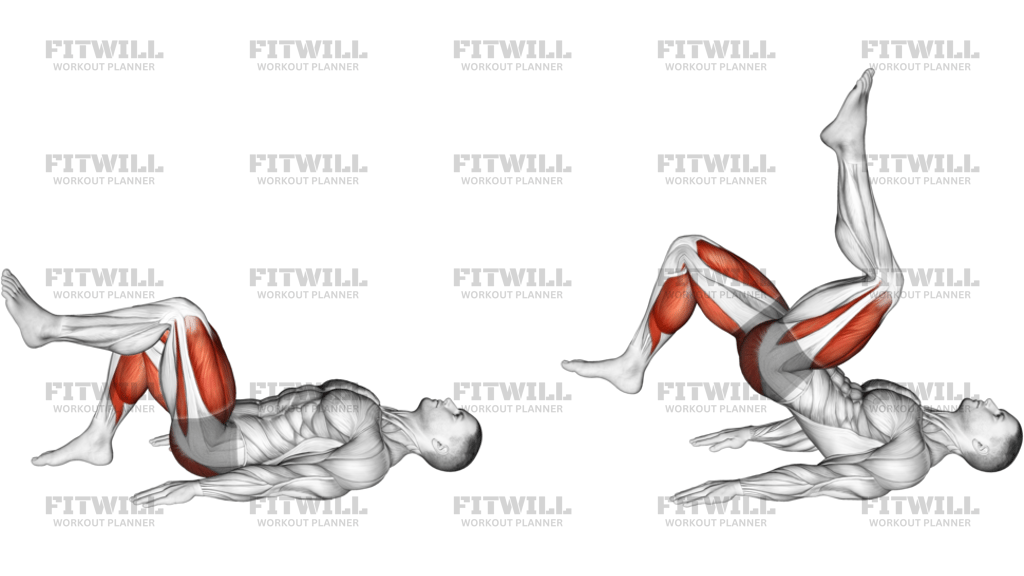
Single Leg Jumping Glute Bridge is a bodyweight explosive bridge performed on the floor with one foot planted and the other leg held long in the air. The lifted-leg position and the single support point make the exercise much less forgiving than a standard bridge, so the setup has to be exact: shoulder blades on the floor, planted heel under enough bend to keep the shin close to vertical at the top, and ribs stacked so the lower back does not do the work for the glutes.
The main training effect comes from a fast hip extension on one side, with the planted-side glute doing most of the lifting and the hamstrings and trunk helping keep the pelvis level. That makes the movement useful for athletic warmups, posterior-chain accessory work, and unilateral control when you want to train power without loading the spine. The "jumping" part is the quick snap of the hips upward, not a full airborne leap, so the torso should stay rooted while the hips drive up sharply.
Good reps feel snappy on the way up and organized on the way down. Press the planted heel into the floor, lift the hips until the torso and support thigh are nearly in line, and keep the free leg long without letting it swing for momentum. A brief squeeze at the top is useful if it does not turn into a back arch. Lower under control, reset the pelvis, and repeat on the same side or for the prescribed number of alternating reps.
This exercise works best when the set stays clean and repeatable. If the planted foot is too far away, the hamstring will take over; if it is too close, the range shortens and the hips may not fully extend. If the pelvis twists, shorten the range and slow down. Beginners can start with a regular single-leg glute bridge before adding speed, and anyone feeling cramping or low-back pressure should reduce the pace, check foot placement, and keep the ribs down.
[ Workout Log & Planner ]
Put your next workout in Fitwill
Keep your plan and training log ready when you are.


Instructions
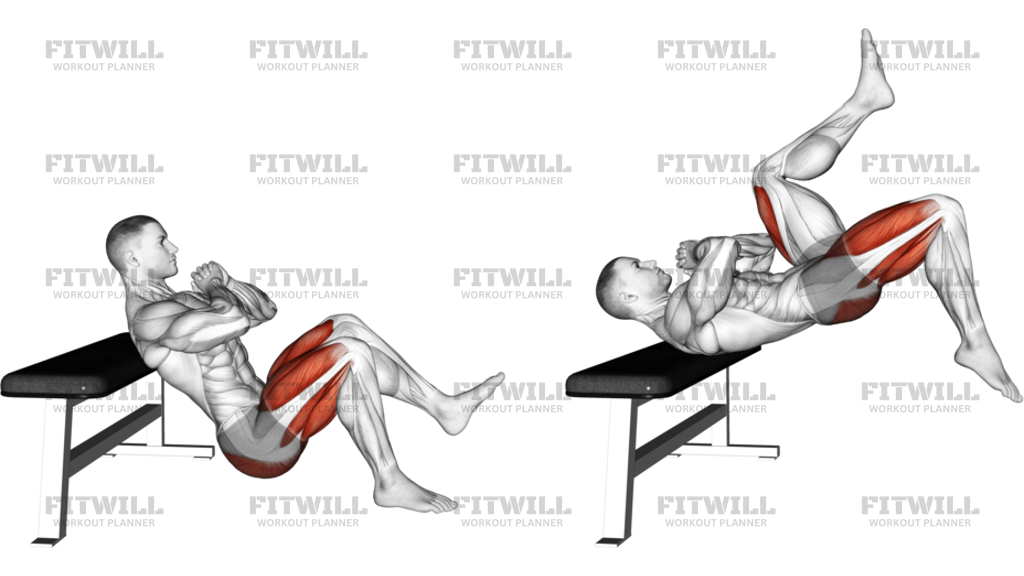
- Lie on your back with one knee bent and that foot flat on the floor; keep the other leg extended upward or slightly forward, matching the single-leg setup shown in the image.
- Place your arms on the floor beside you for balance and keep both shoulder blades heavy on the ground.
- Set the planted foot so the heel is close enough that your shin can stay near vertical when the hips are fully lifted.
- Tuck the ribs slightly and brace your midsection before you start the first rep.
- Drive through the planted heel and midfoot to lift the hips quickly, snapping them upward with control.
- Raise until your torso and support thigh form a near-straight line without overarch of the lower back.
- Keep the raised leg long and quiet so it does not swing or kick to create momentum.
- Lower the hips under control until they hover just above the floor, then repeat with the same side or switch sides if prescribed.
- Exhale on the drive up and reset your pelvis before each rep if the set starts to feel sloppy.
Tips & Tricks
- If your hamstring cramps, move the planted foot a little closer to your hips so the glute can finish the rep instead of the hamstring.
- Keep the toes of the planted foot pointed mostly forward; letting the knee flare or collapse changes the line of force and makes the pelvis twist.
- Think about lifting the hips by squeezing the planted-side glute rather than pushing the ribs up toward the ceiling.
- The raised leg should stay long and controlled; a loose kick changes the exercise into a momentum drill.
- A fast concentric phase is the point of the movement, but the lowering phase should still be smooth and organized.
- Do not chase height by arching the low back at the top. Stop when the torso and thigh are aligned and the pelvis stays level.
- If the shoulders slide or the neck tightens, widen the arms slightly and press the upper back more firmly into the floor.
- Use a mat or pad if the floor is hard enough that you lose your upper-back contact or start shifting around between reps.
Frequently Asked Questions
What does Single Leg Jumping Glute Bridge train most?
It mainly trains unilateral glute drive on the planted side, with hamstrings and core helping keep the pelvis level.
How should my planted foot be positioned?
Place it close enough that the shin is near vertical when the hips are up, and keep the heel rooted for the whole rep.
Should the raised leg stay straight?
Yes. Keep it long and quiet so it supports balance without kicking through the movement.
What makes this a jumping bridge?
The hips drive up with a quick, explosive snap instead of a slow grind, but the shoulders and upper back stay on the floor.
Can beginners do this version?
Yes, but most people should learn the regular single-leg glute bridge first so they can control the pelvis before adding speed.
What is the most common form mistake?
The usual mistake is twisting the pelvis or arching the lower back to fake extra height.
How do I make the exercise harder?
Add a brief squeeze at the top, keep the tempo explosive on the way up, or extend the free leg slightly farther to challenge stability.
When should I stop a set?
Stop when the planted hip no longer reaches the same height, the pelvis starts rotating, or the hamstring takes over with cramping.