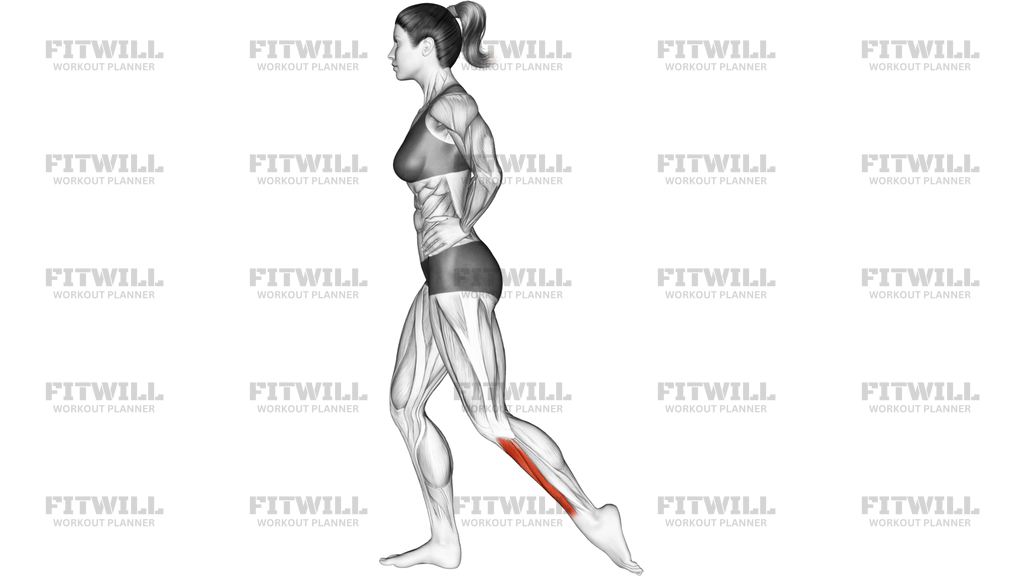
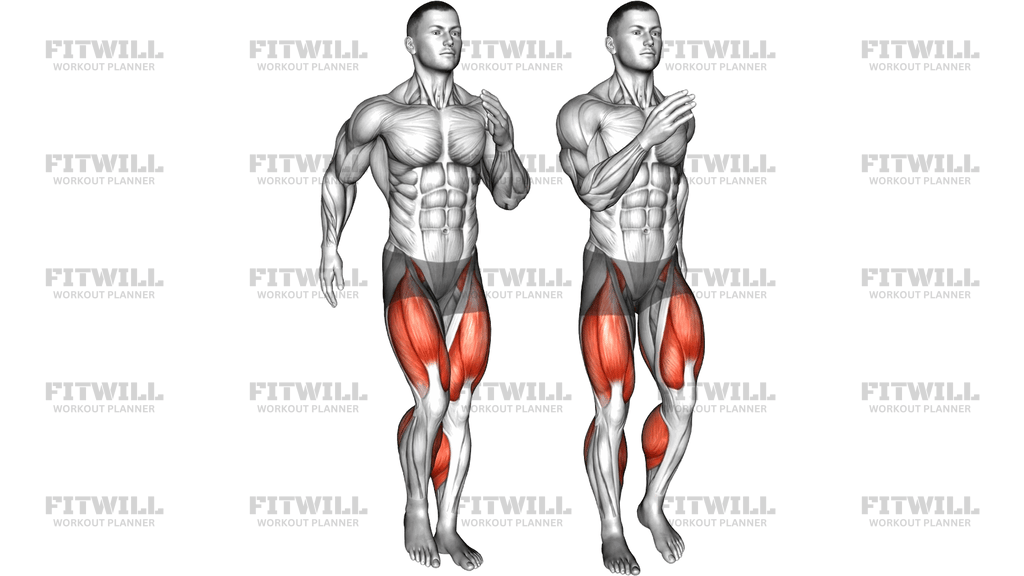
Toe Walk
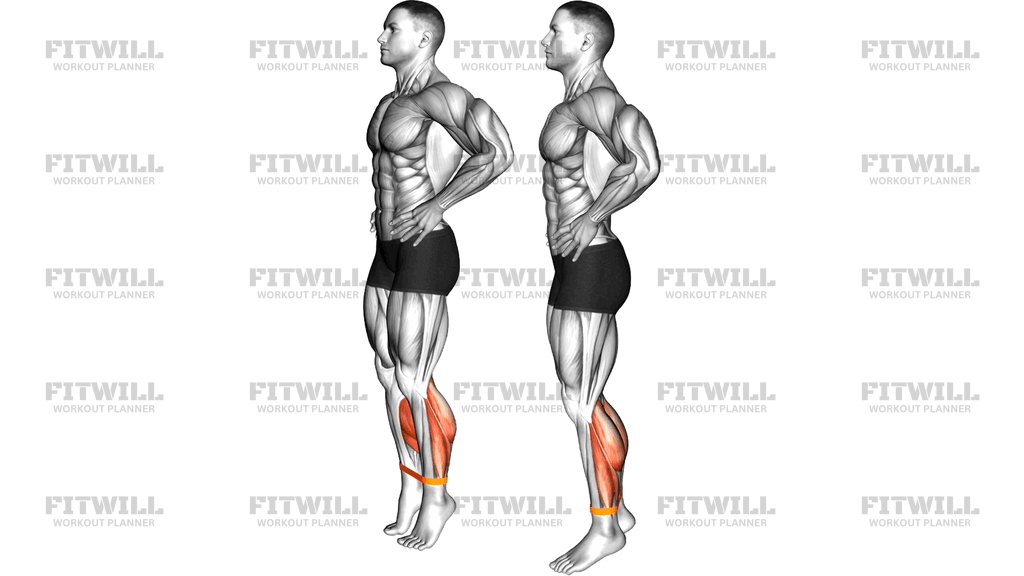
Toe Walk is a bodyweight calf and ankle drill performed by staying up on the balls of your feet and walking with small, controlled steps. It trains the calves to keep working while the ankles, feet, and lower legs stay organized under your body. Because the heels never settle onto the floor, every step asks you to maintain pressure through the forefoot instead of letting the load disappear between reps.
This movement is useful when you want more calf endurance, better ankle stiffness, and a stronger sense of balance during running, jumping, or athletic change-of-direction work. The calves do the bulk of the work, but the feet and core have to help keep your body upright and centered. That is why Toe Walk is often used as a warmup drill, an accessory finisher, or a low-equipment lower-leg conditioning exercise.
The setup matters because a rushed start usually turns into wobbling, leaning, or letting the heels drift down. Stand tall, lift onto the balls of your feet, and keep your toes pointing forward so the pressure stays on the forefoot. Once you begin moving, the goal is not to take big steps; it is to keep the body stacked and the calf tension steady from one step to the next.
A good Toe Walk feels controlled and deliberate. The ankles stay slightly springy, the knees remain softly bent, and the torso stays tall rather than tipping backward to cheat the range. Short steps keep the calves loaded and make it easier to maintain rhythm and balance, especially when fatigue starts to pull the heels toward the floor.
Use Toe Walk when you need a simple way to build lower-leg work capacity without equipment. It is friendly for beginners if the distance stays short and the pace stays slow, but it can also be made harder by extending the walk, slowing the steps, or adding a light carry. If you feel pain in the Achilles or the arch instead of a normal calf burn, shorten the set and reduce the amount of time spent on the forefoot.
Fitwill
Log Workouts, Track Progress & Build Strength.
Achieve more with Fitwill: explore over 9600 exercises with images and videos, access built-in and custom workouts, perfect for both gym and home sessions, and see real results.
Start your journey. Download today!




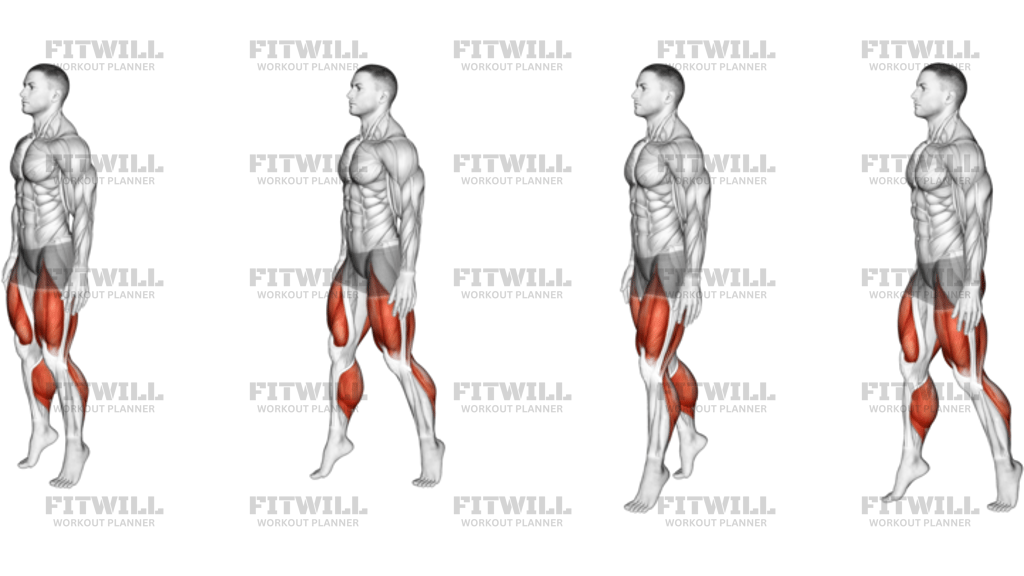
Instructions
- Stand tall on a flat floor with your feet about hip-width apart and your weight centered over the balls of your feet.
- Lift your heels so you are balanced on your forefoot, with your toes pointing forward and your knees softly bent.
- Stack your ribs over your pelvis and let your arms hang naturally so you can use them for balance without swinging.
- Take short, quiet steps forward while staying high on your toes from the first step to the last.
- Keep your heels off the floor and keep pressure through the big toe and second toe as you move.
- Hold your torso tall and avoid leaning back or pitching forward to make the walk easier.
- Breathe steadily as you walk, keeping the same rhythm instead of holding your breath through the set.
- When the set is complete, lower your heels to the floor under control and stand flat before stepping away.
Tips & Tricks
- Keep the steps short. Long strides make the heels drop and turn the drill into a sloppy tiptoe walk.
- Press through the big toe and second toe to stop the foot from rolling outward as the calves fatigue.
- A slight knee bend keeps the ankles springy and reduces the urge to lock out and wobble.
- If balance is the limiter, walk beside a wall, rack, or mirror so you can steady yourself without leaning on it.
- Use a shoe with a stable sole if your feet cramp easily; barefoot work demands more foot control and can feel harsher.
- Stay tall through the crown of the head instead of hinging forward at the hips to reach the next step.
- If your calf burn turns into sharp Achilles or arch pain, stop the set and reduce the walking distance next time.
- For more challenge, slow the steps down rather than taking bigger ones or bouncing off the floor.
Frequently Asked Questions
What muscles does Toe Walk work most?
Toe Walk mainly targets the calves, especially the gastrocnemius and soleus, while the feet and core help keep you balanced.
Is Toe Walk good for beginners?
Yes, as long as the walk is short and controlled. Beginners usually do best starting with a few slow passes on a flat surface.
How is Toe Walk different from calf raises?
Calf raises are mostly a vertical raise-and-lower drill, while Toe Walk keeps the calves working while you move and balance at the same time.
Why do my heels keep dropping during Toe Walk?
That usually means the steps are too long or the set is too fatigued. Shorten the stride and stop before you lose forefoot pressure.
Should I do Toe Walk barefoot or in shoes?
Either can work, but shoes are often easier for beginners because they give the foot a little more support. Barefoot walking demands more control and can cramp the calves faster.
How far should I walk on my toes?
Start with a short distance you can keep clean from start to finish, then extend it only if your heels stay lifted and your torso stays tall.
What should the foot pressure feel like during Toe Walk?
Most of the pressure should stay under the ball of the foot and toes, especially the big toe side. If the pressure shifts to the outer edge, reset your foot placement.
What if my calves cramp during Toe Walk?
Shorten the set, slow the pace, and give the calves a longer rest between rounds. Frequent cramping usually means the distance or volume is too aggressive.