Wide Air Squat
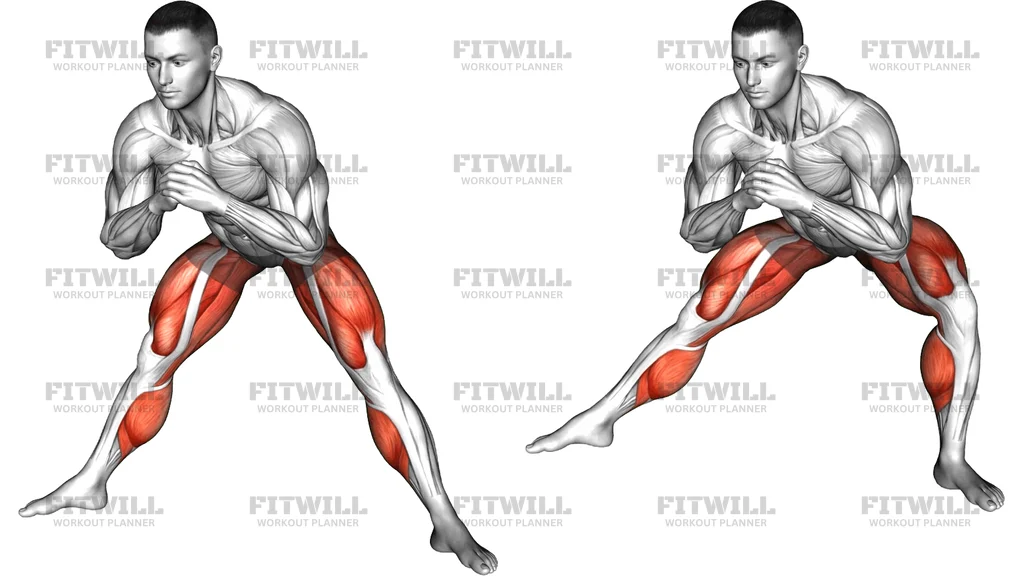
Wide Air Squat is a bodyweight squat performed from a wider-than-shoulder stance, usually with the feet turned slightly out and the knees tracking over the toes. The wider base changes the feel of the squat: it lets the hips sit between the legs, increases the demand on the glutes and inner thighs, and asks the trunk to stay organized while the torso leans forward enough to keep balance over the midfoot.
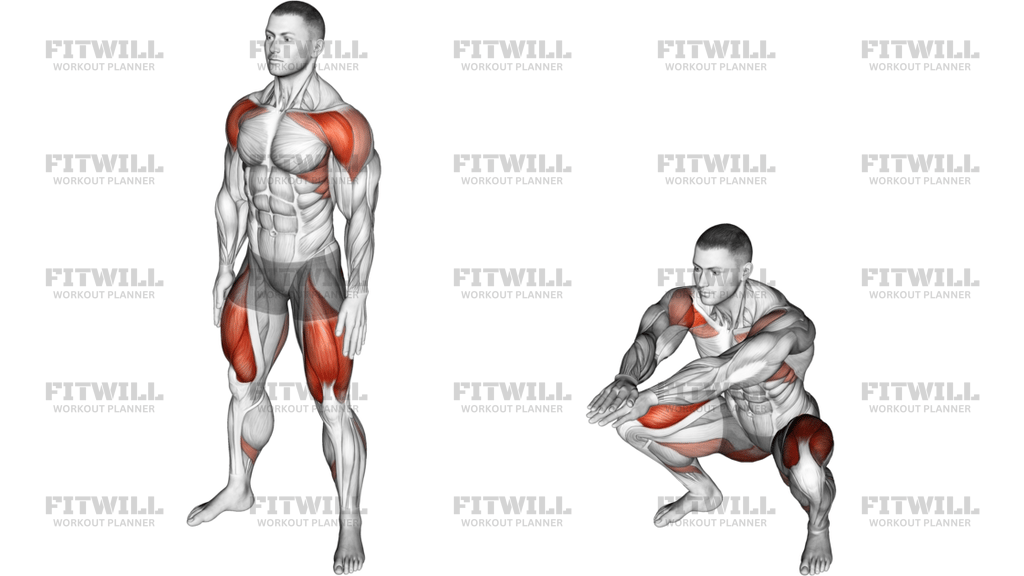
This movement is useful for building lower-body control without external load. It trains the hips, quadriceps, glutes, adductors, and core to work together through a deep bodyweight range. The image shows a deep squat with the arms reaching forward, which is a practical counterbalance that helps you keep the chest from collapsing and the heels from lifting as you descend.
The setup matters more than people expect. A stance that is too narrow turns the movement into a different squat pattern, while a stance that is too wide can limit depth and make the knees and hips feel blocked. Find a foot position that lets you keep the whole foot planted, push the knees out in line with the toes, and sit down between the hips instead of folding forward onto the toes.
Use a slow, controlled descent and let the hips break first, then the knees. At the bottom, keep tension through the legs and drive up by pressing the floor apart and extending the hips and knees together. The arms can stay straight in front of the body for balance, especially on the way down and out of the hole. Breathing should stay deliberate: inhale before you descend, brace, then exhale as you stand.
Wide Air Squat is a good choice for warm-ups, movement prep, bodyweight leg work, and beginner strength circuits. It also works well as a conditioning drill when you want lower-body volume without equipment. Because the range can get deep quickly, respect hip, knee, and ankle mobility limits and stop short of positions that force the lower back to round or the heels to peel off the floor.
[ Workout Log & Planner ]
Put your next workout in Fitwill
Keep your plan and training log ready when you are.


Instructions
- Stand with your feet wider than shoulder width, toes turned slightly out, and weight centered over the middle of each foot.
- Reach your arms straight out in front of you to help counterbalance the squat.
- Set your ribs over your pelvis and brace your trunk before you start descending.
- Sit your hips down between your legs while letting your knees track out in line with your toes.
- Keep your heels flat and your chest lifted enough that your back stays long, not rounded.
- Lower until your thighs are as deep as your mobility allows without losing foot pressure or trunk position.
- Pause briefly in the bottom if you can stay tight and balanced.
- Drive up by pushing the floor apart, extending the knees and hips together, and returning to a tall standing position.
- Exhale as you rise, reset your stance, and repeat for the planned number of reps.
Tips & Tricks
- A slightly wider stance usually makes it easier to keep the hips open and the knees tracking cleanly, but do not force an extreme sumo position if your hips pinch.
- If your heels want to lift, shorten the depth or widen the stance only a little until you can stay rooted through the whole foot.
- Think about spreading the floor with your feet on the way up; that cue usually keeps the knees from caving in.
- Keep the arms long in front of you rather than letting them drop, because the forward reach helps you stay balanced in the bottom position.
- A small forward torso angle is normal in a wide squat, but the lower back should stay controlled instead of collapsing under the load.
- Slow down the descent if you keep bouncing out of the bottom or losing tension in the hips and knees.
- Choose depth based on control, not ego; a consistent mid-depth squat is better than one deep rep followed by several unstable ones.
- If your feet roll inward, check that your arches stay active and that your knees are following the line of your toes.
- Stop the set when the chest drops hard, the heels unload, or the knees drift inward on the way up.
Frequently Asked Questions
What does a Wide Air Squat work most?
It primarily trains the glutes, quadriceps, adductors, and core, with the hips doing a lot of the work.
Why are my arms held out in front?
The forward reach acts as a counterbalance, which helps you sit deeper while keeping your torso from tipping too far forward.
How wide should my stance be?
Wide enough that you can drop your hips between your legs and keep your knees tracking out, but not so wide that your hips feel jammed or your balance becomes unstable.
Should my feet point straight ahead?
A slight toe-out position is usually better for this squat because it lets the knees open naturally as you descend.
How low should I go?
Go as low as you can while keeping your heels down, your knees controlled, and your spine from rounding.
Is this more of a hip exercise or a leg exercise?
It is both. The wide stance shifts more demand into the hips and inner thighs while still heavily using the quads.
Can beginners do this squat?
Yes. Start with a comfortable stance and a smaller range until you can keep the heels planted and the knees aligned.
What is the most common mistake?
Letting the knees cave inward or shifting onto the toes instead of keeping pressure through the whole foot.