Diagonal Punch
Diagonal Punch is a standing bodyweight punching drill that trains coordination, trunk control, shoulder endurance, and quick force transfer through a controlled diagonal reach. It sits somewhere between a warm-up drill and a light plyometric conditioning movement: the rep is fast enough to feel athletic, but not so loose that the torso starts whipping around or the shoulders take over.
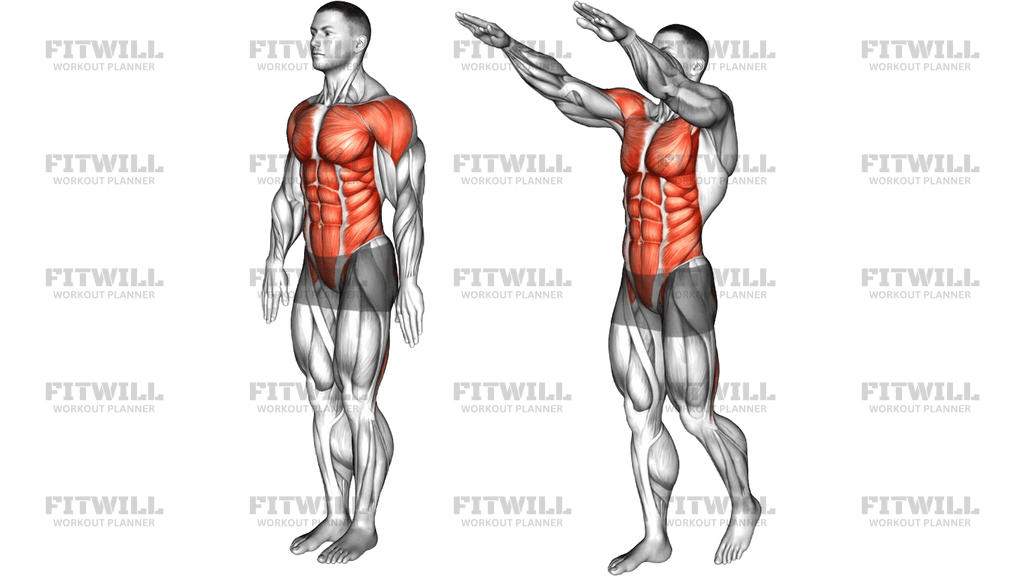
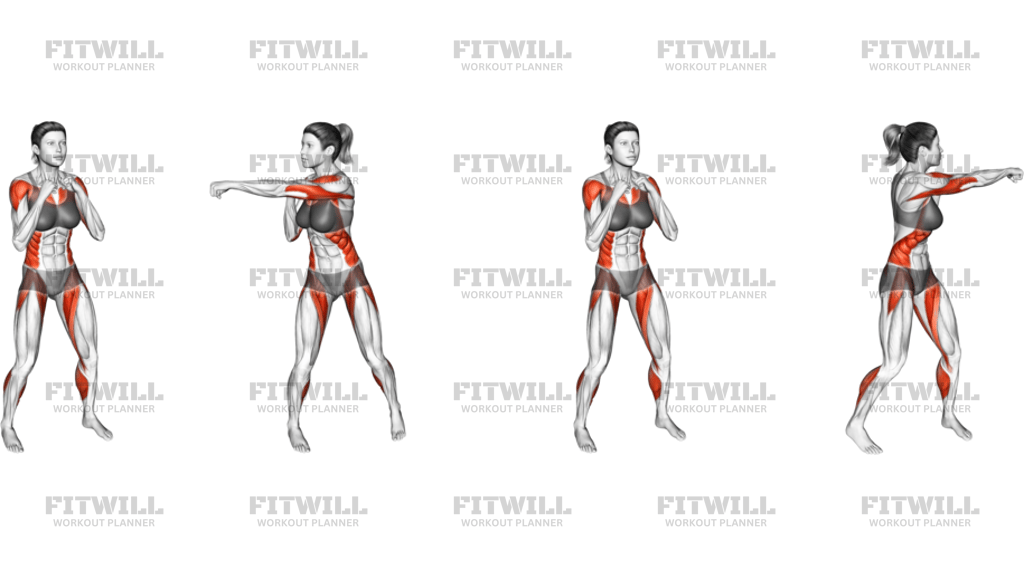
The image shows a narrow, upright fighting stance with the hands returning to guard after each strike. That setup matters because the punch should travel on a clean line from the cheek or chin area to a target just off the centerline, not loop upward or swing across the body. A small turn through the hips and upper torso is useful, but the ribs should stay stacked over the pelvis and the lower back should not arch to chase more reach.
Each repetition should feel like a crisp strike and a quick reset. Extend one arm along the diagonal path, keep the wrist neutral, and stop the punch with the shoulder still down rather than shrugged toward the ear. Exhale on the punch, then bring the hand straight back to guard so the next rep starts from the same position. If the movement turns into a shove, a big torso sway, or a loose arm swing, the drill stops training the intended speed and control pattern.
Diagonal Punch is useful in warm-ups, conditioning circuits, sport-prep sessions, and core-focused workouts where you want coordination and rhythm without equipment. It can be performed by beginners because it does not require load, but the quality standard is still high: stay balanced, keep the stance organized, and shorten the range if the punch gets sloppy. The safest version is the one where every strike looks the same and the return to guard is just as clean as the punch itself.
Fitwill
Log Workouts, Track Progress & Build Strength.
Achieve more with Fitwill: explore over 9600 exercises with images and videos, access built-in and custom workouts, perfect for both gym and home sessions, and see real results.
Start your journey. Download today!




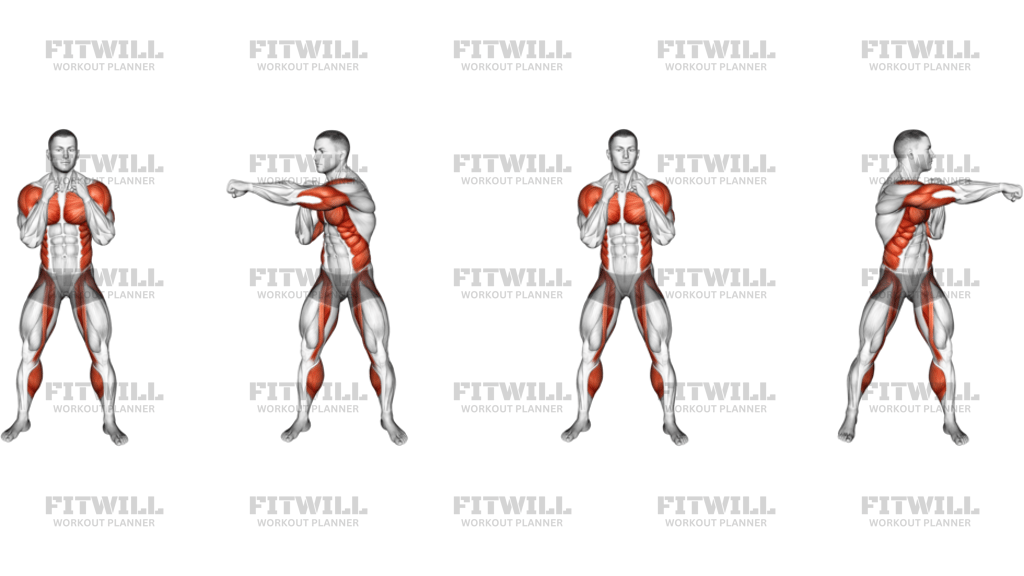
Instructions
- Stand in an athletic stance with your feet about hip- to shoulder-width apart, knees soft, and both hands held high in front of your chin.
- Keep your ribs stacked over your pelvis and your chest tall so you can punch without leaning forward.
- Brace lightly through the trunk before the first rep, then stay tall through the whole set.
- Punch one arm forward on a slight diagonal from the shoulder toward the opposite side at about chest to shoulder height.
- Let the hips and upper torso rotate just enough to reach, but keep both feet planted and balanced.
- Finish the strike with the arm nearly straight, the wrist aligned, and the shoulder staying down away from the ear.
- Snap the hand back to guard under control while the other hand stays up protecting the face and chest.
- Alternate sides in a steady rhythm, exhaling on each punch and resetting cleanly before the next rep.
Tips & Tricks
- Keep your chin slightly tucked so the punch does not pull your head forward.
- Think of each rep as a quick strike and a quick return, not a long push that stays extended.
- Let the back heel pivot only if it helps the reach; do not spin the whole body through the rep.
- Keep the punch line at shoulder height or slightly below so the movement stays crisp instead of becoming a looping swing.
- Snap the elbow to near-straight without locking it hard at the end of the strike.
- Exhale sharply as the fist leaves guard to keep the rhythm tight and the trunk braced.
- Stay light and athletic in the legs, but avoid bouncing so much that the stance loses shape.
- Shorten the range immediately if you feel the low back arching or the shoulders shrugging.
Frequently Asked Questions
What muscles does Diagonal Punch train?
It mainly challenges the shoulders, chest, triceps, obliques, and the deep core muscles that keep the torso steady between punches.
Do I need to rotate my hips on each punch?
A small hip and torso turn is normal, but it should support the strike rather than turn into a full body spin.
Where should my hands start and finish?
Start with both hands in a high guard near the chin, then snap the punching hand back to that same guard position after each rep.
How far should the punch travel?
The hand should travel in a straight, diagonal line from guard to a point around chest or shoulder height, not loop upward or swing wide across the body.
Is this exercise good for beginners?
Yes. Beginners can keep the pace slow, use a smaller range, and focus on returning each hand to guard cleanly.
What is the most common mistake with Diagonal Punch?
The usual errors are shrugging the shoulders, leaning into the punch, or letting the torso twist so far that the lower back takes over.
How can I make the drill harder without equipment?
Use a faster, cleaner rhythm, add longer work intervals, or pause for a beat in the guard position before the next strike.
Should the feet stay planted the whole time?
Yes, the feet should stay balanced and grounded; a small pivot is fine, but the drill should not turn into a hopping movement.