Alternate Leg Raise
Alternate Leg Raise is a floor-based abdominal and hip-flexor drill where you lie on your back and alternate which straight leg lowers while the other stays lifted. The movement is simple, but the setup matters: if your pelvis tips forward or your lower back arches, the exercise shifts away from the abs and becomes a swinging leg motion. Done well, it builds control through the lower trunk, teaches you to keep the ribs down, and gives the hip flexors a clean, low-load strength stimulus.
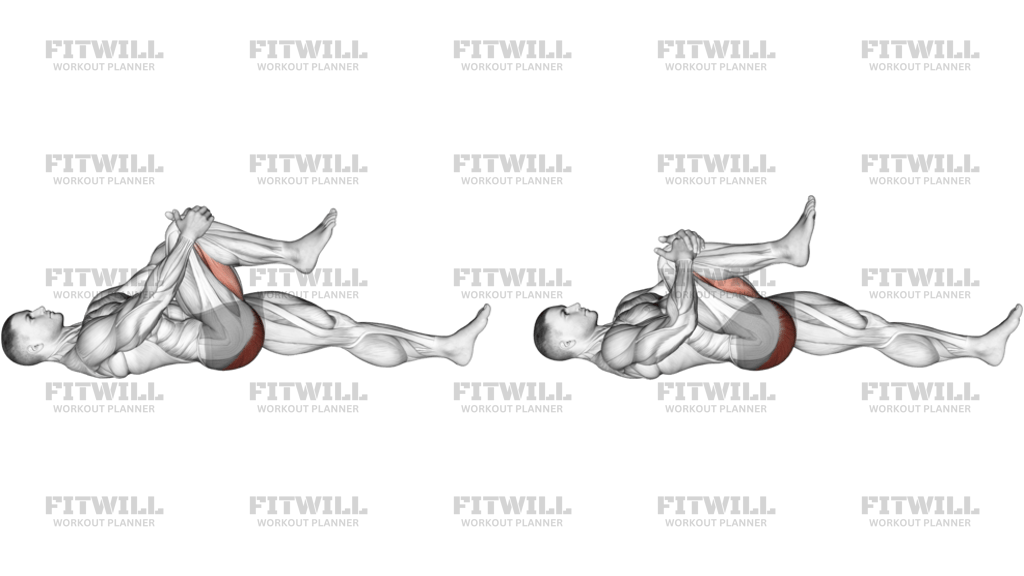
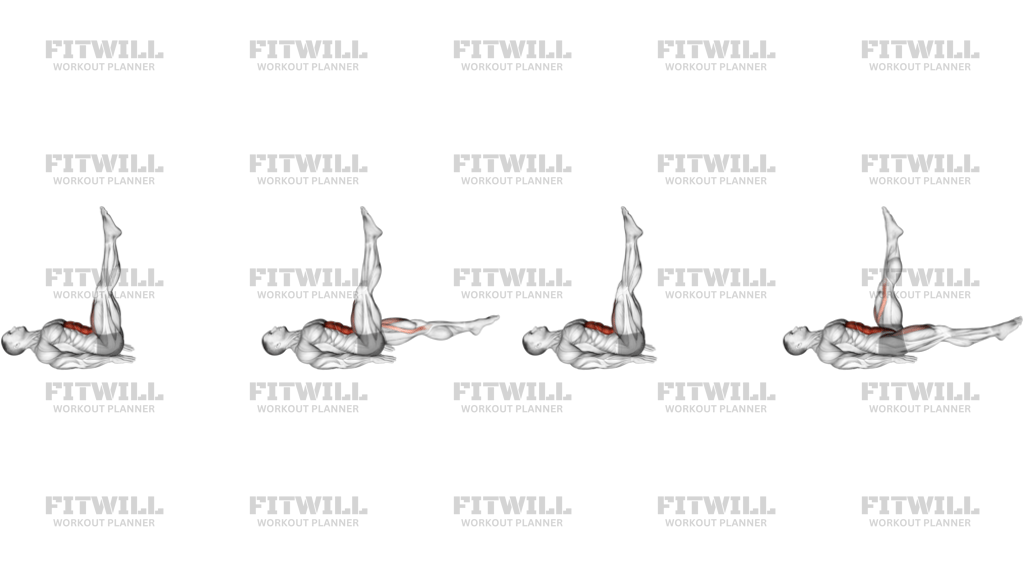
The image shows a supine position with the torso flat on the floor, one leg stacked nearly vertical over the hip, and the other leg extended out close to the floor before switching sides. That pattern makes the exercise useful for core warm-ups, accessory work, and any session where you want a strict anti-extension challenge without loading the spine with external weight. The working leg should move smoothly through the same arc each rep; the still leg should stay tall instead of drifting.
What makes this version valuable is the alternating rhythm. Each side has to decelerate the descending leg while the opposite side stays braced and quiet. That demands more coordination than a simple double-leg raise, and it also exposes side-to-side control differences. If one hip flexor is tighter or one side of the abdomen loses position sooner, the alternating pattern will usually show it quickly.
To perform it well, set your low back gently into the floor, keep your arms pressed down for support, and lower one leg only as far as you can without losing contact through the ribs and pelvis. The leg that stays up should remain straight and active, not bent or drifting behind your head. When the working leg returns, bring it back under control rather than snapping it upward. Match the rep speed to your ability to keep the midsection quiet.
Use Alternate Leg Raise when you want a bodyweight core exercise that emphasizes position, breathing, and clean control over load. It can be scaled by shortening the lowering range, bending the knees slightly, or slowing the descent. It is most useful when the goal is to train abdominal control and hip position, not to chase momentum or a large rep count.
[ Workout Log & Planner ]
Put your next workout in Fitwill
Keep your plan and training log ready when you are.


Instructions
- Lie on your back on a mat with both legs straight and your arms flat by your sides for support.
- Press your lower back gently into the floor and lift one leg until it is stacked over the hip.
- Keep the other leg straight and hovering, with the heel a few inches off the floor.
- Brace through your lower abs so the ribs stay down and the pelvis does not tilt forward.
- Lower the hovering leg in a slow, controlled arc until it is close to the floor or until your back starts to arch.
- Keep the top leg tall and still while the working leg descends; do not let both legs swing together.
- Reverse the motion and bring the lowering leg back to the vertical position without kicking or bouncing.
- Alternate legs for the planned number of repetitions, keeping the same range and tempo on both sides.
Tips & Tricks
- If your low back lifts off the floor, shorten the range before you chase more repetitions.
- Keep both knees locked softly but not hyperextended; a tiny bend is better than a swinging straight leg.
- Think about lowering the leg from the hip crease, not dropping it from the foot.
- Let the down-leg stop just before the floor if that is the point where your pelvis starts to rock.
- Keep your hands pressing into the floor so your shoulders and upper body do not help the movement.
- Exhale as the leg lowers to help keep the ribs tucked and the abdomen active.
- Use a slower descent than ascent if you want the set to feel more controlled and less like momentum work.
- If one side feels much harder, keep the same tempo but reduce the range on that side rather than twisting.
Frequently Asked Questions
What does Alternate Leg Raise work most?
It mainly trains the lower abs and hip flexors while challenging your ability to keep the pelvis and ribs stable.
Can beginners perform this exercise?
Yes. Beginners usually do best with a smaller lowering range and a slight knee bend until they can keep the low back flat.
How low should the moving leg go?
Only as low as you can go without your lower back arching or your pelvis tipping forward.
Why keep one leg vertical while the other lowers?
The tall leg makes the body work harder to stay organized, so each side has to control the motion without help from momentum.
Should my hands do anything during the rep?
Keep your palms down beside you and use them for light floor support, not to push the legs through the rep.
What is the most common mistake with alternating leg raises?
Letting the lower back arch and swinging both legs instead of moving one leg under control.
Can I bend my knees if straight legs are too hard?
Yes. A small knee bend can make the exercise more manageable while you learn to keep the trunk quiet.
When is Alternate Leg Raise useful in a workout?
It works well in a core warm-up, an accessory block, or as part of a low-load abdominal circuit.