Dumbbell Reverse-Grip Squeeze Bench Press
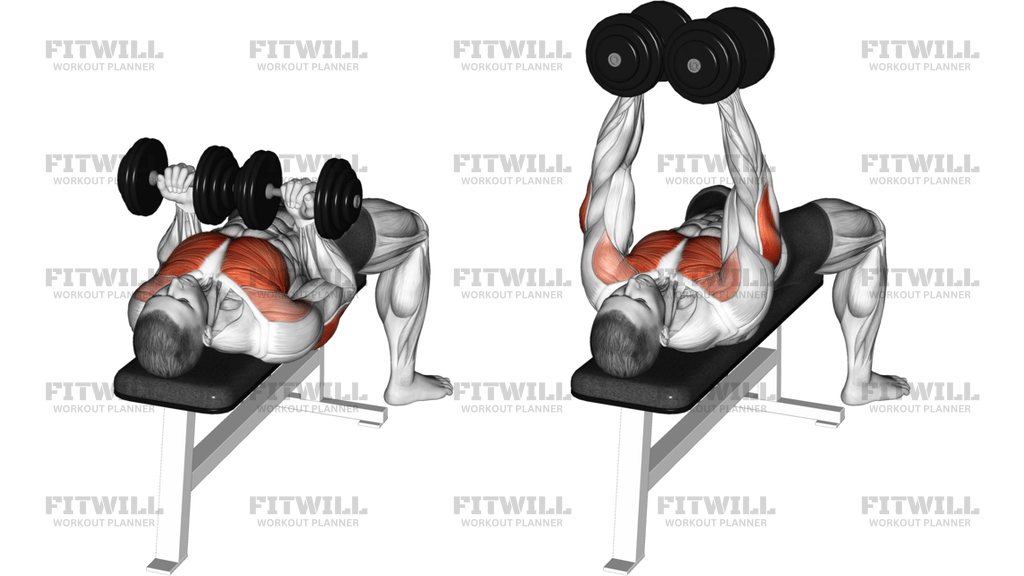
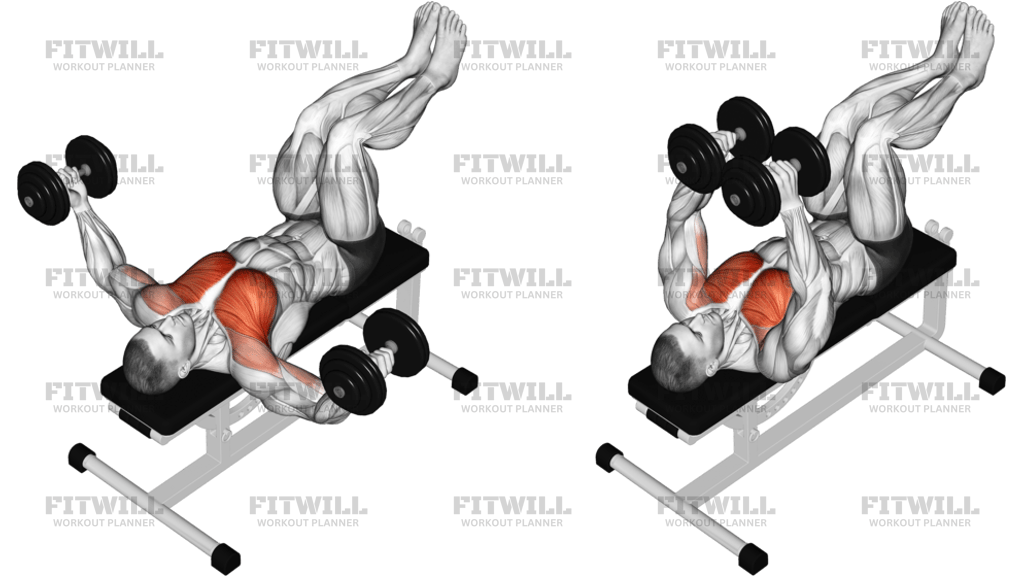
Dumbbell Reverse-Grip Squeeze Bench Press is a bench press variation that uses a reverse grip and a light inward squeeze between the dumbbells to create a tighter, more deliberate pressing path. The image shows the lifter lying on a flat bench with the dumbbells held directly over the chest, palms facing the face, elbows bent, and the weights kept close together through the press. That setup matters because the exercise depends on shoulder position, wrist alignment, and a steady path rather than on how much load can be moved.
This movement is typically used to emphasize the chest and triceps while asking the shoulders and upper back to stabilize the dumbbells. The reverse grip changes how the wrists and elbows track, and the squeeze cue keeps the dumbbells from drifting apart at the top or bottom of the rep. If the hands separate too much, the press turns into a looser dumbbell bench press; if the wrists bend back or the elbows flare, the pattern gets harder on the shoulders and less useful for the chest.
A good rep starts before the first press. Set the feet firmly, keep the upper back planted on the bench, and hold the dumbbells so the inner plates stay in contact or nearly in contact throughout the set. From there, lower the weights in a controlled arc toward the lower to mid-chest, then press them back up over the same line. The elbows should stay comfortably tucked instead of opening wide, and the dumbbells should finish stacked over the shoulders with the chest and triceps doing the work.
Because the reverse grip can feel unfamiliar, load selection matters more than ego. Use a weight that lets you keep the wrists straight, the forearms vertical, and the dumbbells steady all the way through the lowering phase. If the shoulders roll forward, the handles drift, or the bench becomes an arching contest, the set is too heavy or the setup has slipped. The exercise is most useful when you want controlled pressing volume, a chest-focused variation, or a triceps-friendly press that still lets the shoulders assist.
Treat this as a strict strength-and-control drill rather than a speed lift. Smooth reps, even breathing, and a stable bench position will make the exercise feel much more productive than chasing range or load. When the rep ends, lower the dumbbells back to the chest under control and place them down safely before relaxing the shoulders.
Fitwill
Log Workouts, Track Progress & Build Strength.
Achieve more with Fitwill: explore over 9600 exercises with images and videos, access built-in and custom workouts, perfect for both gym and home sessions, and see real results.
Start your journey. Download today!




Instructions
- Lie back on a flat bench with your head, upper back, and hips supported and your feet planted firmly on the floor.
- Hold a dumbbell in each hand above the chest with your palms facing you and the inner ends of the dumbbells lightly touching or nearly touching.
- Set your shoulder blades down and back against the bench, keep your wrists straight, and stack the dumbbells over the shoulder line.
- Bend the elbows and lower both dumbbells together in a controlled path toward the lower to mid-chest.
- Keep the dumbbells squeezed together as they descend so they do not drift apart or wobble side to side.
- Press the dumbbells upward along the same path until the arms are nearly straight without locking the elbows aggressively.
- Exhale as you press up, then inhale on the lowering phase while keeping the rib cage from flaring.
- After the last repetition, guide the dumbbells back to the chest and then place them down safely before sitting up.
Tips & Tricks
- Keep the inner ends of the dumbbells touching or almost touching so the squeeze cue stays active through the whole set.
- Use a reverse grip that feels secure in the palm; if the handles slide, the load is too heavy for this variation.
- Keep the elbows slightly tucked so the press finishes more over the chest and triceps than out wide over the shoulders.
- Lower the dumbbells slowly enough to control the shoulder angle; bouncing off the chest removes the point of the exercise.
- Press both dumbbells at the same speed so one arm does not take over and twist the bench position.
- Keep the wrists stacked over the forearms instead of letting them bend back toward the face.
- A small arch in the upper back is fine, but do not turn the movement into a power bridge with the hips driving up.
- Stop the set when the dumbbells start drifting apart or the shoulders roll forward at the bottom.
Frequently Asked Questions
What muscles does Dumbbell Reverse-Grip Squeeze Bench Press work?
It mainly targets the chest and triceps, with the front shoulders and upper back helping to stabilize the dumbbells.
Why use a reverse grip instead of a normal dumbbell bench press?
The reverse grip changes the wrist and elbow angle, which can make the press feel more chest-focused and triceps-friendly for some lifters.
Should the dumbbells stay together during the rep?
Yes, the inner ends should stay touching or nearly touching so the squeeze component stays in place and the dumbbells do not drift apart.
How deep should I lower the dumbbells?
Lower them under control toward the lower to mid-chest, but stop before the shoulders lose position or the wrists start collapsing.
Is this exercise good for beginners?
Yes, if the load is light and the lifter can keep the wrists straight and the dumbbells steady on the reverse grip.
What is the most common form mistake?
Letting the dumbbells separate, flaring the elbows, or bending the wrists back usually turns the movement into a sloppy press.
Where does this fit in a workout?
It works well as accessory pressing work after a main bench movement or as a controlled chest-and-triceps variation in an upper-body session.
How should I choose the weight?
Pick a load that lets you keep the dumbbells aligned, the grip secure, and the lowering phase smooth from the first rep to the last.