Kettlebell Lying On Floor Single-Arm Bottoms-Up Chest Press
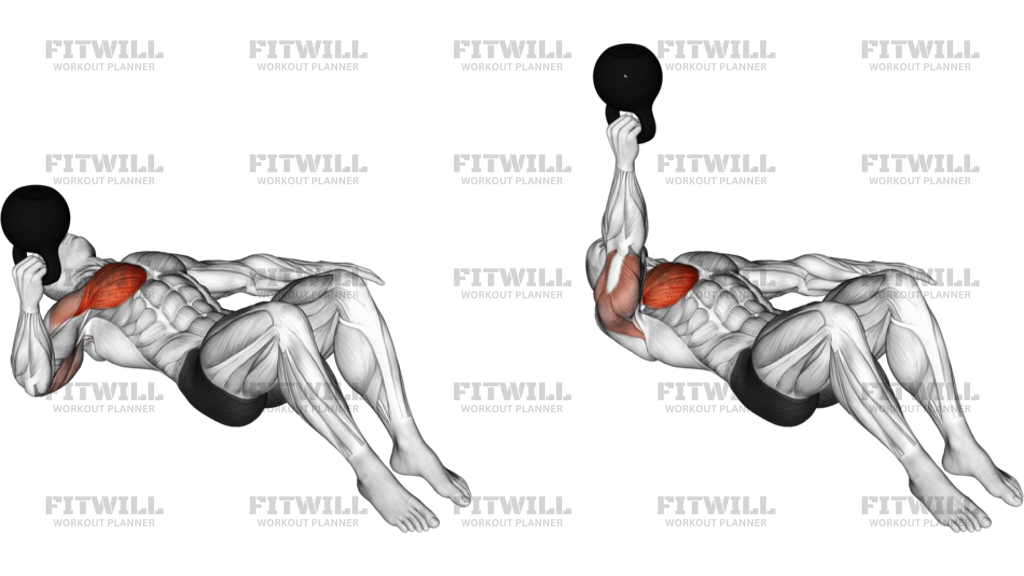
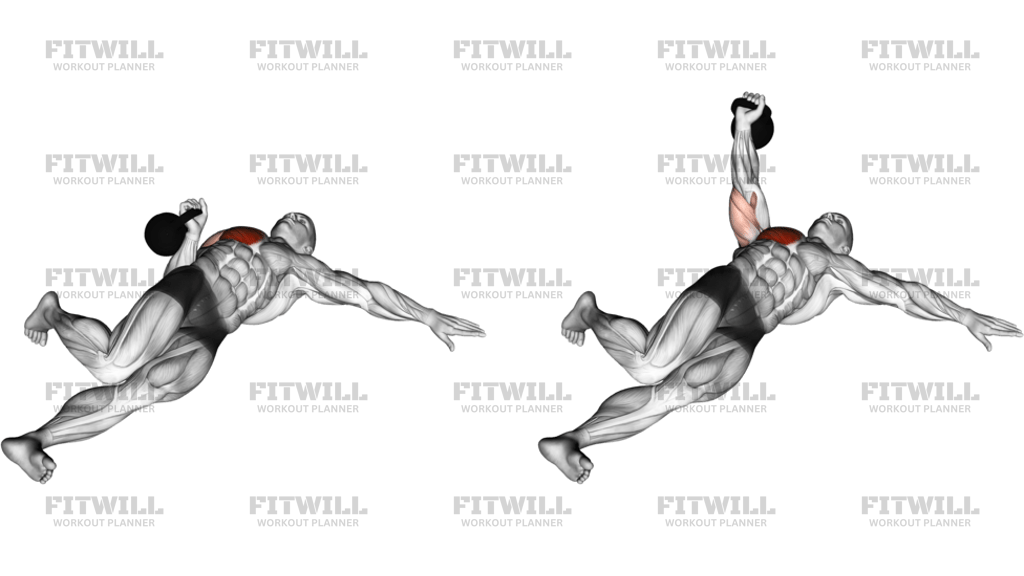
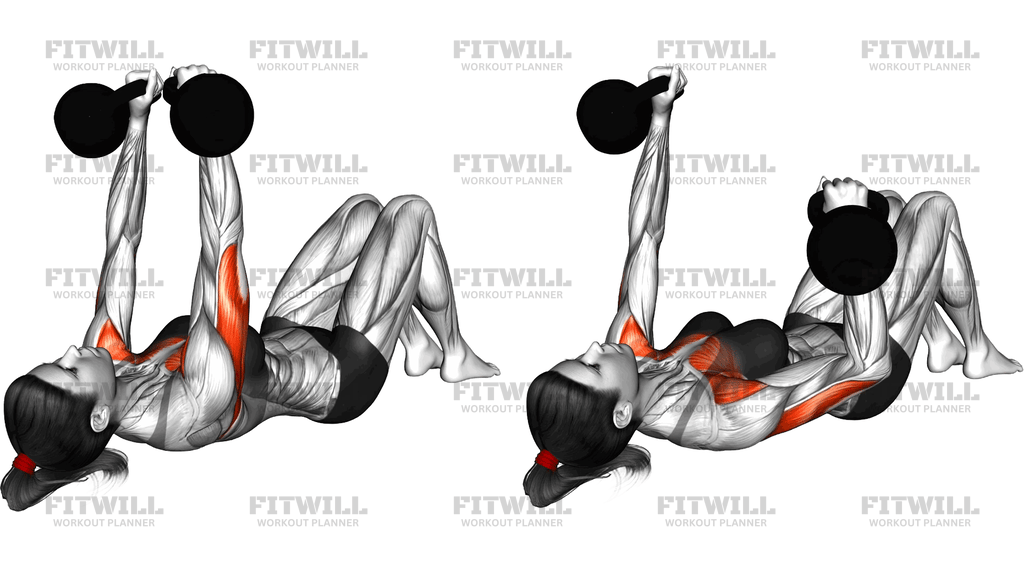
Kettlebell Lying On Floor Single-Arm Bottoms-Up Chest Press is a one-arm floor press performed with the kettlebell held upside down, so the bell sits above the handle and forces the wrist, forearm, shoulder, and trunk to stay organized while the chest presses the load. The floor shortens the range of motion and gives you a clear stopping point, which makes the exercise useful for building press strength without letting the shoulder drift too far behind the torso.
The bottoms-up position changes the training demand in a meaningful way. Instead of only pushing the kettlebell away from the body, you have to stabilize the bell, keep the wrist stacked under the weight, and prevent the forearm from wobbling as the arm extends. That makes the movement especially good for control, shoulder position, and upper-body coordination, while still giving the chest and triceps a strong pressing stimulus.
Setup matters more here than with a standard floor press. Lie flat with your knees bent and feet planted, then bring the kettlebell to the pressing side with the elbow on the floor and the bell balanced directly over the wrist. Keep the non-working arm relaxed on the floor for balance, and set the shoulder blade before each rep so the shoulder does not roll forward as you drive the bell upward. If the bell is unstable before the first rep, it will only get worse as fatigue builds.
Press the kettlebell in a straight line until the arm is fully extended and the bell is stacked over the shoulder, then lower it slowly until the upper arm gently contacts the floor. The floor should stop the descent, not a collapse of the shoulder or elbow. Breathe out as you press and inhale as you lower, keeping the rib cage down so the torso does not twist to help the rep.
This movement is a strong accessory choice when you want a press that rewards precision, grip control, and shoulder stability more than heavy loading. It works well in strength blocks, stability-focused upper-body sessions, and warmups before heavier pressing. Use a conservative load, especially if the bottoms-up position feels shaky, and stop the set when the bell starts to wobble, the wrist bends back, or the shoulder loses its packed position.
[ Workout Log & Planner ]
Put your next workout in Fitwill
Keep your plan and training log ready when you are.


Instructions
- Lie on your back on the floor with your knees bent, feet flat, and the kettlebell in one hand on the pressing side.
- Turn the kettlebell bottoms-up so the bell points toward the ceiling and the handle sits above your wrist.
- Bend the working elbow until the upper arm rests on the floor and the forearm is vertical above the shoulder.
- Keep the opposite arm out to the side on the floor and brace your ribs so your torso stays square.
- Take a breath, then press the kettlebell straight up by extending the elbow and keeping the bell stacked over the wrist.
- Finish with the arm fully extended, the bell steady, and the shoulder not shrugged toward the ear.
- Lower the kettlebell slowly along the same path until the upper arm touches the floor again.
- Reset the shoulder and grip before the next rep instead of bouncing off the floor.
Tips & Tricks
- Start lighter than a normal floor press because the bottoms-up position magnifies wrist and shoulder instability.
- Keep the kettlebell bell directly over the wrist; if the wrist folds back, the rep stops being a clean press.
- Press with the knuckles pointed toward the ceiling and avoid letting the forearm drift inward or outward.
- Keep the shoulder blade set on the floor before each rep so the shoulder does not glide forward at the top.
- Do not slam the triceps off the floor; let the floor end the descent with control.
- If the bell trembles, slow the lowering phase and shorten the set before the wobble gets worse.
- Keep the non-working hand relaxed on the floor instead of reaching across the body or helping the press.
- Exhale through the press and keep the rib cage down so the torso does not twist to finish the rep.
Frequently Asked Questions
What muscles does the kettlebell bottoms-up floor press work?
It mainly trains the chest and triceps, with a strong demand on the shoulder, forearm, and grip to keep the kettlebell stable.
Is this harder than a regular single-arm floor press?
Yes. The bottoms-up position makes the wrist and shoulder work much harder because the kettlebell has to stay balanced the entire time.
How should I position my elbow on the floor?
Lower until the upper arm touches the floor with the forearm still vertical. The elbow should stop under control, not bounce off the ground.
Can beginners use this exercise?
Yes, but only with a very light kettlebell. If the bell wobbles immediately, the load is too heavy.
Why does the kettlebell have to stay upside down?
The bottoms-up position adds a stability challenge that forces better wrist stacking and shoulder control during the press.
What is the most common mistake with this press?
Letting the wrist fold back or letting the shoulder shrug at the top usually breaks the movement quality first.
How many reps should I do?
Use low to moderate reps, usually enough to keep the kettlebell steady and the press path clean without shaking.
What should I do if the kettlebell feels unstable?
Reduce the load, slow the tempo, and shorten the set. Stability should improve before you try to add weight.