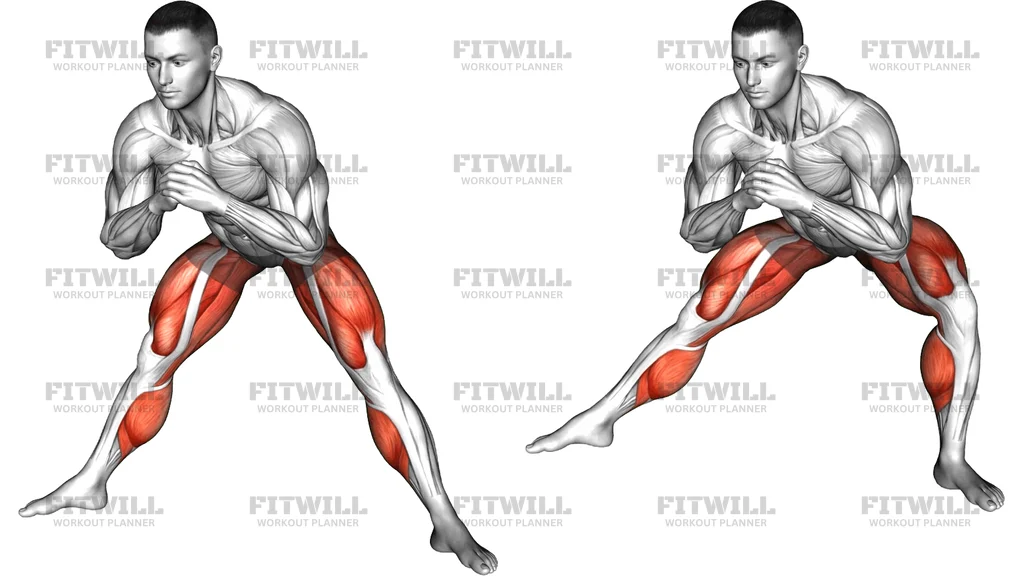
Lateral Walk Push-Up
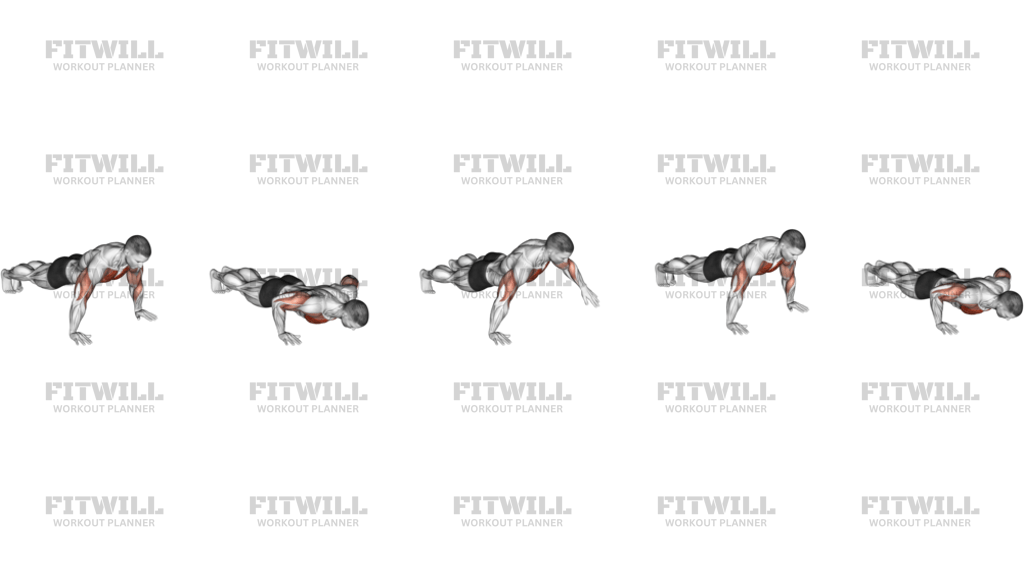
Lateral Walk Push-Up is a bodyweight push-up variation that combines a side step with a press, so each rep challenges chest, shoulders, triceps, and trunk control at the same time. The lateral walk adds an anti-rotation demand that is easy to miss if you rush the movement, which is why setup and foot placement matter as much as the push-up itself.
This exercise is useful when you want more than a standard push-up. The hands and feet stay on the floor while the body shifts sideways, so the working side has to stabilize through the shoulder and rib cage before pressing. That makes it a strong option for upper-body endurance, trunk stiffness, and coordinated movement under bodyweight load.
The position should look like a firm plank before the first push-up begins. Keep the feet wide enough to step cleanly, the hips level, and the shoulders stacked over the hands. Each lateral walk should feel deliberate, not scrambled: shift one hand and the opposite foot, re-brace, then perform the push-up from a stable base.
The press itself should travel in a straight, controlled line. Lower the chest between the hands, keep the elbows at a usable angle, and press back to a strong plank before taking the next side step. If the hips twist or sag, shorten the walk and clean up the plank before adding more repetitions.
Use this movement as accessory work, conditioning, or an athletic warm-up when you want bodyweight pressing with more coordination than a regular push-up. It also works well in circuits because the lateral shift raises the stability demand without needing external load. Beginners can scale it by taking smaller side steps, elevating the hands, or performing fewer total walks while keeping every rep crisp.
Fitwill
Log Workouts, Track Progress & Build Strength.
Achieve more with Fitwill: explore over 9600 exercises with images and videos, access built-in and custom workouts, perfect for both gym and home sessions, and see real results.
Start your journey. Download today!




Instructions
- Start in a high plank with your hands under your shoulders, feet a little wider than hip width, and your body in one long line from head to heels.
- Brace your midsection, squeeze your glutes, and spread your fingers so the shoulders feel stable before you move.
- Shift one hand and the opposite foot laterally in a small controlled step, keeping your hips as level as possible.
- Bring the second hand and foot along to re-establish a strong plank before you lower into the push-up.
- Bend the elbows and lower your chest between your hands until your upper arms are near parallel to the floor or your best pain-free depth.
- Press the floor away to return to the top of the push-up without letting the ribs flare or the hips twist.
- Take another small lateral walk to the other side, then repeat the push-up from that new plank position.
- Keep the side-to-side travel smooth and repeat for the planned number of steps or reps.
- Breathe in as you lower and exhale as you press and stabilize before the next walk.
Tips & Tricks
- Make the lateral step short enough that you can keep the plank rigid; a huge side shuffle usually turns the exercise into a balance drill.
- Keep your feet slightly wider than the hands if you need more stability, especially when you first learn the pattern.
- If your hips rock side to side, slow the walk down and pause for one breath in each plank before the next push-up.
- Think of the pushing arm as a strong tripod with the opposite hand and both feet supporting the torso.
- Lower with the chest between the hands, not forward toward the floor, so the shoulders do not drift ahead of the wrists.
- Keep the elbows at a moderate angle instead of flaring them straight out, which helps the shoulders stay organized under load.
- Use elevation on a bench or box if floor reps break down before the side-step pattern does.
- Stop a set when the trunk starts to twist hard; once the torso rotates, the exercise loses the point of the lateral walk.
Frequently Asked Questions
What does Lateral Walk Push-Up train most?
It trains the chest, triceps, shoulders, and core while challenging anti-rotation control through the side step.
Should my hands stay in the same place for every rep?
No. The hands travel laterally with the body so each push-up starts from a new plank position on the side.
How far should I walk sideways?
Only as far as you can keep the hips level and the shoulders stacked over the hands. Smaller steps are usually cleaner.
What is the biggest form mistake?
Letting the torso twist or the hips sag while stepping sideways is the most common way to lose the benefit of the movement.
Can I do this on my knees?
Yes. A kneeling version can keep the side-to-side pattern and pressing mechanics while reducing the load.
Is this harder than a regular push-up?
Usually yes, because the lateral step adds more shoulder and trunk stabilization on every rep.
Where should the elbows point during the push-up?
Let them track at a moderate angle from the torso rather than flaring straight out, which keeps the shoulders more stable.
How can I make the exercise easier?
Elevate the hands, shorten the side step, or perform fewer walks per set while keeping each rep controlled.