Prayer Push
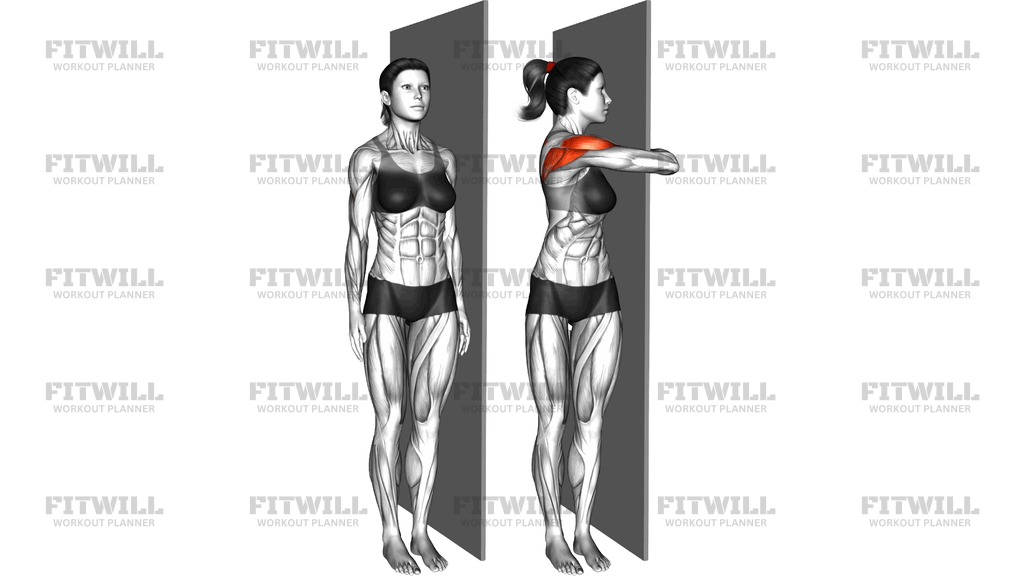
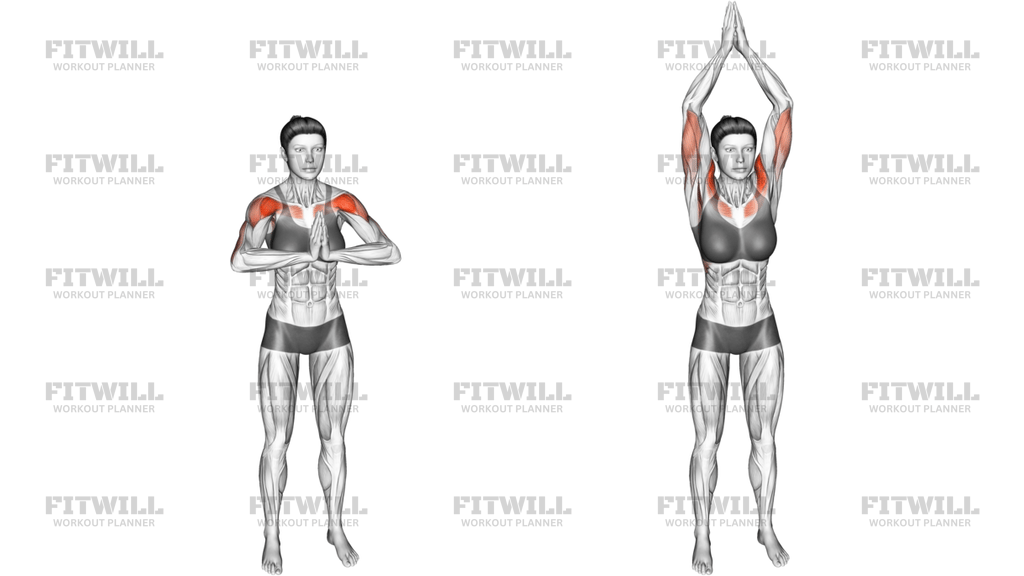
Prayer Push is a standing bodyweight shoulder drill that starts with the palms pressed together at the chest and finishes with the hands reaching overhead in a prayer position. The movement looks simple, but it asks for coordinated shoulder flexion, scapular upward rotation, and torso control so the arms can travel up without the rib cage flaring or the neck taking over. It is a useful way to train the front and side of the shoulders while reinforcing clean overhead positioning.
The primary emphasis is on the delts, with the traps, upper back, and triceps helping stabilize the shoulders as the arms rise. In anatomy terms, the main work centers on the Deltoids, with support from the Trapezius, Rhomboids, and Triceps brachii. Because the exercise is unloaded, the quality of the setup matters more than the amount of effort. If the stance is loose or the rib cage tips forward, the movement turns into a back arch instead of a controlled shoulder reach.
Start by standing tall with the feet planted, knees soft, and the pelvis stacked under the ribs. Bring the palms together at the sternum with the elbows slightly forward of the torso, then press the hands lightly into each other to create tension through the forearms and shoulders. From there, the hands travel straight up the midline and then overhead, finishing only as high as you can reach without shrugging aggressively or losing the line from ribs to pelvis.
On the way up, the shoulders should rotate and reach smoothly while the chest stays quiet. Keep the chin neutral, breathe out as the hands rise, and stop the rep before the lower back arches or the elbows bend to cheat the range. Lower the hands back to the prayer position under control and repeat with the same path each time. A clean rep should feel like a controlled shoulder reach, not a fast torso bend or a forced stretch.
Prayer Push works well as a warm-up, accessory drill, or low-load shoulder patterning exercise when you want better overhead mechanics without external resistance. It is usually beginner-friendly because the load is just body weight, but the range still needs to be pain-free and controlled. If overhead motion feels pinchy, shorten the range and keep the reps smooth until the shoulders can reach higher without compensation.
[ Workout Log & Planner ]
Put your next workout in Fitwill
Keep your plan and training log ready when you are.


Instructions
- Stand tall with your feet about hip-width apart, knees soft, and your weight centered over both feet.
- Bring your palms together at the middle of your chest with your elbows slightly forward and your shoulders relaxed.
- Stack your ribs over your pelvis and lightly brace so your lower back stays neutral.
- Press your palms into each other to create tension before you start the rep.
- Raise your hands straight up the center line of your body, keeping your chin neutral and your neck long.
- As your hands pass your face, let the shoulders rotate upward instead of forcing them down or forward.
- Reach overhead with your palms still together, stopping before your ribs flare or your lower back arches.
- Pause briefly at the top, then lower your hands back to chest level with the same controlled path.
- Repeat for the planned number of reps while keeping each repetition smooth and identical.
Tips & Tricks
- Keep the palms lightly pressed together; hard pressing usually makes the shoulders shrug and the neck tighten.
- Exhale as the hands rise so the rib cage stays stacked instead of flaring into a back arch.
- If the shoulders pinch overhead, shorten the range and stop just before the painful point.
- Do not let the elbows drift far behind the body at the start; that usually turns the rep into an awkward chest stretch.
- Let the shoulder blades rotate upward at the top instead of pinning them down the whole time.
- Keep the motion slow through the middle of the range, where most compensations show up first.
- A neutral head position matters here; reaching with the chin leads usually pulls the shoulders forward too.
- Use this as a quality drill, not a fatigue test, and stop the set when the overhead path gets sloppy.
Frequently Asked Questions
What muscle does Prayer Push target most?
The delts are the primary target, with the traps, upper back, and triceps helping stabilize the movement.
Can beginners perform this exercise?
Yes. It is beginner-friendly because it uses body weight, but the overhead range still needs to stay smooth and pain-free.
Where should my hands start in Prayer Push?
Start with your palms together at the center of your chest, elbows slightly in front of your torso, and shoulders relaxed.
How high should my arms go?
Raise them only as high as you can while keeping your ribs down, your neck relaxed, and your lower back neutral.
Why do I feel my lower back during this movement?
That usually means your rib cage is flaring to fake extra range. Shorten the overhead reach and keep the pelvis stacked under the ribs.
Should my shoulders stay pulled down the whole time?
No. The shoulders need to rotate upward as the arms rise; forcing them down can make the overhead position feel pinchy or blocked.
Is Prayer Push more of a strength exercise or a mobility drill?
It can serve as both. The unloaded setup makes it useful for shoulder control and warm-up work, but the movement still builds useful strength-endurance.
What should I do if my shoulders feel tight overhead?
Reduce the range, slow the rep down, and keep the hands moving in a straight line before working back toward a fuller overhead reach.