Bridge Hip Abduction
Bridge Hip Abduction is a floor-based glute bridge variation that combines hip extension with outward knee drive. From a hooked-lying position, you lift the hips into a bridge while actively abducting the thighs, which makes the glutes do more than just hold the pelvis up. It is a simple bodyweight drill, but the combined action makes it useful for building awareness of hip position, pelvic control, and glute engagement.
The exercise is especially helpful when you want the bridge to train more than just a straight hip thrust. The abducted knee position asks the outer glutes and deep hip stabilizers to keep the femurs aligned while the hips rise, so the set quickly exposes side-to-side differences, foot pressure issues, or lumbar overextension. Done well, it trains the body to lock in a strong bridge without collapsing the knees inward or overusing the lower back.
The setup matters because the hips, feet, and ribcage all influence the quality of the rep. Plant the feet flat, set the shoulders on the floor, and start with the knees bent and slightly open so the thighs can press outward as the hips rise. Keep the ribs down and the pelvis controlled; if the low back takes over, the bridge turns into spinal extension instead of a hip-focused pattern.
At the top of each rep, think about driving the knees apart while keeping the feet rooted and the pelvis level. The outward knee action should come from the hips, not from twisting the feet or bouncing the torso. A short pause at lockout helps you feel whether the glutes are holding the position or whether the knees are drifting, the pelvis is rotating, or the lower back is finishing the movement for you.
Bridge Hip Abduction fits well as a warm-up activation drill, accessory glute work, or a low-load finisher when you want controlled tension rather than heavy resistance. It is a good choice for beginners learning bridge mechanics and for lifters who need better hip stability before progressing to loaded bridges, hip thrusts, or single-leg variations. Keep the reps smooth, pain-free, and repeatable so the movement teaches the hips to work as a unit.
[ Workout Log & Planner ]
Put your next workout in Fitwill
Keep your plan and training log ready when you are.


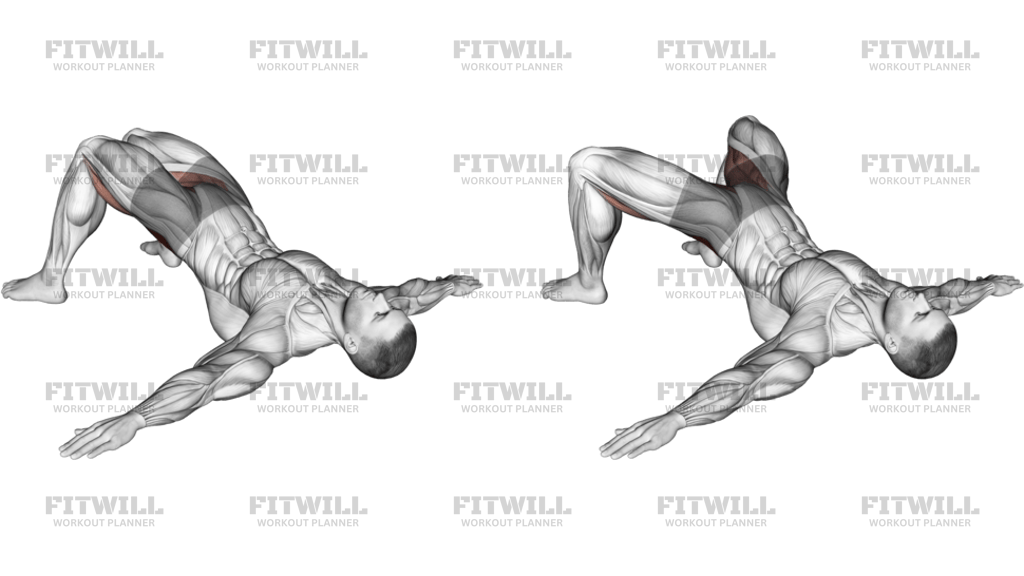
Instructions
- Lie on your back with your knees bent, feet flat on the floor, and arms out for balance.
- Set your feet about hip-width apart and slightly tuck your pelvis so your lower back stays neutral.
- Open the knees just enough to feel the hips load, keeping the soles of the feet planted.
- Exhale and drive through your heels to lift the hips until your body forms a straight line from shoulders to knees.
- As you reach the top, press the knees outward while keeping the feet and shoulders grounded.
- Hold the bridge briefly without arching the lower back or letting the ribs flare up.
- Lower the hips with control while keeping the knees gently pushed out and the weight even through both feet.
- Reset fully at the bottom, then repeat for the planned number of reps or time.
Tips & Tricks
- Keep pressure through the midfoot and heel so the knees can open without the feet rolling outward.
- Think about spreading the floor with your knees instead of forcing a bigger bridge height.
- Stop the rep before your ribs pop up; the bridge should finish at the hips, not the low back.
- If your hamstrings cramp, move the feet a little farther away and reduce the range of motion.
- A short pause at the top makes it easier to feel the glutes working instead of bouncing through the rep.
- Keep the neck relaxed and your eyes on the ceiling so the upper body stays quiet.
- Let the knees travel only as far as you can control without the pelvis twisting.
- Use slower lowers when the outer hips are the limiting factor; momentum makes this exercise much easier than it should be.
Frequently Asked Questions
What does Bridge Hip Abduction work most?
It mainly trains the glutes, especially the outer hip muscles that keep the knees from collapsing inward, while the hamstrings and core help stabilize the bridge.
Is this the same as a regular glute bridge?
No. A regular bridge is mostly hip extension, while this version adds an outward knee drive that increases hip-abductor demand and pelvic control.
Should my knees stay wide the whole time?
Keep them slightly open during the whole set, then widen a bit more at the top if you can do it without twisting the pelvis or rolling the feet.
Why do my hamstrings take over?
Usually the feet are too far from the hips or the bridge is too high. Bring the heels a little closer and keep the ribs down so the glutes can finish the rep.
Can beginners use this exercise?
Yes. Bodyweight reps are a good way to learn bridge mechanics and feel the glutes without loading the spine.
How do I know if I am doing it correctly?
You should feel steady pressure through both feet, the hips should rise smoothly, and the knees should open without the low back arching or the pelvis rotating.
What is the main mistake with the bridge position?
The biggest mistake is turning it into a lower-back arch. The hips should lift because the glutes extend the hips, not because the ribs flare up.
How can I make it harder?
Slow the lowering phase, hold the top longer, or add a light band above the knees if you want more abduction resistance while keeping the bridge strict.